Si Woo Kim's Near-59 at Byron Nelson: A Round That Came Up One Shot Short
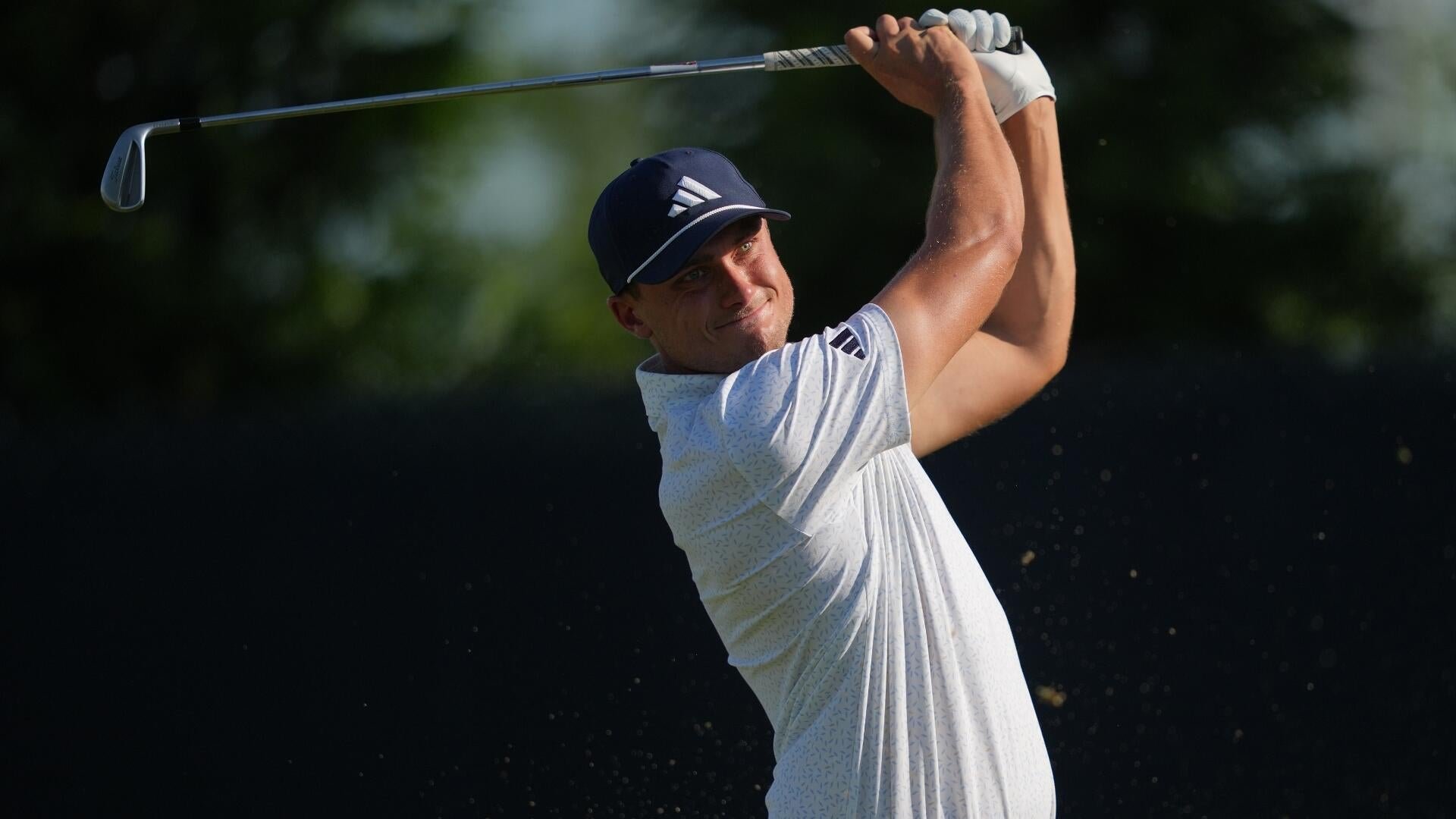
Si Woo Kim came within one shot of写入历史书 on Friday, 22 May 2026, when he closed his second round at the CJ Cup Byron Nelson with a bogey on the par-4 18th hole at TPC Craig Ranch in McKinney, Texas. A par would have given him a 59 — and with it, entry into one of golf's most exclusive clubs. Instead, he settled for a 60, the 16th sub-60 round in PGA Tour history.
The near-miss generated the kind of reaction that only a stroke away from the record tends to provoke: a gallery at the 18th green that fell nearly silent as Kim's 12-foot putt slid past the cup, and a scoreboard that briefly flashed a number — 59 — that never actually appeared beside his name.
Kim, a three-time PGA Tour winner who claimed his most recent title at the 2022 Sanderson Farms Championship, entered the week ranked 69th in the FedEx Cup standings. His 60 on Friday moved him into contention heading into the weekend at the CJ Cup Byron Nelson, one of the tour's regular-season stops that rarely commands this level of replay attention.
The record Kim nearly joined is a short list. The PGA Tour's sub-60 rounds span decades, from Al Geibberger's 60 in the 1977 Tommy Aaron INVITATIONAL (a different era of scoring, though still official) to Jim Furyk's 58 at the 2016 Travelers Championship. The most recent addition before Kim's attempt was likely a round by another player in recent years — the list remains deliberately rare, understood by tour historians as a function of both skill and the particular luck of a round going your way on the final hole.
What made Kim's case notable was the timing. A 59 requires something close to perfect execution on the closing holes, and Kim had managed that for 17 of them. The 18th at TPC Craig Ranch is a 438-yard par-4 that rewards precision off the tee and demands a committed iron approach. Kim's tee shot found the right fairway bunker. His second shot came up short of the green. The bogey was not a collapse — it was the kind of outcome that separates a 59 from a 60, and it is the difference between one number and another that will now follow him.
The tour has long managed the narrative around sub-60 rounds with a particular mix of reverence and restraint. Official recognition comes with a quiet footnote: a 59 is historically significant, but a 60 is not. The distinction matters for the record books, for media highlights, and for the player themselves, who must recalibrate what constitutes a successful week when history was within reach.
The broader context for Kim's round matters too. The CJ Cup Byron Nelson has moved venues several times and carries the name of one of the game's philanthropists, but it has never been a signature-attention event on the schedule. That a near-59 emerged here — rather than at a major or a playoff — reflects something about the democratisation of elite scoring. Tour-level players are simply better than they were a generation ago, and the conditions that allow a 59 are available more frequently than the record suggests.
For Kim, the immediate aftermath was a conversation with the course and with himself. The 60 stood. The tournament continued. He was not in the final group come Saturday, but he was close enough to the lead that another low round would move him forward. The question for the weekend was whether the one-shot miss would become a distraction or a motivator.
The broader pattern in professional golf suggests the latter. Players who come close to a historic round and then go low again within months tend to treat the near-miss as information rather than failure. Kim's distance control and his ability to convert scoring chances — demonstrated across 17 holes on Friday — are not skills that vanish after one bad break on the 18th. Whether he converts this experience into a win at TPC Craig Ranch or in the weeks ahead will determine whether the 60 becomes a footnote or a turning point.
This publication covered Kim's near-59 as a singular scoring achievement; ESPN's wire account led with the record context. Both framings are accurate — the distinction is one of emphasis, not fact.