SpaceX's IPO Moment: What the Launch Scrub Says About the Deal
A day after SpaceX announced a landmark public listing, a routine launch postponement became a Rorschach test for how markets evaluate founder-controlled empires in an era of record valuations.
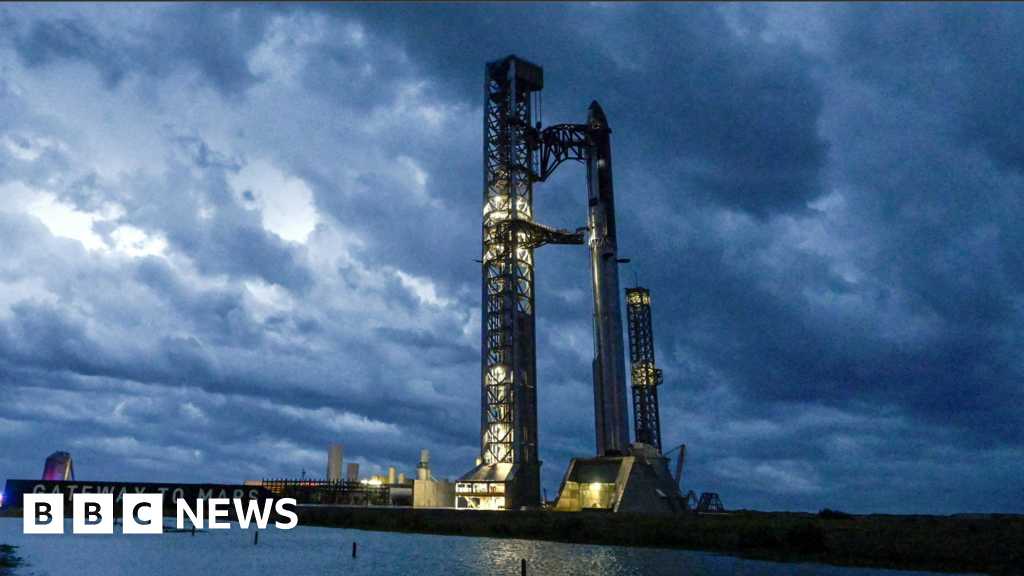
The 12th Starship flight was scrubbed from Boca Chica, Texas, on May 21, 2026, thirty-two minutes before the planned launch window. SpaceX cited automated flight termination system checks and rescheduled for the following day. It was, by the standards of a company that has normalised controlled explosions as a business model, an unremarkable delay. What made the moment notable was the calendar it occupied: twenty-four hours earlier, SpaceX had quietly filed paperwork for what analysts immediately called the most anticipated technology IPO since Meta Platforms listed in 2012. The sequencing was coincidental. The optics were not.
The filing set SpaceX's implied valuation at a figure that would rank it among the most valuable private companies to ever attempt a public listing — a milestone that, if sustained through the roadshow, would reshape assumptions about how much appetite exists for unprofitable, capital-intensive, geopolitically entangled aerospace businesses. The launch pad delay became, within hours, a subplot in a larger narrative about whether a company that has spent years resisting the scrutiny of public markets can suddenly accept it — and what that acceptance means for the investors being invited to fund the next phase of Musk's ambitions.
The Inner Circle Equation
The TechCrunch analysis of SpaceX's shareholder structure, published before the IPO filing was formally confirmed, laid out the arithmetic plainly. Elon Musk holds the largest stake by a margin that makes the next-largest shareholders functionally secondary actors. The remaining top holders are described as having longstanding personal and professional ties to Musk — a category that, in practice, means the governance questions that normally accompany a flotation are compressed into a narrower band of scrutiny. Ordinary institutional investors, the kind who allocate capital through index funds and ESG mandates, are being asked to accept a structure in which one individual's vision and incentives define the upside and downside of the entire enterprise.
That structure is not unprecedented. Alphabet went public with a dual-class share arrangement that preserved founder control. Meta replicated the model. Tesla's retail investor base has spent years navigating the gap between Musk's public persona and the company's financial performance. What distinguishes SpaceX is the sector. Aerospace — particularly orbital launch services, satellite broadband networks, and the human spaceflight pipeline — involves government contracts, export control regimes, and national security sensitivities that make pure founder-risk calculus a different proposition from a social media platform or an electric vehicle company. The investors being courted for SpaceX's IPO will be buying into a business whose largest customer is, by design, the United States government.
The Launch as Diagnostic
SpaceX has normalised flight scrubs in ways that few other aerospace companies have attempted. The Starship development programme has been characterised by iterative hardware destruction — each test flight intentionally generating data that would be expensive or impossible to obtain through static analysis alone. The FAA licensing framework for Starship launches from Boca Chica requires environmental assessments, range safety co-ordination, and a level of regulatory engagement that no private company has previously navigated at this scale. The May 21 postponement, attributed to automated flight termination checks, fell within the band's normal operational variability.
But the IPO context changes how such events are read. In the hours after the scrub was announced, the equity story had to be re-sold to potential investors who had, moments earlier, been processing the magnitude of the filing. That re-selling happened largely through the financial press and the investor relations infrastructure SpaceX has quietly built over the past eighteen months. The company's communications discipline — measured, technical, avoiding the rhetorical excesses of Musk's personal social media presence — reflects a deliberate choice to separate the corporate brand from the founder brand. Whether that separation holds when the next Starship flight produces debris over the Gulf of Mexico, or when a government contract is rebid, or when Musk's political entanglements create diplomatic complications for a company that operates launch sites on three continents, remains an open question.
Structural Position: Who Owns the Orbit
SpaceX's dominance in commercial launch services is a structural fact of the current aerospace market. The combination of reusability — pioneered at scale by the Falcon 9 programme — and a manufacturing integration model that treats launch vehicles as iterative hardware platforms has compressed costs in ways that competitors have struggled to match. United Launch Alliance, Blue Origin, and the emerging cluster of small-launch providers operate in a market that SpaceX effectively prices. That pricing power is the asset being listed.
The geopolitical dimension is harder to price. SpaceX's Starlink network has become critical communications infrastructure in conflict zones — a role that has brought the company into direct contact with government intelligence and military agencies. The National Security Space Launch programme, which contracts SpaceX for payloads the US government designates as sensitive, represents a revenue stream that is both stable and politically complex. Investors in the IPO are buying into a company that is, structurally, a defence contractor with a consumer internet product and a human spaceflight programme — a combination that has no direct public-market comparator.
The IPO itself is not a pivot away from that complexity. It is an attempt to fund the next phase of it. Starship is designed to be the vehicle that carries both NASA's Artemis lunar programme and SpaceX's own interplanetary ambitions. Both pathways require capital that private investors — even those with long time horizons — have limits on providing. The public markets represent a different kind of capital: more diffuse, more liquid, and subject to a different set of expectations about disclosure, governance, and risk communication. SpaceX has spent years outside that framework. The filing marks its entry.
Precedent and Its Limits
The closest historical parallels are not aerospace companies. They are the technology companies that listed with dual-class structures and founder-majority control at valuations that seemed, at the time, to price in futures that had not yet arrived. Google's 2004 IPO, priced at $85 per share, embedded the founders' voting control in a structure that Larry Page and Sergey Brin defended on the grounds that short-term pressure would distort long-term investment. Fifteen years later, that defence has been used so frequently that it has become a genre. The evidence for whether it produces superior long-term outcomes is genuinely mixed. Alphabet has outperformed the broader market. Meta has oscillated wildly in response to founder decisions. The pattern suggests that founder control is not inherently value-creating or value-destroying — it is a bet on the specific individual that the market is being asked to place.
SpaceX is that bet, concentrated. The question the IPO is asking is whether the market is prepared to place it at the implied valuation. The launch scrub, in this framing, is noise. The filing is the signal. Whether the signal survives contact with institutional due diligence — which will include scrutiny of Musk's other commitments, his management bandwidth, and the governance mechanisms (or absence thereof) that protect minority shareholders — will determine whether the listing proceeds as currently structured or whether the terms shift before the first day of trading.
What Comes Next
The next Starship flight, rescheduled for May 22, 2026, will be a data point in a story that has already outgrown any single test flight. If it proceeds without incident, the IPO roadshow gains momentum. If it produces the kind of outcomes that iterative development sometimes does — a high-altitude anomaly, an early termination, debris over inhabited areas — the narrative management challenge for SpaceX's investor relations team becomes significantly more complex. In neither scenario is the fundamental structure of the company altered. But in the public markets, perception and structure move together in ways that private companies can largely avoid.
The longer arc is about the industrialisation of low-Earth orbit and the commoditisation of launch. SpaceX has defined that arc for the past decade. The IPO is an invitation for public capital to fund its continuation — on terms that give the founder the keys and the public investor a seat whose influence is, by design, limited.
Whether that invitation gets accepted at the implied valuation will be one of the more revealing tests of current market appetite for founder risk at scale. The scrub, in the end, answered none of the questions. It simply reminded everyone that the questions exist.
This article was filed from London. The wire framing around SpaceX's IPO focused heavily on valuation benchmarks and Musk's personal stake. This piece attempted to foreground the structural governance questions that a dual-class flotation at this scale introduces — questions that tend to get submerged in the narrative weight of a founder's public profile.