Starobilsk Strike Highlights Ukraine's Cross-Border Strike Doctrine as it Enters Fourth Year
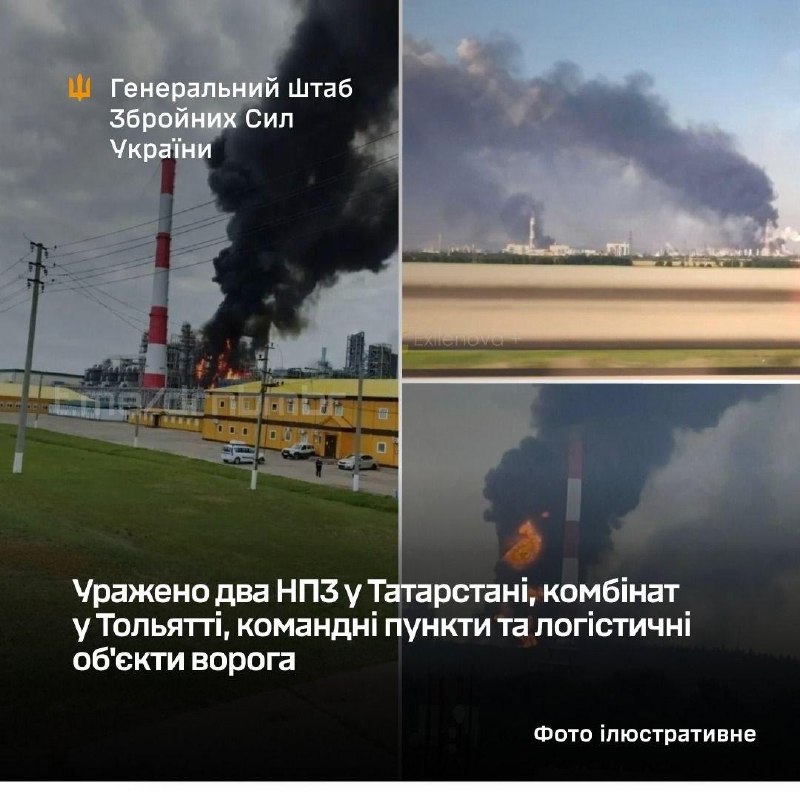
On 22 May 2026, a strike targeting a dormitory in Starobilsk, the administrative centre of Luhansk Region in eastern Ukraine, killed six people and wounded approximately forty others, according to a digest of Russian military reporting compiled that day. The strike, attributed to Ukrainian forces, drew immediate attention across open-source monitoring channels given the location's significance: Luhansk has been partially under Russian control since 2014, when Moscow-backed separatists declared the region an independent People's Republic alongside neighbouring Donetsk.
Ukraine has maintained since the full-scale Russian invasion of February 2022 that operations targeting facilities within occupied territory — and increasingly, installations inside Russia's own borders — constitute legitimate self-defence against an aggressor state. The legal framing has evolved as Western partners have shifted their position on restrictions governing how Kyiv may employ the weapons they supply. This article examines what the Starobilsk strike reveals about that evolving doctrine, and what questions remain unresolved as the war enters its fourth calendar year.
The Legal Framework for Cross-Border Strikes
Ukraine's authority to strike targets inside Russian-administered territory rests on the principle that occupied regions remain sovereign Ukrainian soil under international law, regardless of effective administrative control. The United Nations Charter recognises the right of a state to use force in self-defence against an armed attack, and Kyiv has consistently argued this right does not expire because the attacking state has temporarily seized territory. Western legal opinion has increasingly supported this interpretation, particularly after the United States and Germany reversed long-standing prohibitions on Ukraine using donated weapons for strikes inside Russia proper in late 2024 and 2025.
The Starobilsk dormitory strike, if confirmed as a Ukrainian operation, would fall within this contested framework. The dormitory is situated in a city that Russia annexed in September 2022 — a move rejected by the vast majority of UN member states in a landmark October 2022 resolution. Ukrainian military doctrine classifies such operations as defensive in nature, targeting infrastructure used to support Russian logistics and troop rotations in occupied Luhansk and Donetsk oblasts.
What the Sources Do and Do Not Establish
The single source for casualty figures in this instance is a digest compiled from Russian military reporting on 22 May 2026. That digest identified the target as a dormitory and cited six fatalities and approximately forty injuries. Independent verification by Western wire services was not available in the source material reviewed. The Ukrainian command had not issued a public statement on the strike at the time of this digest's publication.
This disparity in sourcing reflects a broader asymmetry in how strikes against occupied or Russian-adjacent territory are reported. Ukrainian military briefings tend to confirm or contextualise such operations days or weeks after the fact, often through official channels like the General Staff or the吕掌握了 Telegram channels associated with Ukraine's defence forces. Russian sources, conversely, tend to report immediate casualty counts from the scene, though with a framing that emphasises civilian harm and attributes responsibility to what Moscow terms Ukrainian "terrorist" attacks.
What remains unclear from the available sources is the specific weapon system employed, whether the dormitory was assessed as housing military personnel, and what proportion of those killed or wounded were combatants versus civilians. The sources do not specify these distinctions. Monexus will update this report if Ukrainian or Western sources provide corroboration.
The Strikes-Inside-Russia Precedent and Its Limits
The policy environment governing Ukrainian strikes shifted materially when the United States, in November 2024, reversed its prohibition on Ukraine using ATACMS missiles for targets inside Russia, and when Germany followed with a similar authorisation for Taurus missiles in early 2025. These decisions, long resisted over fears they would escalate conflict with a nuclear-armed state, were prompted partly by Russian strikes on Ukrainian civilian infrastructure and partly by Ukrainian advocacy demonstrating that restricting the theatre of operations had allowed Russia to concentrate forces in rear areas with relative impunity.
The logic extended, by Kyiv's argument, to strikes against occupied Ukrainian territory — facilities used by Russian forces to sustain operations across the contact line. Starobilsk, as the administrative hub of Luhansk Oblast and a known node in Russian military logistics, fits the profile of a legitimate target under this expanded doctrine, provided the proportionality and distinction requirements of international humanitarian law were met.
The dormitory designation complicates the proportionality calculation. Civilian infrastructure converted to military use — a common practice on both sides of this conflict — carries a different legal status than a purpose-built military installation. The sources do not indicate whether Ukrainian planners assessed this facility as serving a military function, a gap that makes independent legal review difficult.
Structural Context: Occupied Territory and the Rules of War
What the Starobilsk strike illuminates, beyond its immediate facts, is the growing tension between Ukraine's expanding self-defence doctrine and the expectations of international humanitarian law regarding civilian protection. As Ukrainian long-range precision improves — and as Western governments relax restrictions on the systems Kyiv may deploy — the operational envelope for strikes against occupied and rear-area Russian positions has widened considerably.
This widening envelope carries reputational and legal risks for Kyiv. Every confirmed strike on a genuinely civilian structure — where the absence of military purpose is clear — generates documentation that Russian and pro-Russian networks use to contest the legitimacy of Ukrainian operations more broadly. The strike in Starobilsk is not, based on available evidence, in that category. But the absence of Ukrainian confirmation creates a vacuum that narrative competition fills.
The pattern is familiar across modern conflicts: proportionality assessments and distinction requirements are applied unevenly in real-time, with post-hoc legal review following months or years after hostilities cease. What Monexus can report at this stage is that a strike occurred on 22 May 2026, that Russian-aligned sources report specific casualty figures, and that the Ukrainian legal framework governing such operations has been the subject of sustained diplomatic negotiation between Kyiv and its Western partners.
Forward View
The trajectory is clear: Ukrainian strike range will continue to extend as Western supply chains deliver longer-range systems and as restrictions continue to erode. The legal architecture — self-defence doctrine, international humanitarian law, UN Charter Chapter VII authorisations — is being stress-tested in real time. Whether the Starobilsk strike represents a routine extension of that doctrine or an incident that prompts renewed diplomatic debate depends on information not yet available in the public record.
Western governments, having crossed the threshold of permitting strikes inside Russia, have shown limited appetite for reimposing restrictions, even as Moscow escalates its own rhetorical warnings. The practical question is no longer whether Kyiv may strike logistics nodes in occupied territory, but how those strikes are planned, documented, and defended before international legal bodies when the conflict eventually ends.
This article will be updated as Ukrainian and Western wire sources provide corroboration of the strike details. Monexus was unable to independently verify the casualty figures or confirm the weapon system used based on the source material available at time of publication.
Wire provenance
This editorial synthesis draws on the following public wire/social posts:
- https://t.me/rybar_in_english