The Quiet Sacrifice: Taiwan Arms Freeze Exposes the Hole in America's Indo-Pacific Promise
The United States has quietly paused its largest-ever Taiwan arms package to redirect munitions toward an Iran operation. That decision speaks louder than any public commitment to Taiwanese self-defense.
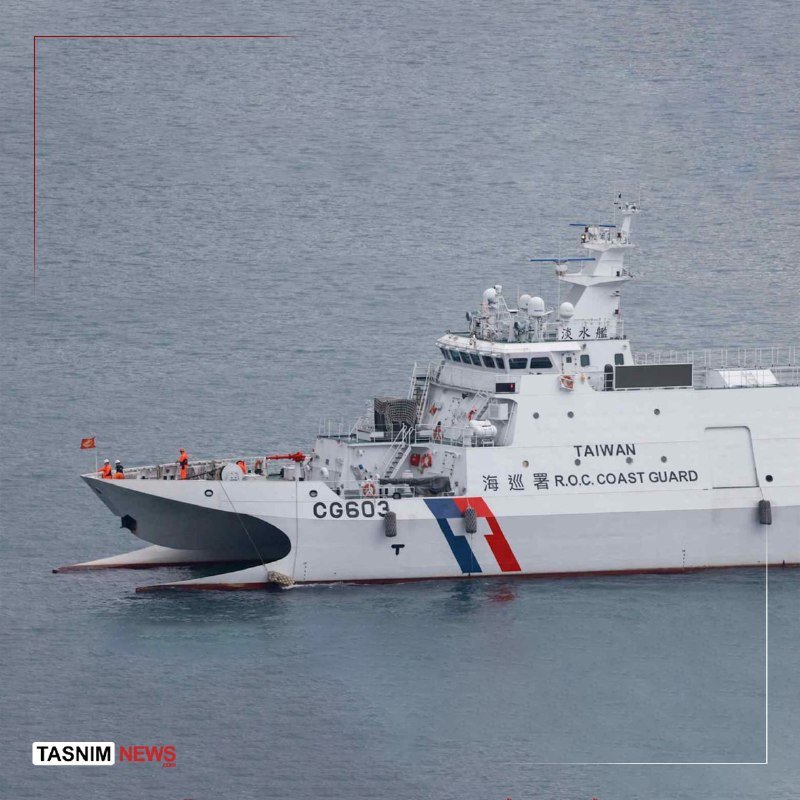
Something revealing slipped out on 22 May 2026. A US Navy official confirmed what market watchers and defense analysts had suspected for days: the largest-ever package of American arms destined for Taiwan has been placed on administrative hold. The stated reason was munitions conservation for an Iran operation. Read that sentence again. The largest-ever Taiwan arms sale—years in the planning, priced at figures that would reshape the island's deterrent posture—has been paused, mid-process, because Washington needs the inventory elsewhere.
That single fact punctures a decade of Indo-Pacific doctrine.
The Biden and subsequent administrations built an architecture of reassurance around Taiwan: arms sales as the connective tissue between American commitment and Taiwanese capability, a quiet signal to Beijing that any use of force would carry costs. The sales were never framed as charity or political favours. They were positioned as transactions rooted in legal obligation—the Taiwan Relations Act requires the United States to provide Taiwan with defensive weapons—and in strategic interest. The moment those sales become negotiable based on which crisis is currently hottest, the architecture collapses as a credible deterrent.
The Iran Variable
The decision makes cold operational sense within its own frame. American military logistics operate under real constraints. Precision-guided munitions, air defense interceptors, and the electronic warfare suites that an Iran contingency would require are finite in the near term. Diverting production capacity or existing stockpiles toward a potential flashpoint in the Middle East while a slower-burning competition unfolds in the Pacific is the kind of trade-off defence planners make every budget cycle. No serious analyst would argue otherwise.
But operational logic and strategic credibility do not always align. Taiwan is not a standing grievance requiring constant management. It is a potential flashpoint where American deterrence either holds or it does not. When an adversary—Beijing—watches the United States redirect arms meant for Taiwan toward a different theatre, it draws conclusions. The most obvious one: American commitments scale with American convenience.
Beijing has not issued a public statement on the pause as of this writing. That restraint is itself informative. The Chinese foreign ministry and state media have historically been voluble on Taiwan arms sales, treating each package as evidence of Western containment. The silence now suggests either bureaucratic lag or something more calibrated: a decision to let the American move speak for itself rather than inflate its significance by responding.
The Price Signal Problem
Beyond the immediate military calculus, there is a market dimension that the headlines gloss over. The same week the pause became public, Polymarket data suggested a material shift in oil price expectations, with some models projecting a drop below $90 per barrel on renewed prospects for a US-Iran understanding. This is not incidental. American grand strategy, at the level of budgeting and force allocation, has always run on an energy price assumption. When those assumptions shift—downward, toward stability—the perceived urgency of Middle Eastern contingencies recedes, and the logic of reallocating Pacific-facing munitions weakens with it.
The reverse is also true, and that is the uncomfortable implication. Taiwan's deterrence is partly hostage to oil market volatility not because of any formal linkage, but because American attention and budget authority flow toward whichever crisis the market narrative frames as most urgent. A $90 oil market is a less urgent Middle East. A $130 oil market, driven by Gulf disruption, is a different calculation entirely—and Taiwan would lose.
The Taipei Calculus
Taiwan's government has not publicly protested the pause. That restraint is understandable: antagonising the primary arms supplier is poor diplomatic practice, and private channels exist precisely for this kind of demarche. But the absence of public friction should not be mistaken for acceptance. Taiwanese defence planners have watched American force repositionings, carrier group deployments, and now arms sale pauses with the attention of people whose survival depends on correctly reading Washington. The pause will be entered into those calculations.
It also should not be mistaken for irrelevance. Taiwan's defence posture depends on several categories of weaponry: anti-ship missiles that could complicate a PLA blockade, air defence systems that could reduce the effectiveness of first-strike strikes, and communications and intelligence infrastructure that ties Taiwanese forces into a broader situational awareness picture. These are not commodity items. The production timelines, integration requirements, and training pipelines for complex systems run in years, not months. A pause of months can become a gap of years.
What Deterrence Costs When It Is Suspended
The structural point is straightforward. Deterrence is a reputation good. Its value depends on the adversary's belief that commitments will be honoured even under stress. When the United States pauses its largest-ever arms sale to Taiwan—not because of Taiwanese non-performance, not because of changed threat assessments, but because of an unrelated regional contingency—it sends a signal that its Indo-Pacific commitments are negotiable in ways its European commitments demonstrably are not.
This publication has noted before that American alliance architecture treats different theatres with different degrees of credibility. NATO commitments carry an institutional, legal, and political weight that makes suspension or renegotiation politically near-impossible in the short term. Taiwan occupies a different legal and political category entirely—arms sales are discretionary, the relationship is unofficial, and the strategic ambiguity that Washington has maintained for decades cuts both ways. Beijing benefits from that ambiguity when it reduces American credibility; Taipei suffers from it when American commitments are quietly suspended.
The pause will likely lift. American officials have described it as temporary, contingent on Iran operations concluding or munitions availability improving. But temporary gaps in deterrence have a way of becoming permanent recalculations in adversary behaviour. The 22 May 2026 decision is not the end of American Indo-Pacific strategy. It is a stress test of whether that strategy was ever as robust as its public framing implied.
Taiwan arms sales resumed or further paused — Monexus is tracking the next data point closely.