Tehran's Martyrdom Murals: How the Raisi Commemoration Reimagines Iranian State Iconography
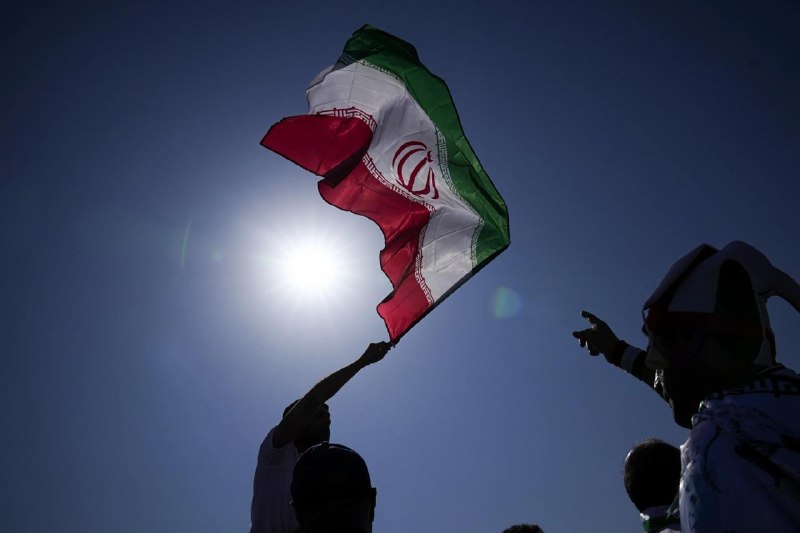
On 19 May 2026, the streets of Tehran were transformed. According to Mehr News Agency, enormous banners and murals depicting the late President Ebrahim Raisi appeared across the Iranian capital simultaneously — timed to coincide with the second anniversary of his death in a helicopter crash near the Azerbaijan border. The state-orchestrated commemoration was not spontaneous grief; it was infrastructure.
What Tehran witnessed was a carefully calibrated piece of political theatre. The installation of these images at scale, in the weeks following the second anniversary, speaks to a regime that has learned to weaponise memory as governance. Raisi's death in May 2024 left a vacuum in Iran's conservative religious establishment; the murals are one answer to the question of how a political class fills that absence.
The Politics of Martyrdom Imagery
Iran has a long history of using visual propaganda to sanctify fallen leaders. The 1979 revolution produced an entire aesthetic vocabulary for martyrdom — portraits framed in green and red, imagery drawing on Shia devotional traditions of suffering and sacrifice. The Iran-Iraq war (1980–1988) normalised this further, creating a template in which death in service of the state became not just acceptable but spiritually elevated.
Raisi, who served as president from 2021 until his death, occupied a particular position within this framework. He was not a war hero in the traditional sense; he rose through the judicial ranks and the Bassij, becoming known for hardline positions on social restrictions and a central role in the 1988 executions of political prisoners. Yet the regime's messaging after his death cast him firmly in the martyr archetype — a man who died in service, whose sacrifice demanded continuation of his project.
The murals accomplish several things at once. They reinforce continuity at a moment when the political landscape has shifted — Masoud Pezeshkian, a relative moderate, now occupies the presidency. They signal that the hardline establishment that Raisi represented remains dominant in shaping the republic's symbolic language. And they provide a visual anchor for public mourning rituals that serve a legitimising function for the entire Islamic system.
What the Commemoration Conceals
Any honest reading of these murals must account for what they are designed to obscure. Raisi's presidency was marked by significant domestic unrest — the Woman, Life, Freedom protests that erupted in September 2022 after the death in custody of Mahsa Amini represented the most sustained challenge to the republic's authority in over a decade. The protests were met with a crackdown that drew international condemnation.
The murals do not contain this history. They present a sanitised figure — devoted, dutiful, martyred. The dissonance between the state image and the documented reality of those years is not accidental; it is the point. In a system where legitimacy derives partly from the control of public space and public memory, the erasure of inconvenient episodes is a feature, not a bug.
It is worth noting that the sources available do not indicate significant domestic opposition to the murals themselves. This may reflect genuine popular acceptance of the commemoration, or it may reflect the practical limitations on dissent in public space. The regime controls the visual grammar of Tehran's streets; whether it controls what people believe about what they see is a separate question.
A Regime Communicating With Itself
Seen from outside, the mural campaign raises a question about the Islamic Republic's self-perception in 2026. Two years after Raisi's death, Iran is navigating a complex external environment: stalled nuclear negotiations with the United States, continued sanctions pressure, and a shifting regional landscape following the Gaza conflict. Internally, the Pezeshkian government has signalled willingness to engage with Western interlocutors — a posture that sits uneasily alongside the triumphalist visual language of the Raisi commemorations.
The murals may be read as a message directed inward rather than outward. They tell the conservative establishment, the Revolutionary Guards, and the Bassij networks that the ideological core of the Raisi project remains intact — that his death was a martyrdom, not a repudiation. In a regime where internal factional negotiations are opaque to outside observers, visual displays of continuity serve as a form of reassurance politics.
Stakes and Forward View
The question is not whether the Islamic Republic will continue to produce martyrdom imagery — it will. The more interesting question is what happens as the second anniversary gives way to the third, the fifth, the tenth. Every authoritarian system faces the problem of memory management over time: how to keep a figure salient without allowing that figure's legacy to become a constraint on future choices.
Raisi's successors have room to diverge from his policies while maintaining the symbolic vocabulary of his commemoration. The murals give them cover for that divergence — they can claim continuity while practising adaptation. The visual language of martyrdom is, in this sense, a resource to be exploited rather than a doctrine to be followed.
For outside observers, the murals serve a different function: they are a lens through which to watch how Iran manages the tension between its revolutionary founding mythology and the practical demands of governance in 2026. That tension does not resolve. It simply finds new expressions.
Desk note: The wire frame (Mehr News) presented this as a straightforward state commemoration. This piece attempts to surface the structural work the imagery performs — memory management, factional signalling, and the suppression of inconvenient recent history — without collapsing into editorial condemnation. The restraint is deliberate; the reader can draw their own conclusions from the evidence presented.
Wire provenance
This editorial synthesis draws on the following public wire/social posts:
- https://t.me/mehrnews