Tehran's Trust Deficit Is Rational — and Washington's Diplomacy Is Paying the Price
Iran's top diplomat has told the UN Secretary-General that excessive American demands and a pattern of broken commitments are the primary obstacles to any negotiated settlement — and the claim deserves serious engagement, not dismissal.
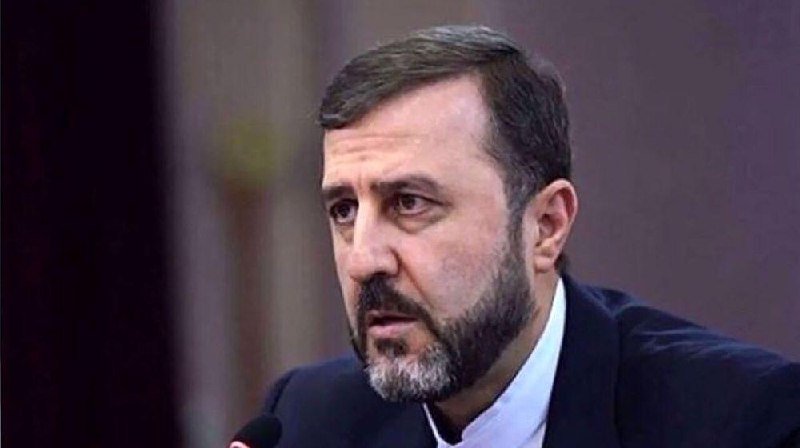
When Abbas Araqchi picked up the telephone on May 22, 2026 to brief the United Nations Secretary-General on the state of Iran's nuclear diplomacy, the message he carried was not new. It was, however, unusually direct. Tehran, his office said, entered the diplomatic process seriously and responsibly — despite what the statement described as strong doubts about the United States. Washington's record of broken promises, excessive demands, and what the Iranian framing calls "betraying diplomacy" was the stated reason those doubts persist. The Secretary-General received the briefing; the talks remain stalled.
That asymmetry — Iran presenting itself as the cautious reasonable actor, the United States as the unreliable one — is the kind of framing that Western dispatches tend to bury in paragraph six. It should not be buried. It reflects a genuine diplomatic pathology, and treating it as mere propaganda inverts the problem.
The Charge Is Specific, Not General
The Iranian foreign minister's office, speaking through state-linked channels including Al-Alam Arabic and Fars News International on May 22, 2026, laid out three linked claims. First, that Iran engaged the negotiating table in good faith. Second, that Washington's pattern of retreat from agreed frameworks — not Iranian intransigence — is what has complicated the process. Third, that American demands have exceeded what any sovereign state could accept as a baseline for talks. The reference to negotiations "mediated by Pakistan" is notable; it positions Islamabad as the current diplomatic conduit, not Oman or Switzerland as in prior rounds.
The sources here are Iranian state-adjacent. That is worth stating plainly. But the claims they carry — about credibility, about excessive demands, about broken commitments — are not invented for this moment. They are the same grievances Tehran has iterated across multiple negotiating cycles, from the JCPOA original signing in 2015 through its conditional revival in 2023-24. Whether one agrees with Iran's position or not, the consistency of the complaint is itself a data point about what the other side hears when Washington announces a new diplomatic initiative.
What Washington Actually Demands — and Why Tehran Hears It as Ultimatum
Western coverage of US-Iran negotiations typically frames American demands as reasonable non-proliferation asks: caps on enrichment levels, transparency on facilities, monitoring timelines. Those demands are not unreasonable on their face. But context shapes reception. Tehran watches as the United States simultaneously maintains sanctions that an Iranian population of 88 million experiences as economic strangulation, expands regional security commitments that Tehran reads as encirclement, and then presents a negotiating posture demanding irreversible concessions in exchange for sanctions relief that Washington has repeatedly demonstrated it can and does reverse.
The history matters here. The JCPOA was agreement, signature, implementation — and then the United States withdrew under a different administration, re-imposing the very sanctions the deal had lifted. That is not disputed history. It is not Iranian propaganda. It is a documented fact of American diplomatic practice. When Iranian officials say Washington has a "record of breaking promises," they are citing that record. When they say excessive demands are the obstacle, they are pointing to the sequencing problem: the United States asking Iran to dismantle its enrichment program before Washington commits to a sanctions regime it has shown it can re-impose unilaterally.
The Mediation Problem Nobody Wants to Discuss
Equally worth examining is the reference to Pakistan as the mediating power. That detail, if accurate, represents a meaningful shift in diplomatic architecture. Oman mediated the 2013-2015 JCPOA process. Switzerland and Oman have served as back-channels in various phases. Pakistan — a nuclear-armed state with deep ties to both Washington and Tehran, currently navigating its own IMF-program straitjacket and a domestic insurgency problem — is not a neutral intermediary. It is a state with interests on both sides of every question.
Why Pakistan now? The question answers itself, partly. With the JCPOA effectively moribund and no obvious third-party venue willing to host direct US-Iran contact, a regional power with established relationships to both governments fills the vacuum. But the vacuum itself is the story. Washington's willingness to accept Pakistani mediation signals either diplomatic pragmatism or a tacit acknowledgment that the formal channels have broken down. Possibly both.
What Comes Next Depends on Which Side Defines the Stakes
If Washington's framing holds — that Iran is the obstacle, that it seeks a nuclear weapon, that diplomatic pressure is the lever — then the current standoff is rational policy. If Iran's framing holds — that it seeks sanctions relief and security guarantees, not a weapon, that excessive demands are a negotiating tactic designed to extract maximum concession before any reciprocal move — then Washington is conducting talks in a mode that has failed repeatedly and can be expected to fail again.
The evidence for the Iranian position is not dispositive, but it is structurally coherent. A state that has enriched uranium for decades without crossing the weapons threshold has demonstrated restraint. A state whose economy has been under severe sanctions without regime collapse has demonstrated durability. Neither of those facts proves Tehran's peaceful intent. But they complicate the dominant narrative in Washington that the only rational response to Iran is maximum pressure.
What Araqchi told the United Nations Secretary-General on May 22, 2026, is that his government is watching, and that the watching has produced a conclusion. Whether that conclusion is strategic disinformation or genuine grievance is the question that will determine whether these talks produce anything or simply produce the next round of recrimination. The Secretary-General, presumably, is still listening.
Monexus covered Iran's diplomatic framing as reported by state-linked channels on May 22; the piece engages that framing critically rather than discounting it, because the consistency of Tehran's complaints about American credibility is a structural fact that deserves analytical attention independent of source affiliation.
Wire provenance
This editorial synthesis draws on the following public wire/social posts:
- https://t.me/alalamarabic/82456
- https://t.me/alalamarabic/82455
- https://t.me/alalamarabic/82454
- https://t.me/FarsNewsInt/47123