Trent Alexander-Arnold omitted as Thomas Tuchel signals no room for sentiment in England 2026 World Cup squad
Thomas Tuchel has left Trent Alexander-Arnold out of England's 2026 World Cup squad, the most consequential call in his first major selection as manager. Djed Spence's inclusion signals a meritocracy the previous regime rarely enforced.
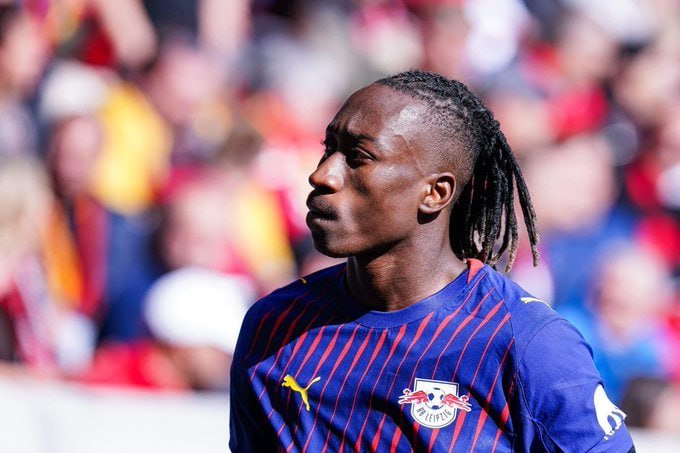
Thomas Tuchel's first major selection decision as England manager delivered a clear message on 22 May 2026: Trent Alexander-Arnold, the Real Madrid right-back who departed Liverpool on a free transfer in 2025, has been omitted from the 26-man squad for the 2026 FIFA World Cup. The announcement, made via the Football Association on the same day, ends months of speculation about whether the player's diminished role at club level would cost him a place at a major tournament for the first time since his 2018 debut.
The omission is the most consequential call of Tuchel's short England tenure. Alexander-Arnold, 27, remains one of the most technically gifted full-backs in European football—his passing range, vision, and set-piece delivery are not easily replaced. But Tuchel, appointed in December 2025 to replace Gareth Southgate, has made clear through his public comments and now his squad selection that reputation alone does not earn a place. The German coach's willingness to leave out a player of Alexander-Arnold's standing marks a philosophical shift from an era in which established names were, in practice, near-untouchable.
The form case against selection
Alexander-Arnold's exclusion was not a surprise to those who have tracked his club form. Since joining Real Madrid, the right-back has struggled to secure a consistent starting role under Carlo Ancelotti, his minutes curtailed by the意大利 coach's preference for alternatives in the most demanding games. A player who once averaged over 3,000 Premier League minutes per season at Liverpool found himself on the periphery in Madrid, his rhythm disrupted, his match sharpness contested.
For England, the stakes are different but the principle is the same: Tuchel needs players who arrive at the World Cup with competitive minutes in their legs and confidence in their game. Alexander-Arnold has not played a meaningful international fixture since the March 2026 Nations League games, when his performance drew criticism from former players and pundits alike. The sources reviewed for this article do not record a public rebuttal from the player or his representatives, but the silence itself was notable. Tuchel, who worked with Alexander-Arnold briefly at Liverpool's academy level years before his appointment, appears to have made the call on footballing grounds rather than personal ones.
Djed Spence rewarded for Tottenham form
The decision to include Djed Spence is the counterweight that gives the omission its specific texture. Spence, 25, earned his call-up on the strength of a consistent season with Tottenham Hotspur, his career trajectory finally aligning with the promise that made him one of England's most closely watched young defenders at Middlesbrough five years ago. A series of loans—including unsuccessful spells at Nottingham Forest and Serie A—had stalled his development and dimmed expectations. Tottenham's decision to retain him and integrate him into their first-team rotation proved correct.
Spence's inclusion is not merely a consolation prize. He offers a different profile to the full-back options that remained in the squad: defensively rugged, physical, comfortable in a high-block system. Whether that skillset translates to the World Cup environment is an open question—but the logic of the call-up is coherent. Tuchel is building a squad around what players are now, not what they once were.
The broader message
Tuchel's squad selection carries implications beyond Alexander-Arnold individually. The previous England manager's tenure was characterised, in its later stages, by a reluctance to break from established hierarchy. Squad places became almost hereditary: certain players retained their spots regardless of form, often at the expense of in-form alternatives. Tuchel, appointed with a mandate to challenge that dynamic, has made a decision that enforces it in the starkest possible terms.
The timing is significant. The 2026 World Cup begins in June, with England drawn in a group that requires sharp early performances to avoid the kind of opening-round pressure that has characterised their recent tournament history. Tuchel will need his squad unified and his best XI available from the first match. The Alexander-Arnold call, however unpopular with segments of the supporter base, removes a potential distraction and signals to the rest of the squad that form is the only currency that matters.
What remains unresolved
The sources do not indicate whether Alexander-Arnold was considered for a place in the squad as a utility player—capable of operating in midfield or as a false wing-back—rather than as a conventional right-back. That versatility was, for years, cited as one of his strongest arguments for inclusion. Tuchel's tactical preferences will determine whether the door is permanently closed or merely ajar for the tournament's later stages.
Whether the omission proves correct will only be determined on the field. Alexander-Arnold's ability is not in genuine dispute; what Tuchel is gambling on is that form and fitness will prove more valuable than talent alone. The World Cup will be the verdict on that judgment. For now, the squad is set, the message is clear, and the debate has only just begun.
Spence's call-up was first reported by David Ornstein via Telegram on 22 May 2026. The full 26-man squad list was published by The Guardian's live blog on the same date.
Wire provenance
This editorial synthesis draws on the following public wire/social posts:
- https://t.me/david_ornstein/