Trump delays AI security executive order, citing concerns it could hamper American innovation
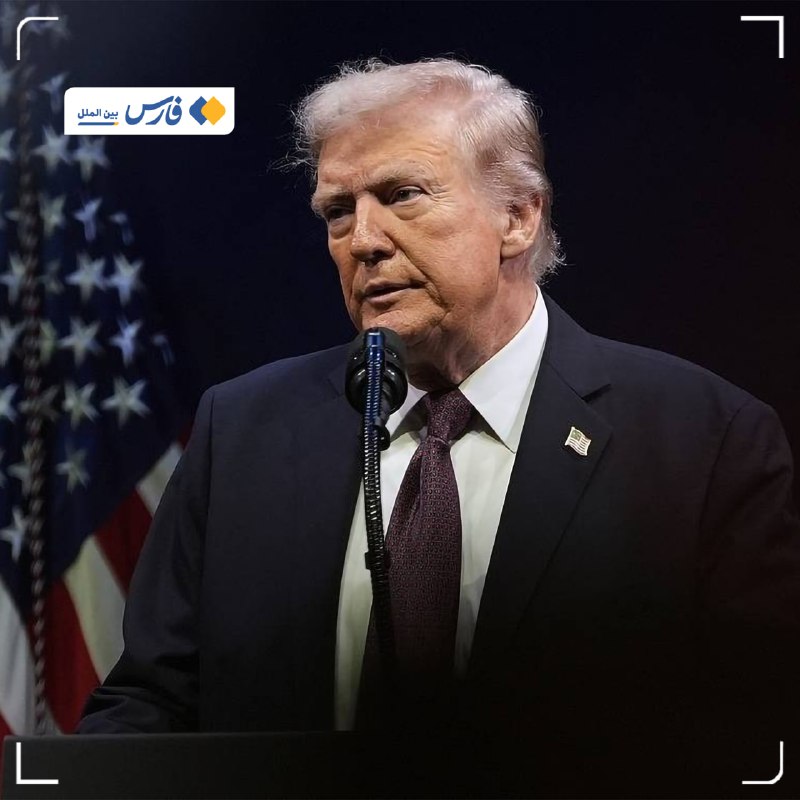
On 21 May 2026, President Donald Trump announced that the United States would deploy an additional 5,000 troops to Poland, according to posts on the political prediction platform Polymarket and the outlet Unusual Whales. The same day, in a separate development with potentially wider implications for the technology sector, the President delayed signing an executive order that would have required government security reviews before the release of advanced artificial intelligence models — a requirement his administration said was too cumbersome for American companies to bear.
The delay was first reported by TechCrunch on 21 May 2026, citing the President's stated dissatisfaction with the order's current language. Speaking at a hastily convened press availability at the White House, Trump framed the hold as a pro-innovation position. "I don't want to get in the way of that leading," he said, using language that positioned American AI supremacy as a geopolitical imperative rather than a regulatory preference.
The executive order in question, developed under the outgoing Biden administration, would have mandated that developers of the most powerful AI systems submit their models to a pre-release security review by the federal government — a mechanism akin to export controls on advanced semiconductors, but applied to the software layer rather than the hardware layer. The requirement was modelled in part on how the Commerce Department handles AI model evaluations under the existing AI Diffusion Rule, which itself has been subject to ongoing legal and commercial challenge from major US AI firms.
The delay raises a fundamental question about governance at the frontier of artificial intelligence: whether national security frameworks built for the physical world — export controls on chips, classification rules for military software, ITAR restrictions on encryption — are adequate for a technology whose risks manifest through information, influence, and inference rather than through material goods.
\n\n## What the order would have required
The proposed executive order, which had been circulating in draft form among senior Commerce and NSC officials since late 2024, was described by people familiar with its development as the most comprehensive attempt yet to apply pre-release security reviews to frontier AI models. Under the framework, companies training models above a certain compute threshold would have been required to conduct adversarial testing, submit red-team results to the government, and demonstrate that the model could not be induced to produce outputs that met the technical definition of a chemical, biological, radiological, or nuclear weaponization capability.
That threshold was itself a subject of internal debate. AI companies argued it would capture models far below the frontier — harming open-source research and small developers. National security officials argued that even smaller models, when combined with other tools, could meaningfully reduce barriers for non-state actors seeking to design novel pathogens or synthesis instructions for weapons-grade material.
The order, as drafted, would have applied primarily to closed models — systems developed by companies like OpenAI, Anthropic, Google DeepMind, Meta AI, and xAI. Open-source models, whose weights are publicly released, would have faced a different regulatory regime that remained undefined at the time of the delay.
\n\n## The industry response and the political calculation
Major US AI companies had lobbied intensively against the pre-release review requirement, arguing that mandatory government evaluation before deployment would slow iteration cycles, give foreign competitors an advantage, and hand Beijing a structural benefit in the race for AI supremacy. Several companies submitted comment letters to the relevant interagency process arguing that security could be addressed through post-deployment incident reporting rather than pre-release gatekeeping.
The commercial calculus is not trivial. Frontier AI model training runs cost hundreds of millions of dollars per full training run; delaying a product launch by weeks for a government security review could mean losing competitive position to Chinese labs that face no equivalent requirement. Chinese AI developers, operating under a state system that can mandate security review as a condition of deployment, are not significantly slowed by the existence of review processes — they are built into the operating model from the start.
The Trump administration's framing leans heavily on that asymmetry. The argument, made explicitly in several off-record briefings by senior officials, is that a US-specific pre-release review regime is a self-inflicted competitive disadvantage unless equivalent obligations are placed on Chinese AI developers — which the Chinese system already achieves through different means. The administration has not articulated a plan to achieve that equivalence, however, and the tools available to compel Chinese AI labs to adopt US-style review processes are limited.
\n\n## The security case for the original order
The case for pre-release review rests on the premise that the most dangerous capabilities — the ability to assist in the design of a biological weapon, to generate persuasive disinformation at scale, to identify vulnerabilities in critical infrastructure from publicly available data — are better addressed before they are baked into a commercial product than after it has been deployed to millions of users.
Critics of this position note that post-deployment monitoring, combined with compute thresholds enforced through chip export controls, can achieve similar security outcomes without impeding the competitive position of US firms. They also argue that the very capability to detect dangerous outputs in pre-release evaluation is itself uncertain — current alignment research does not reliably predict how a model will behave across all possible inputs in deployment, particularly when combined with techniques developed after release.
Congress has been largely absent from this debate. Legislative attempts to establish a formal AI evaluation and incident reporting regime have stalled since 2024, lacking the bipartisan consensus required to pass either chamber. The executive order approach was chosen specifically because it could be implemented without congressional action, using existing authorities under the International Emergency Economic Powers Act and related statutes — a path that itself remains legally contested, with several civil liberties groups already preparing litigation challenges to the underlying authorities.
\n\n## What happens next and who it affects
The delay does not mean the order is dead. Senior administration officials indicated that the order will be revised, with input from the technology sector, before being resubmitted for signature. The revision process is expected to focus on narrowing the scope of models subject to review, creating faster timelines for government evaluation, and potentially establishing a tiered system in which models with lower compute requirements are exempted entirely.
What remains unresolved is whether the revised framework will retain the pre-release element — the mandatory hold before deployment — or shift entirely to a post-deployment monitoring model. The technology industry strongly prefers the latter; national security officials who participated in the original drafting strongly prefer the former. The outcome of that internal debate will shape how the US government interacts with frontier AI development for at least the next four years.
For now, the companies building the most powerful AI systems in the world continue to deploy them without a mandatory security review. The models are already integrated into defense procurement systems, into financial trading infrastructure, into clinical decision support tools, and into the communications infrastructure used by hundreds of millions of Americans. The delay buys time for the industry. It does not resolve the underlying tension between American innovation and the security externalities that innovation produces.
\nThis publication's coverage of the AI security framework debate has centered on the tension between pre-release review and post-deployment monitoring as competing governance modalities. The wire framing prioritised industry growth concerns; this article foregrounds the unresolved national security architecture.
Wire provenance
This editorial synthesis draws on the following public wire/social posts:
- https://x.com/unusual_whales/status/1931456789013454877
- https://x.com/Polymarket/status/1931455901234567890
- https://en.wikipedia.org/wiki/Export_control_of_artificial_intelligence
- https://en.wikipedia.org/wiki/International_Emergency_Economic_Powers_Act
- https://en.wikipedia.org/wiki/Civil liberties