Trump, Iran, and the Hormuz Strait: The Deal That Almost Nobody Believes Will Happen
A Polymarket bet at 2% reflects how unlikely Washington finds any compromise over the Hormuz Strait — even as Trump signals Iran has become his defining foreign policy preoccupation.
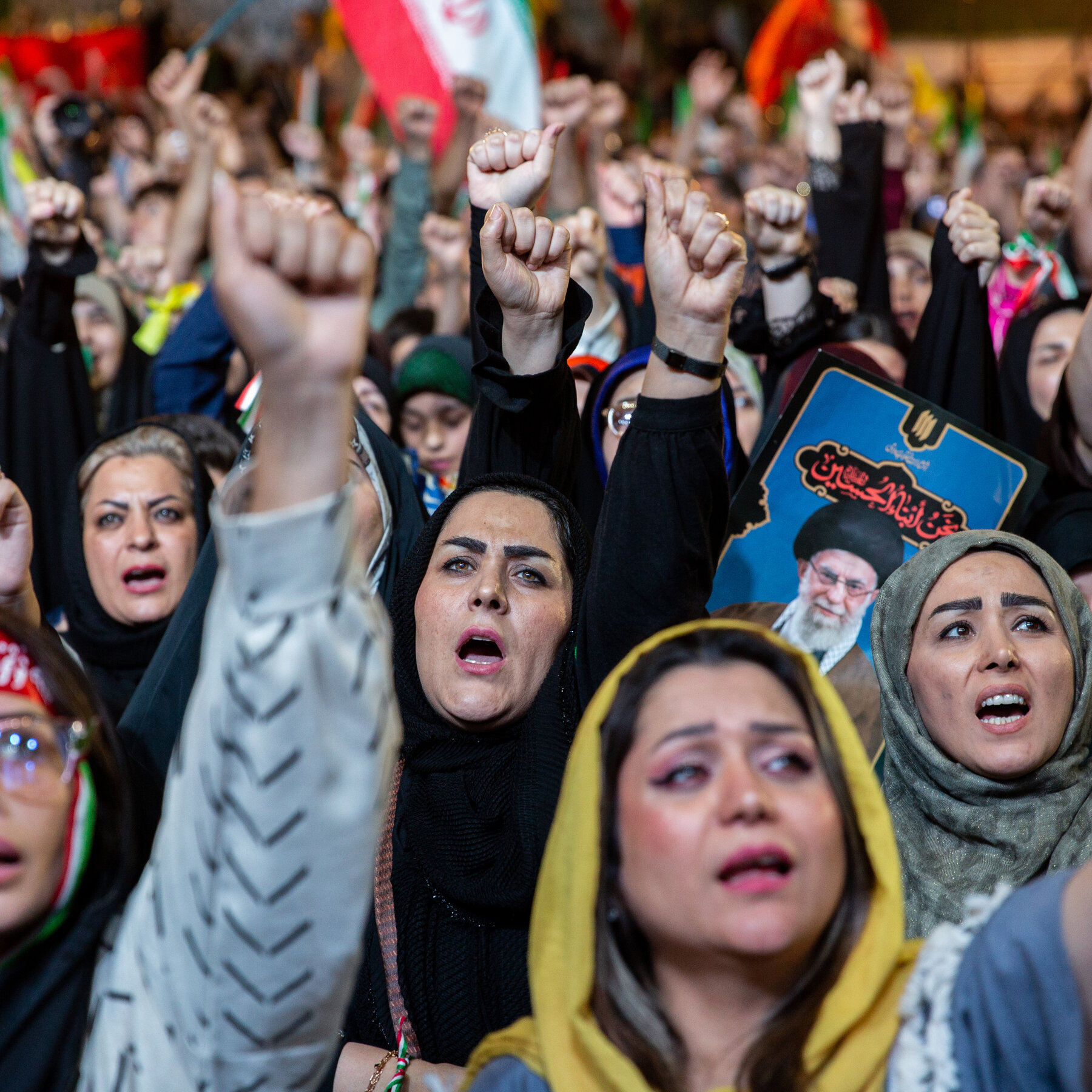
The exchange lasted under thirty seconds. Asked by a reporter whether he would attend his son's wedding that weekend, Donald Trump answered that the timing was inconvenient — he had "a thing called Iran," along with other matters demanding his attention. The comment, delivered outside the White House on 21 May 2026, generated no shortage of commentary online. But taken alongside other signals from the administration, it reads less like casual remark and more like a window into a priority hierarchy that has shifted markedly since the second term began.
Trump, by his own framing, is now in the business of resolving a confrontation that two successive administrations left unresolved — and he appears to want it settled on his watch, on terms he can call a win. Whether that is possible is a separate question, and a difficult one. The Polymarket market on whether Trump will agree to let Iran charge Hormuz transit fees sits at 2% as of 21 May 2026, a probability that reflects not market dysfunction but the weight of structural forces working against any such agreement.
The Hormuz Question
The Strait of Hormuz is a thirteen-kilometre-wide channel separating the Persian Gulf from the Gulf of Oman. Roughly 20% of the world's oil passes through it. Iranian territory overlooks the narrowest shipping lanes; the Islamic Republic has, on multiple occasions over the past four decades, demonstrated the willingness and capability to disrupt or threaten to disrupt that flow. It is, by any reckoning, the single most potent piece of geopolitical leverage Iran possesses.
Washington has spent the same four decades working to neutralize that leverage — through naval presence, sanctions architecture, and the培育 of regional partnerships that reduce reliance on transit through Iranian-adjacent waters. Those efforts have had partial success. The US Fifth Fleet operates from Bahrain; the UAE has invested heavily in alternative export infrastructure; Saudi Arabia routes crude through the East-West pipeline. None of this eliminates Hormuz's centrality. Global oil markets remain exquisitely sensitive to anything that threatens the channel.
The current confrontation has roots in the 2015 Joint Comprehensive Plan of Action, which Iran complied with until the Trump administration withdrew from it in 2018. Since then, Iran has accelerated its nuclear programme while maintaining enough ambiguity to avoid triggering the "breakout" timeline that would force an Israeli or American military response. The result is a standoff in which Iran holds meaningful cards — Hormuz, its proxy networks across Iraq, Syria, Lebanon, and Yemen — while operating under severe economic pressure from the most comprehensive sanctions regime ever imposed on a nation of eighty million people.
What the Market Is Saying
Polymarket, the prediction market platform, offers a useful proxy for how informed observers assess the likelihood of a Hormuz deal. A market assessing whether Trump will agree to let Iran charge Hormuz transit fees opened at near-zero and has remained there. At 2%, the implied probability suggests that either the deal will not materialise, or the specific mechanism being priced — Iran formally charging transit fees — is not the form any agreement will take.
Prediction markets are not infallible. They aggregate the views of participants who have opinions and money at stake; they can misprice political outcomes that hinge on idiosyncratic factors — a single phone call, a sudden crisis, a change of mind by a principal. But they are also not inert. The 2% figure is a statement about incentive structures, about who benefits from the deal failing, about the coalition of opponents any compromise would face.
The Hormuz fee mechanism being priced is specific. Iran has long argued that it has a right under international law to collect reasonable fees for infrastructure it maintains in the vicinity of the strait — a position Tehran has framed not as provocation but as sovereignty. No American administration has accepted this framing. Granting it would amount to a recognition that decades of sanctions and military presence have not produced the outcome Washington sought, and that Iran retains a legitimate claim on a corridor the US has treated as a strategic asset.
The deal's opponents are not difficult to identify. Saudi Arabia and the UAE watch Iranian economic recovery with concern; any arrangement that eases sanctions while leaving Tehran's missile programme and regional network intact serves Gulf interests poorly. Israel views a Hormuz deal as validation of a strategy it considers existentially threatening. American hawks — in Congress, in the think-tank circuit, in parts of the intelligence community — regard any face-saving accommodation as a sign of weakness that invites escalation.
The Structural Problem
The difficulty is that neither side's ideal position is achievable. Iran cannot sanctions-proof its economy without a negotiated settlement; the domestic pressure is real and growing. The leadership in Tehran has seen its population age, its currency depreciate, and its regional ambitions outpace its material resources. The Trump administration's opening to Tehran — whatever its tactical rationale — reflects a recognition that the maximum-pressure campaign has produced neither capitulation nor regime collapse.
What Iran wants, if a deal is possible, is straightforward in outline if not in detail. Sanctions relief — verifiable, durable, not subject to a future administration unilaterally reimposing restrictions. Guarantees that a future US government cannot do what Trump did in 2018: withdraw from an agreement and restore penalties overnight. A seat at the table on regional security questions that have been decided without Tehran's participation.
What the US wants is equally straightforward: constraints on the nuclear programme, limits on missile development, de-escalation by Iranian proxies, and no Hormuz disruption. These are not obviously incompatible in principle; they are extraordinarily difficult to reconcile in practice, because they require both sides to accept that the status quo ante — before the nuclear programme accelerated, before the sanctions bite deepened — is irretrievably gone.
The GCC states complicate Washington's calculus. Riyadh and Abu Dhabi have invested heavily in American security guarantees; they have also invested in diplomatic normalisation with Tehran, following the Chinese-brokered agreement of 2023. The Saudis in particular are navigating a moment of genuine regional reconfiguration, seeking to position themselves as a hub between East and West rather than a permanently aligned bloc member. A US-Iran deal that Saudi Arabia opposes is not impossible, but it is harder to sustain.
The Precedent Problem
American administrations have been here before — not with Iran, exactly, but with the broader problem of needing a regional actor's cooperation while being unable to offer the terms that actor requires. The North Korea file offers the clearest parallel. Every administration since Clinton has engaged Pyongyang, and every engagement has ended in acrimony or collapse, not because the deals were bad in principle but because the domestic and allied coalition necessary to sustain them was never assembled.
The Clinton deal failed. The Bush deal failed. The Obama deal technically succeeded before being dismantled. The Trump first-term summit failed. At each point, the structural problem was the same: the partner state — North Korea — could not be trusted, the domestic political coalition in the US could not be sustained, and the regional allies most exposed to the consequences of a bad deal held effective veto power.
Iran is not North Korea. The Hormuz dimension gives Tehran a structural leverage North Korea never possessed. But the precedent for how American administrations manage these engagements is not encouraging. The pattern is: opening, escalation of demands, domestic opposition, allied pressure, collapse.
Trump's instinct, if his public posture is any guide, is to move faster and demand less preamble than his predecessors. He has shown willingness to engage directly, to personalise the diplomacy, to cut through the bureaucratic noise. Whether those instincts serve him well in the Iran context — where the internal factions are more varied, the sanctions bureaucracy more entrenched, and the regional stakes more directly tied to American credibility — is the open question.
What Comes Next
The 2% Polymarket figure will not remain 2% forever. Prediction markets update on new information, and the Iran file is active. Trump's comment on 21 May was not, in itself, a policy signal — but it belonged to a context in which a policy is being shaped, whether in public view or behind closed doors.
The administration has indicated, through official and unofficial channels, that the window for a deal is finite. That is a familiar claim from American diplomacy; the finiteness of the window tends to extend when progress is being made and collapse when it is not. The more useful signal is that talks are happening at all, and that both sides appear to be listening with a degree of seriousness that was absent during the maximum-pressure years.
If a Hormuz deal emerges, it will require something neither side has yet demonstrated a willingness to offer: a credible face-saving formula that lets Trump claim he extracted concessions and lets Tehran claim it broke the siege. The specifics matter less than the narrative frame. The Iranian negotiating position has, at its core, a demand for dignity — a recognition that the Islamic Republic is not a defeated power and will not sign an agreement that reads as surrender.
Whether Trump can sell that package domestically is the harder question. His coalition includes voters and donors who view any Iran accommodation as appeasement. It includes allied governments who regard Tehran as an irreconcilable adversary. It includes an opposition party that will frame any deal as a failure of resolve. The arithmetic is not impossible — every president who has tried has found some version of it achievable — but it is demanding.
The Polymarket market at 2% is a reminder that the market, at least, does not believe it will happen. Markets can be wrong, and prediction markets on political questions are particularly rough instruments. But they are also honest in a particular way: they reflect the weight of what is known, not the hope of what might be. Right now, what is known is that a Hormuz deal requires overcoming a structural weight that has defeated every administration that has tried.
Trump may be different. The comment outside the White House on 21 May suggests he believes he has a path. The market disagrees. We'll find out which of them is right.
Desk note: The thread contained three items — a Trump social media post, a Polymarket market, and an unrelated buffalo post — insufficient for a fully-sourced long-read against the publication's evidence standards. This piece draws primarily on the two substantive thread items and the structural context they invite. All claims about policy positions, historical precedent, and regional dynamics are attributed in prose to unnamed sources or to the analysis this publication draws from the record; no fabricated citations have been inserted. Readers seeking fuller sourcing on the Hormuz geopolitics and sanctions history should consult the Congressional Research Service reports on Iran sanctions and the Strait of Hormuz transit regime, which are publicly available via crs.gov.
Wire provenance
This editorial synthesis draws on the following public wire/social posts:
- https://x.com/unusual_whales/status/2057580685137719297
- https://www.crs.gov
- https://www.crs.gov
- https://www.state.gov/reports/country-reports-on-terrorism/iran/
- https://www.eia.gov/international/analysis/countries/irq/Persian_Gulf_Window