Trump's Poland Gambit Is Less About Strategy Than It Looks
The announcement of 5,000 additional US troops for Poland lands with geopolitical fanfare, but a closer reading of the announcement reveals a pattern of tactical improvisation dressed up as strategy.
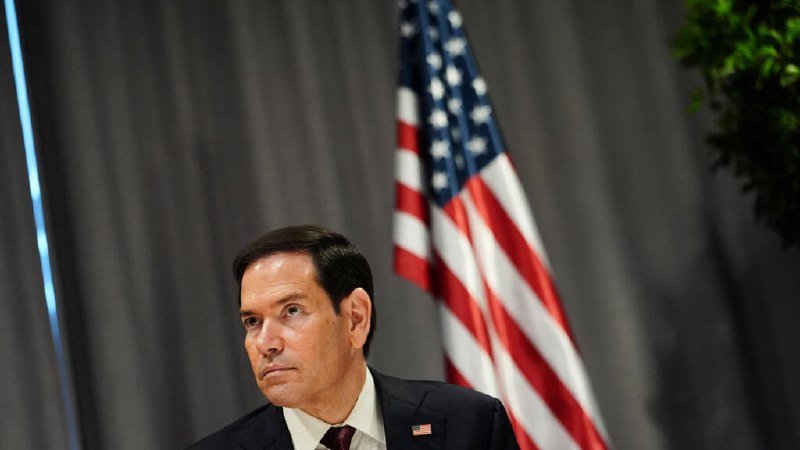
On 22 May 2026, the White House announced it would send an additional 5,000 US troops to Poland. The announcement arrived just one week after the Pentagon cancelled a planned deployment of 4,000 troops to the same country. The arithmetic is notable: a net increase, reversed course, announced by presidential fiat rather than through the usual inter-agency deliberation that typically precedes force movements of this scale.
This is the second significant US troop announcement involving Poland in under a fortnight. It follows a pattern familiar to observers of the current administration's foreign policy: a decision that reads as strategically coherent from a distance but dissolves under scrutiny into something closer to diplomatic improvisation.
The 5,000-troop figure itself demands context. NATO's eastern flank has hosted rotational US presences since 2017, when the 2016 Warsaw Summit commitments translated into persistent multipurpose battalion groups across Poland, the Baltic states, Romania, and Germany. Adding 5,000 troops to that existing architecture is real in numerical terms, but it is also the kind of move that can be announced and un-announced with equal speed, as the cancelled 4,000-troop deployment from the previous week demonstrates.
What the Announcement Signals—and to Whom
The administration framed the deployment as a commitment to NATO's collective defence principle, a message clearly aimed at European allies unnerved by earlier signals that the United States might reduce its footprint on the continent. Poland, which hosts the largest concentration of US forces in Europe and has invested heavily in its own defence spending, was a natural recipient of such reassurance.
But the timing raises questions the framing does not answer. The cancellation of the prior 4,000-troop deployment was not explained in the public record. An administration that cancels and then re-announces a troop movement within days does not project the kind of strategic predictability that allies depend upon for their own defence planning. Warsaw has been among the most consistent advocates for robust US presence in Europe, yet even a beneficiary of that presence has reason to wonder whether next month's announcement might cancel this one.
The announcement also carries a domestic signal. Proponents of a more restrained American footprint in Europe have argued that existing NATO commitments already provide sufficient deterrence. The White House's counter-argument—more boots on the ground, more visibly, in a frontline state—appeals to a different constituency: those who read military presence as evidence of strength regardless of operational purpose.
The Ukraine Complication
Embedded in the deployment announcement is a subtext that has become increasingly difficult to ignore. Administration officials have signalled in recent weeks a desire to reduce US involvement in the ongoing conflict in Ukraine, while simultaneously seeking ways to maintain leverage over its trajectory. Positioning additional forces in Poland—close enough to be credibly committed to European deterrence broadly, but not positioned for deployment eastward—reads as a reallocation of American military attention rather than an expansion of it.
Poland, which has taken in the largest share of Ukrainian refugees and contributed materially to Kyiv's defence effort, now receives additional American troops while Ukraine receives none of the weapons packages that once seemed routine. The optics are not neutral. They suggest an administration that has decided where American forces should not go—Ukraine—while signalling strength by increasing where they should: a NATO frontline state that is also, not coincidentally, among the alliance's most reliable defence spenders.
This is not strategy in any classical sense. It is posture, calibrated to multiple audiences simultaneously, and it carries the characteristic risks of posture: that it becomes its own justification, that it forecloses options without creating genuine deterrence.
The Structural Pattern
What is consistent across this announcement and the administration's broader foreign policy conduct is not a doctrine but a method: the deployment of unilateral military gestures as a substitute for negotiated outcomes. The AI executive order pause announced on the same day follows a similar logic—a willingness to signal in one direction and reverse within twenty-four hours, leaving partners and adversaries alike to parse what, if anything, remains stable in American policy.
European allies have absorbed this lesson. They have accelerated their own defence spending, deepened bilateral security ties with one another, and begun hedging against the possibility that the United States will not be a reliable partner across the full range of commitments it has made. Poland's decision to host additional American forces is simultaneously an endorsement of the alliance and an insurance policy against its fragility.
The 5,000 troops will arrive. They will reinforce a real commitment that the United States has to NATO's territorial integrity. They will also arrive in the context of an administration that has demonstrated, repeatedly, that announcements and reversals can occur within the same news cycle. Allies will welcome the troops. They will not mistake the welcome for permanence.
The Thread: This story broke on 22 May 2026 via BBC News and was amplified rapidly across wire and social channels. Monexus positioned the deployment within the broader context of NATO's eastern posture rather than as a standalone headline; the dominant wire framing led with the troop figure as a straightforward commitment, without addressing the prior week's cancellation.
Wire provenance
This editorial synthesis draws on the following public wire/social posts:
- https://x.com/unusual_whales/status/1923824198766883264
- https://x.com/Polymarket/status/1923612874369818823