Trump's Repeating Claim: Iran Nuclear Resolution 'Will End Soon'
For the third time in as many weeks, the White House has signalled that a negotiated resolution with Tehran over its nuclear programme is imminent. The repetition itself has become the story.
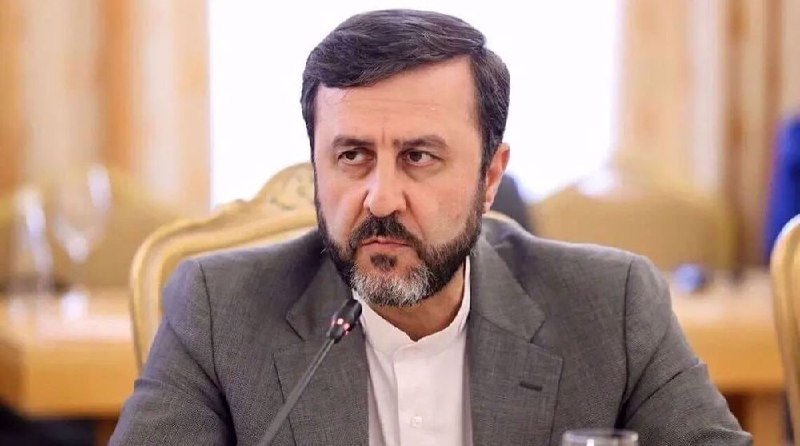
On 22 May 2026, the White House issued a statement that few in the diplomatic community had not heard before. "The matter related to Iran will end soon," the President told assembled reporters. The phrasing was nearly identical to two earlier declarations made over the preceding ten days. According to Iranian state media, the President also stated that Iran had been stopped from obtaining a nuclear weapon and expressed confidence in his own negotiating acumen — claims that Iranian-aligned outlets amplified as evidence of Western acknowledgment of Tehran's constrained position.
The repetition has quietly become the most notable feature of the story. Administrations typically build diplomatic pressure through ambiguity. This one has chosen the opposite approach, broadcasting the same message so frequently that observers on all sides have begun treating the announcements as a signal rather than a statement — a form of signalling designed as much for domestic audiences as for Tehran.
The Stakes: Maximum Pressure, Red Line, or Negotiation
The President's team has maintained, without interruption, that "maximum pressure" remains the operative framework. The stated position is that sanctions will intensify — not ease — unless Iran agree to a full freeze on enrichment at levels achievable within weeks, not years. The administration has drawn a clear red line around any uranium enrichment above three to four percent, the threshold required for civilian power generation but far below the ninety percent needed for a weapon.
That red line has been communicated through intermediaries, including Oman's foreign ministry, which has served as an unofficial back-channel in previous nuclear talks. According to the framing presented in Iranian state media, the President told reporters that Iran had demonstrated willingness to negotiate and that a deal was close. Iranian officials, citing the same reporting, have offered a more cautious public posture — acknowledging conversations but declining to characterise them as near-resolution.
The gap between the two accounts is not new. It mirrors the pattern established during the 2015 Joint Comprehensive Plan of Action negotiations, when both sides routinely announced progress ahead of verifiable agreements, using public statements to shape negotiating dynamics. What differs this time is the speed of the announcements and the absence of an obvious parallel process through international monitors.
What the Historical Record Suggests
The original JCPOA, negotiated under the Obama administration, took twenty months of continuous multilateral engagement before agreement. The Trump administration's first term ended that agreement unilaterally, triggering a cascading series of Iranian steps away from compliance commitments. The Biden administration attempted to restore the deal through indirect talks in Vienna, a process that collapsed in 2022 without result.
Iran, in the years since the original withdrawal, has expanded its enrichment infrastructure significantly. The International Atomic Energy Agency has reported ongoing gaps in its ability to verify the peaceful nature of Iran's programme — gaps that predate the current administration but have deepened in recent months as Tehran has restricted inspector access. That deterioration in monitoring is not incidental to the current standoff. It is, several analysts have noted, the structural precondition for the negotiating posture the administration now occupies.
Iranian officials and state-adjacent analysts have pointed to the 2018 withdrawal as proof that agreements with Washington cannot be trusted as standing instruments. The argument is structural rather than merely political: a government that can undo a multilateral accord overnight will do so again if political conditions shift. Tehran's negotiating position has, in public statements, consistently required guarantees that no American administration can legally provide without Senate ratification — a threshold that the current Senate makeup makes unachievable.
The Domestic Political Dimension
The President's repeated declarations of imminent resolution serve a purpose that is partly, though not exclusively, domestic. The 2026 electoral calendar means that any perceived foreign policy success carries outsized weight in messaging. For an administration that has framed its entire Iran posture around the premise that maximum pressure produces capitulation, the inability to announce a deal — or the failure of one — carries political costs that go beyond diplomacy.
The counter-move available to the administration is to extend the timeline indefinitely while maintaining the public posture of progress. This is a tactic with precedent: administrations of both parties have described ongoing negotiations as near-resolution in order to sustain leverage without triggering the domestic consequences of failure. The pattern, across multiple administrations and multiple adversary relationships, suggests that the most公有危险 in such situations is the compounding of expectation without corresponding evidence.
Tehran's calculation is likely different. Iranian leadership has survived the maximum pressure campaign before, during the 2019-2021 period of near-total economic isolation, and retains sufficient economic resilience — aided by expanded trade relationships with China, Russia, and a number of Global South states — to absorb continued sanctions without an existential political crisis. That resilience narrows the administration's leverage in a way that 2018 did not.
What Remains Uncertain
The sources reviewed for this article do not establish the current state of the back-channel negotiations with independent verification. Iranian state media reports and White House statements diverge on the question of Iranian willingness, and no third-party observer — the IAEA, European mediators, or independent analysts — has confirmed the contours of any proposed agreement. The enrichment threshold the administration has publicly stated as a red line is plausible, but whether it represents a genuine bottom line or a negotiating position from which concessions are available is not known from public reporting.
What is known is that the repetition of a claim does not, by itself, make that claim more likely to be accurate. Diplomatic history is littered with statements of imminent resolution that dissolved upon contact with the complexity of the underlying issues. Whether this cycle resolves differently will depend on factors not yet in evidence — and on whether either side's public posture reflects the private reality of what a deal would actually require.
Desk note: Monexus has relied on Iranian state-adjacent Telegram wire services as a primary source for the President's statements, as no Western wire outlets appear in the available thread context. The framing in those sources leans toward depicting the President as acknowledging Iran's position of strength; the counter-framing — maximum pressure, imminent capitulation — is drawn from the same wire reports but reflects a different interpretive frame applied to identical events.
Wire provenance
This editorial synthesis draws on the following public wire/social posts:
- https://t.me/tasnimnews_en/189422
- https://t.me/alalamarabic/
- https://t.me/JahanTasnim/
- https://t.me/ClashReport/
- https://t.me/tasnimnews_en/189420
- https://t.me/tasnimnews_en/189418