Trump's uranium ultimatum puts Hormuz at the center of a new energy standoff
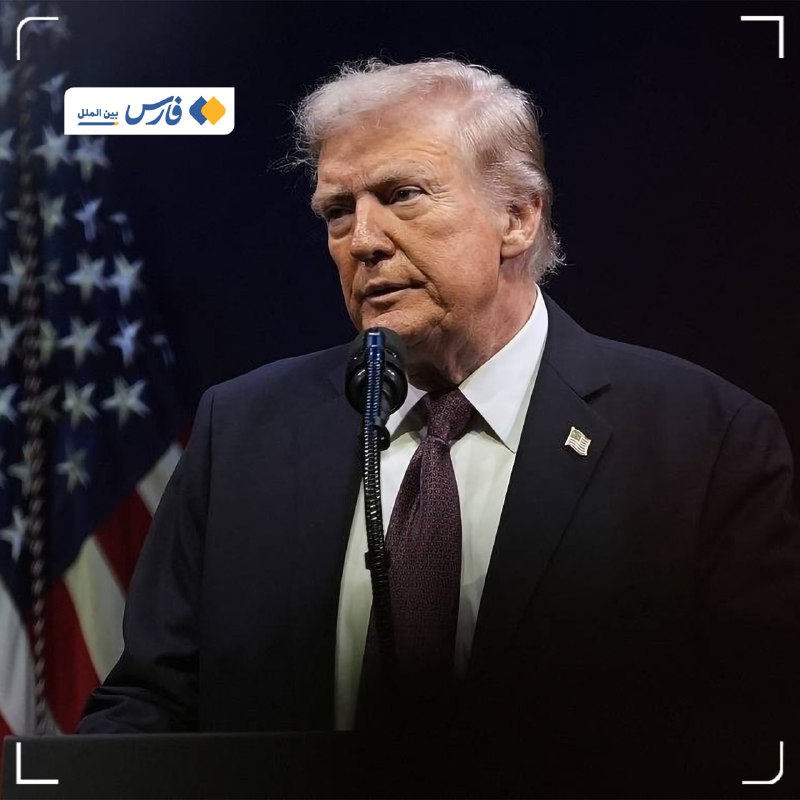
On 21 May 2026, President Donald Trump stated that the United States would retrieve Iran's uranium and most likely destroy it — a declaration that, if enacted, would mark a sharp escalation from two years of on-off negotiations over Tehran's nuclear programme. Speaking to reporters in Washington, Trump set aside a question about attending his son's wedding, telling the press pool: "This is not good timing for me. I have a thing called Iran and other things." That wry framing obscured a high-stakes gambit: the withdrawal of a significant portion of Tehran's enriched uranium, or the physical transfer of stockpiles under international supervision, has been a stated goal of US diplomacy since the collapse of the JCPOA framework in 2018.
The immediate trigger for the renewed pressure is unclear from public sources, but market observers noted a familiar linkage in the President's remarks. Trump told voters earlier that day that gasoline prices would fall "after Iran stops its actions" — a phrasing that ties the nuclear dispute directly to energy pricing, a political vulnerability the administration has repeatedly sought to address. The Polymarket betting market that afternoon assigned only a 2 percent probability to the scenario that Trump would agree to let Iran charge Hormuz transit fees, a concession Tehran has repeatedly signalled it would seek as part of any broader nuclear accord.
The statement from the White House followed a separate but related Reuters report that Iran's state-directed propaganda has undergone a discernible shift in recent weeks — moving from explicitly religious framing toward nationalist themes that foreground military strength and national unity. The change, documented by Reuters on 21 May 2026, appears to reflect domestic political calculations within Tehran as international pressure mounts, though the report does not link the propaganda pivot directly to the uranium dispute.
The Strait of Hormuz is the structural reality beneath every statement. Approximately 21 percent of the world's oil supply passes through the narrow waterway between Oman and Iran, according to long-standing Energy Information Administration data referenced across the analytical community. Any disruption — whether from military action, naval interdiction, or Tehran's threatened interference with commercial shipping — would transmit immediately into global energy prices. That concentration of risk is why Washington's uranium ultimatum is as much an energy story as it is a non-proliferation one.
The uranium question: what does Washington actually want?
The language of retrieval raises questions that administration statements have not yet answered. Enriched uranium held by Iran, under International Atomic Energy Agency monitoring, has been the subject of successive negotiation rounds, with Beijing and Moscow historically resistant to full sanctions escalation that would further isolate Tehran. Whether the United States is seeking physical transfer of the material to a third-country storage facility, a commitment to downblend the stockpile to non-weapons grade, or simply a verified accounting of the total inventory, remains unspecified in the public record as of this publication.
What is clear is that the Trump administration has abandoned the patient diplomacy of its early-term approach. A Polymarket market tracking the President's travel in 2026 showed a 26 percent probability that Trump would visit Canada — a lower figure than might be expected for a neighbouring ally, suggesting the administration's bandwidth is consumed by Middle East contingencies. The betting data is not predictive, but it is a rough proxy for how informed traders assess the President's near-term priorities.
The Iranian response, as of the most recent reporting, has not been formally articulated through official channels. Tehran's state media apparatus, which has shifted toward nationalist messaging as documented by Reuters, is capable of framing any US demand as an act of sovereignty violation — a domestic-political utility that complicates any back-channel negotiation.
Gasoline politics and the Hormuz premium
The connection Trump drew between Iranian actions and gasoline prices is politically legible even if the causal mechanism is contested. Iranian-aligned groups in the Gulf have previously demonstrated the capacity to target commercial shipping, and the country's geographic position gives it asymmetric leverage over a chokepoint that Western navies cannot fully neutralise without significant escalation. Oil markets, which had been factoring in a relatively stable Middle East outlook as 2026 opened, have been periodically repriced around the same Hormuz scenario that now sits closer to the center of the news cycle.
The 2 percent Polymarket probability assigned to Iran being permitted to charge Hormuz transit fees is itself a data point about the asymmetry of the current negotiation. Tehran has long argued that any normalisation of its nuclear status should include relief from secondary sanctions that limit its participation in global trade and finance. The question of shipping fees is a proxy for the broader argument about whether Iran can be integrated into the international system or must remain outside it — and the market's assignment of low probability to that outcome suggests the current US posture is not oriented toward concession.
If the uranium ultimatum fails to produce a negotiated outcome, the escalation path is familiar from prior cycles: additional sanctions designations, covert operations against nuclear infrastructure, or military strikes. Each carries distinct energy-market implications, but all converge on higher risk premiums for Gulf-origin crude.
The propaganda shift and what it signals
The Reuters reporting on 21 May documented Iran's transition from religious to nationalist propaganda themes — a move that analysts have interpreted as the regime calibrating its messaging for a population that is simultaneously economically strained and increasingly aware of the escalation risk. The Iranian authorities have periodically used nationalist framing to consolidate domestic support during periods of international tension, and the timing of the shift, coinciding with renewed US pressure on the nuclear file, fits a known pattern.
The report did not offer direct evidence of how the broader Iranian public receives these messaging shifts, and polling data on Iranian public opinion remains incomplete given the constraints on independent survey research inside the country. What the structural framing suggests, however, is that Tehran is managing two simultaneous pressures: the external demand for uranium accountability and the internal requirement to present any accommodation as a national victory rather than a capitulation.
That political requirement narrows the space for a face-saving compromise. If the Trump administration insists on physical removal or destruction of existing stockpiles, Tehran cannot present that outcome as anything other than a concession — a dynamic that historically has made Iranian governments resistant to agreements that lack cosmetic guarantees they can present as reciprocal.
Stakes and what comes next
The next phase of this confrontation will be determined by signals from both sides. The United States has made a public statement of intent; Iran has not yet responded in kind. Between those two points sits the Hormuz chokepoint, global oil markets, and the roughly 20 percent of world oil supply that cannot be routed around the Persian Gulf quickly under any scenario. The political cost of a disruption would be borne by consumers in the United States and Europe ahead of midterm elections, a calculation the White House clearly has in view given its explicit linkage of Iranian behaviour to gasoline prices.
The 2 percent probability attached to a Hormuz fee concession by the end of May suggests the market views a negotiated thaw as unlikely in the near term. That assessment may be correct. But the history of Gulf crises is littered with scenarios that analysts assigned low probability until they materialised with limited warning. The uranium ultimatum is, for now, a statement. Whether it becomes a crisis depends on what Tehran decides it can afford to do next.
This article was updated to reflect the Reuters reporting on Iran's propaganda strategy, published after the initial White House statement. Coverage at Monexus prioritised the energy-market implications of the Hormuz chokepoint over the diplomatic mechanics that dominated the wire ticker.
Wire provenance
This editorial synthesis draws on the following public wire/social posts:
- https://reut.rs/4v7sPwC