Trump's Uranium Ultimatum Leaves Europe Guessing — and Iran Bracing
European governments sought clarification from Washington after President Trump issued stark warnings about Iran's enriched uranium stockpile — only to find that even senior officials inside the State Department appeared unclear on what the ultimatum actually entailed.
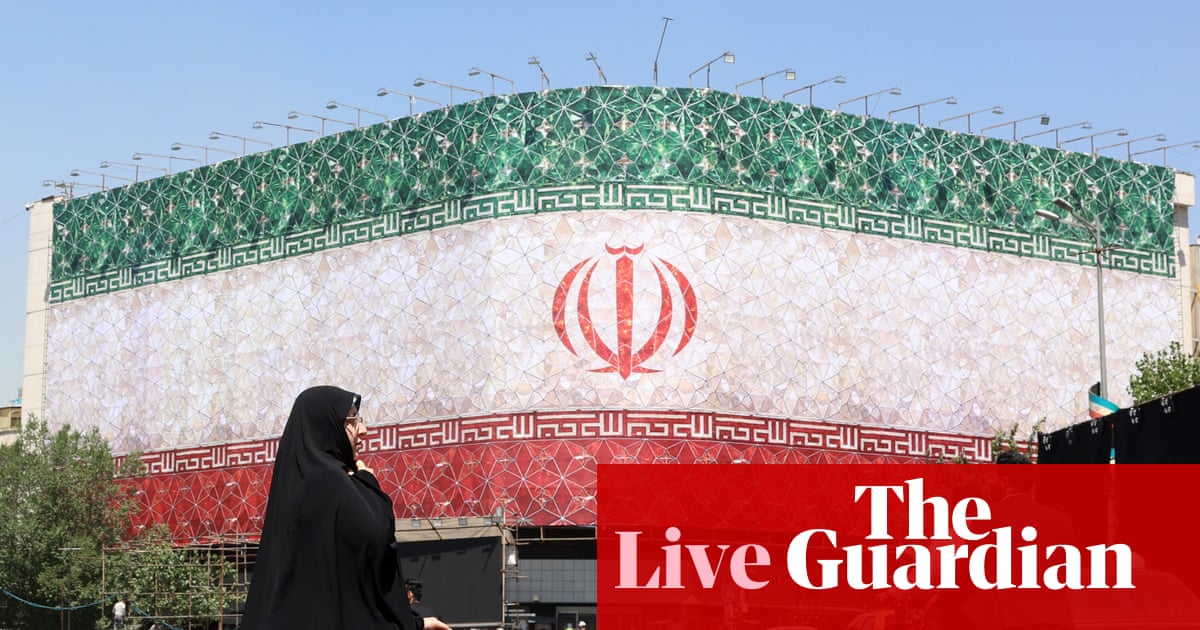
When the Trump administration delivered its latest broadside against Iran last week — warning that the United States would "take" Tehran's enriched uranium and "probably destroy it" — the message landed not only in Tehran but also in the chancelleries of Western Europe. Within hours, European governments had dispatched quiet queries to the State Department in Washington, seeking to understand whether the language represented a new policy direction, a negotiating tactic, or something else entirely.
The answer they received, according to one European diplomat briefed on the exchanges, was itself a cause for concern: the officials they consulted could not offer a clear explanation of what the president meant. The administration's public position was, in the words of the diplomat, "unsettling in its own right — not because it was threatening, but because nobody on the American side seemed certain what the threat entailed."
The episode underscores a recurring problem in the current administration's approach to nuclear diplomacy. The rhetoric arrives with force and regularity; the policy architecture beneath it often remains opaque, even to allies who are expected to line up in support.
The Language on the Table
The substance of the president's public statements on Iran has been unambiguous in its aggression. "Iran can't keep its enriched uranium," Trump told reporters at the White House on 21 May 2026. "We're going to take it, we need it, and we'll probably destroy it." He added that Iran would provide the United States with "what we want, one way or another."
The phrasing is notable for what it omits. It does not specify under what legal authority the United States would physically remove another state's nuclear material. It does not indicate whether the administration is contemplating a strike on Iranian nuclear facilities, a covert operation, a negotiated surrender of stockpiles, or some combination thereof. It does not acknowledge that Iran's enriched uranium, while a serious proliferation concern, is subject to international monitoring agreements that the United States itself is party to.
European capitals have spent the better part of two decades investing diplomatic capital in containing Iran's nuclear programme through a combination of sanctions, incentives, and the Joint Comprehensive Plan of Action — the 2015 deal that the Trump administration tore up in 2018. The current ultimatum, whatever its ultimate intent, sits uneasily with that legacy. Three European governments — France, Germany, and Britain — have maintained active diplomatic channels with Tehran even as they aligned with US sanctions pressure. Those channels are now being tested.
A spokesperson for the French foreign ministry declined to comment on the specifics of the inter-government communications but confirmed that "maintaining dialogue with all parties remains essential to regional stability." Berlin offered a similar formulation. London did not respond to a request for comment.
What "Retrieve" Actually Means
The administration's preferred verb — "retrieve" — carries its own ambiguity. Iran's enriched uranium stockpile, accumulated over decades of nuclear development, is currently subject to International Atomic Energy Agency inspections under the terms of its Safeguards Agreement. The material is declared, catalogued, and subject to monitored storage at declared facilities.
The IAEA declined to comment on the administration's statements. A senior agency official, speaking on condition of anonymity, noted only that all declared nuclear material in Iran remains under continuous agency surveillance in accordance with the Non-Proliferation Treaty.
If the administration is contemplating a forced removal of Iranian nuclear material, it would require a basis in international law that does not currently exist. The UN Security Council would need to authorize such an operation, and Russia and China — both with veto power and both maintaining their own strategic relationships with Tehran — would almost certainly block such a resolution. Absent a new Security Council mandate, any unilateral US action to physically seize Iranian nuclear material would constitute a violation of the Vienna Conventions governing state conduct.
The alternative reading — that the administration is using rhetoric as leverage in a renewed push for a new nuclear agreement — is more consistent with the historical pattern of Trump-era negotiations. The president has repeatedly used maximalist public language while delegating to aides who then engage in quieter talks designed to produce a more limited outcome. That pattern, however, depends on the other side believing the maximalist language is credible. And credibility, in this instance, appears to have been damaged by the very confusion it produced in allied capitals.
The Domestic Calculation
Trump himself offered an additional clue about the motivation behind the Iran escalation in the same period. "Gasoline prices will fall after Iran stops its actions," he told supporters at a campaign-style event on 21 May 2026. The statement was notable not for what it said about nuclear policy but for what it revealed about the political architecture the administration is operating within.
The president, facing sustained pressure over fuel prices ahead of midterm electoral calculations, has sought to attach the Iran question to household pump costs. The linkage is, on its face, dubious: Iranian oil production represents a relatively small share of global supply, and the geopolitical risk premium associated with heightened US-Iran tensions tends to push prices upward rather than downward in the short term. But the political logic is clear enough — an enemy abroad who can be blamed for pain at home serves a purpose regardless of the causal relationship.
The strategy carries risks for the administration. Oil markets respond to supply signals and risk perception, not political messaging. The current elevated state of US-Iran tensions has contributed to a modest but measurable increase in crude futures since April. If the administration escalates further — through new sanctions designations, naval movements in the Gulf, or kinetic action — the effect on prices could run precisely counter to the political objective. The president who ran on cheap fuel is now associated with a set of decisions that could make fuel more expensive.
A Pattern, Not an Incident
What the European diplomatic episode reveals is not simply a problem with a single statement. It reflects a structural issue in how the current administration communicates with its allies. Foreign policy, particularly in the nuclear domain, depends on credibility — the ability of counterparties to predict how a government will behave under specific conditions. That predictability is what allows for deterrence, containment, and negotiated restraint. When a major power's statements cannot be decoded by its own senior officials, the entire architecture becomes unstable.
Allies in Europe have learned to navigate this uncertainty through a combination of quiet direct engagement, selective public ambiguity, and the cultivation of relationships with mid-level officials who often have more granular knowledge of actual policy intent than the principals do. The system works, but imperfectly, and it absorbs significant diplomatic resources that might otherwise go toward actual negotiation.
Iran, for its part, appears to be maintaining a posture of controlled defiance. Iranian officials have not issued a direct public response to the president's statements, though state-adjacent media has carried commentary characterizing the ultimatum as an electoral stunt. The absence of a sharp Iranian response may itself be a signal — Tehran appears to be waiting for the administration to either clarify or escalate, and to calibrate its own response accordingly.
The Stakes Ahead
The short-term trajectory depends on decisions not yet made. If the administration moves toward a negotiated outcome — one in which Iran agrees to reduce its enrichment activity and open itself to enhanced inspections in exchange for partial sanctions relief — the European allies are prepared to support the effort. France, Germany, and Britain have maintained a joint diplomatic mechanism specifically for this scenario.
If, however, the administration opts for a more confrontational approach — new sanctions designations, naval deployments, or strikes on Iranian nuclear facilities — the alliance cohesion will be tested severely. European governments have spent three years aligning with US maximum-pressure campaigns on Russia. The political bandwidth for a second simultaneous maximum-pressure campaign on Iran is limited, and the public opinion calculus in several key capitals runs against direct military involvement in the Middle East.
The underlying question — whether Iran will be permitted to maintain a civilian nuclear programme while its enriched uranium stockpile remains — is not new. It has been the central dispute in US-Iranian relations since the early 2000s. What is new is the absence of a coherent American position that allies can understand, support, or even oppose in a structured way. Until that changes, the uncertainty itself becomes the policy. And in nuclear diplomacy, uncertainty is not stability. It is its opposite.
This publication covered the uranium ultimatum primarily through Western diplomatic channels and US administration statements. The framing reflects the absence of Iranian government commentary on the record during the period in question.