Trump's uranium ultimatum is all pressure, no policy
Trump's demand that Iran surrender its enriched uranium is constitutionally shaky, operationally murky, and disconnected from the legal architecture meant to govern nuclear material. It sounds like a negotiating position. It isn't one yet.
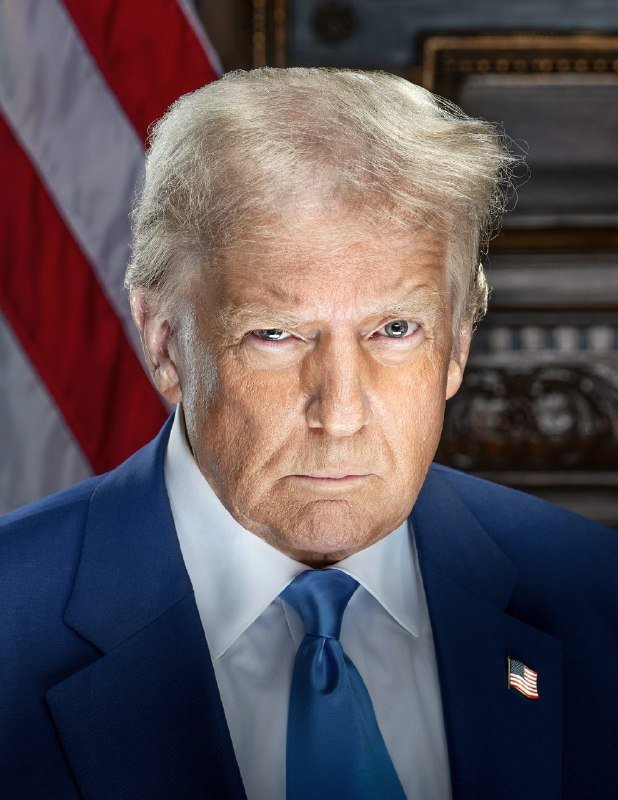
On 21 May 2026, standing outside the White House, President Trump delivered what has become a familiar formulation of his approach to Iran: the United States would take the country's enriched uranium, use it, and probably destroy the remainder. "Iran can't keep its enriched uranium," he said. "We're going to take it, we need it, and we'll probably destroy it." Iran, he added, was going to give Washington what it wanted "one way or another." The phrasing had the cadence of a settled outcome rather than an opening gambit.
The statement deserves scrutiny that initial coverage did not consistently provide. Strip away the rhetoric and what remains is a demand with no visible legal basis, no credible enforcement mechanism, and a strategic logic that cuts against itself.
The legal vacuum at the centre of the demand
International law does not grant the United States unilateral title to another state's nuclear material simply because that state is under sanctions or is the subject of American political displeasure. The Nuclear Non-Proliferation Treaty, to which both the US and Iran are parties, governs the transfer and use of weapons-grade uranium through a framework of safeguards agreements administered by the International Atomic Energy Agency. Iran's stock of enriched uranium — the concentration level matters enormously here, and the sources do not specify it — is subject to IAEA monitoring under those agreements. A unilateral American seizure, outside any UN Security Council mandate or bilateral arrangement with Tehran, would constitute a violation of Iran's sovereign rights under the NPT.
The Trump administration has shown consistent indifference to institutional constraints it did not design. But the precedent being set — that any nuclear aspirant who accumulates material may have it confiscated by a more powerful state — would unravel the non-proliferation architecture Washington has spent sixty years constructing. That is not a diplomatic negotiating position. That is the demolition of a regime.
What Iran actually has
The Polymarket market on whether Trump will agree to let Iran charge Hormuz Strait transit fees settled at a 2% implied probability as of 21 May 2026. The market is a coarse instrument, but it captures something real: the structural asymmetry between the two parties. Iran controls the Hormuz Strait. Approximately 20% of global oil shipments pass through it. No amount of presidential rhetoric changes that geography.
Iran's enriched uranium stockpile, accumulated over years of incremental withdrawal from the 2015 Joint Comprehensive Plan of Action, represents negotiating equity — not just a proliferation concern. Tehran understands this. The Islamic Republic has historically extracted maximum leverage from minimum material. The stockpiles are not a contingency. They are the contingency. Demanding their surrender without offering meaningful sanctions relief, diplomatic normalisation, or security guarantees is not a negotiation. It is a list of demands with no reciprocal component.
The gasoline price linkage
Trump has stated explicitly that gasoline prices will fall "after Iran stops its actions." This framing — that Iranian behaviour is the proximate cause of American fuel costs — is structurally convenient for an administration that entered office promising cheap energy but has struggled to move the pump. Oil markets are global, demand-driven, and set by OPEC+ production decisions in which Iran is a secondary factor. Saudi Arabia, Russia, and UAE production policy moves markets. Iranian exports, constrained by sanctions, do not.
The linkage is not analytically coherent. It is, however, narratively useful: it positions Iranian suffering as the mechanism by which American consumers benefit. That framing treats Iran not as a negotiating counterparty with interests to accommodate, but as a party whose submission is a prerequisite for American prosperity. The history of diplomacy with Tehran — including the JCPOA, which Iran complied with until the US withdrew in 2018 — suggests the opposite lesson. Compromise produced results. Maximalist demands produced nothing.
What this publication finds
The uranium ultimatum is, at present, a statement of intent without an implementation pathway. There is no congressional authorisation for a raid on Iranian nuclear facilities. There is no UN mandate. There is no evidence of an allied coalition willing to participate in what would be, by any legal definition, an act of armed interdiction against a sovereign state's nuclear infrastructure.
That does not mean it should be dismissed. Presidential statements of this kind have a way of generating their own logic. An administration that has repeatedly stated it will take a specific action eventually faces pressure to demonstrate that the statement was not empty. The refrigerant rule delay, announced on the same day by the same administration, suggests a pattern: regulatory rollback deployed to ease short-term political costs while harder, more consequential confrontations are left unresolved.
The Iran question is not a weekend scheduling inconvenience, whatever the President's remark about his son's wedding suggested. It is a structured geopolitical challenge requiring legal cover, allied consensus, and an endgame. None of those are visible in the current posture. What is visible is a demand so maximalist it functions as a conversation-ender rather than a conversation-opener — and a reminder that the gap between a presidential statement and a policy outcome remains, as always, vast.
This article reflects the editorial position of Monexus on the Iran nuclear file as outlined in its conflict-desk compass.
Wire provenance
This editorial synthesis draws on the following public wire/social posts:
- http://reut.rs/3RDNvgZ
- https://x.com/SprinterPress/status/1923567869428482443