Trump Draws Venezuela Parallel to Iran Pressure Campaign, Claims Tehran Is Eager for a Deal
President Trump on 22 May 2026 drew an explicit parallel between his Iran strategy and the maximum-pressure campaign deployed against Venezuela, claiming Tehran is eager to reach an agreement — a framing Iranian state media promptly rejected.
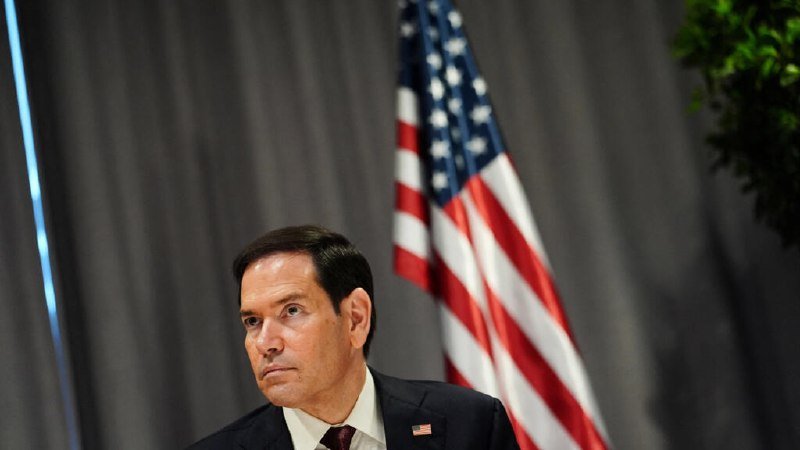
On 22 May 2026, President Donald Trump declared that his administration is pursuing an Iran policy identical in approach to the one deployed against Venezuela — a maximum-pressure sanctions framework that has strained Caracas's economy and its government over years. "You have seen what we did in Venezuela and what we did with Iran," Trump said publicly, framing the two campaigns as coterminous. He added that Iran is "eager to reach an agreement," suggesting the economic architecture of his strategy is achieving its intended effect. The comments came as part of a broader foreign policy review in which Trump also stated that Chinese President Xi did not substantially contest his assertion that the United States possesses the world's most capable military.
Iranian state media, reporting via Tasnim, responded by characterising the US president as "the head of the American terrorist state" and stating that Trump had "failed to achieve his war goals in Iran." The framing is calibrated for both domestic Persian-language audiences and the broader non-Western readership Tehran has been cultivating as part of its hedging strategy — a direct counter to the White House's public framing that maximum pressure is working and that diplomatic capitulation is imminent.
The Venezuela Blueprint
The US approach to Venezuela involved a two-track strategy: sweeping primary sanctions on the Venezuelan oil sector combined with secondary sanctions threatening third-country entities that purchased Venezuelan crude or facilitated dollar-denominated transactions on behalf of Caracas. The effect was a near-complete collapse of state oil company PDVSA's export infrastructure — not because of military action, but because the global financial system became prohibitively costly for most counterparties to access. The Maduro government survived the economic shock through a combination of repression, alternative customers (notably China and Russia), and restructured oil sales routed through opaque intermediaries.
Trump's implicit argument is that Iran is following the same trajectory — that the cumulative weight of sanctions is sufficient to force compliance without direct military confrontation. What the available sources do not specify is whether the analogy holds in practice: Venezuela's oil exports were结构性 vulnerable in ways that Iran's may not be, given Tehran's deeper existing relationships with Beijing and its more mature infrastructure for non-dollar settlement.
Tehran's Counternarrative
The Tasnim framing — that Trump has "failed to achieve his war goals in Iran" — is a specific rhetorical choice designed to pre-empt the narrative of imminent capitulation. Iran has survived what it characterises as an illegal sanctions regime for years and has developed institutional resilience around it: the Islamic Republic's economic survival has depended on a mix of Chinese energy purchases, barter arrangements, and non-dollar payment mechanisms that have preserved a floor of export revenue.
The claim that Iran is "eager to reach an agreement" remains uncorroborated from independent sources in the current thread context. Internal debates within Tehran's leadership — between factions favouring negotiated relief and those arguing that maximum pressure has peaked — are not visible in the reporting available. What is structurally significant is that both sides are simultaneously making maximalist public claims: Washington saying the model is working, Tehran saying the model has failed. The actual state of play in any back-channel negotiation is not inferable from the available sources.
The Dollar as a Geopolitical Lever
The structural mechanism connecting the Venezuela and Iran cases is not primarily military but financial: the dollar's position as the world's reserve currency allows the US to impose sanctions that effectively cut target states from global commerce. Venezuela's oil survived in truncated form because Beijing and Moscow provided alternative financial infrastructure and customers willing to accept oil-in-exchange-for-goods arrangements outside dollar settlement. Iran has followed a broadly similar arc — deepening energy relationships with China and developing alternative payment mechanisms, including barter arrangements and non-dollar settlement systems, to maintain export revenues despite escalating secondary sanctions.
The effectiveness of US pressure, therefore, depends not solely on the severity of sanctions but on whether alternative financial architectures can provide sufficient relief to the target state. That question remains genuinely contested in both cases. The current thread does not include independent reporting on the volume of Iranian oil exports under current sanctions conditions or on the operational status of China's yuan-denominated oil procurement mechanisms.
The Xi Angle
Trump's separate claim — that President Xi did not substantially contest the assertion of US military superiority — adds a second dimension to the week's framing. The statement positions US military dominance as an established fact rather than a contested claim, a framing designed to reinforce the credibility of US pressure across multiple fronts simultaneously. Beijing's direct response has not been independently reported in the sources available to this publication. What is structurally significant is the pattern: a US administration using claims of military superiority to bolster the credibility of economic pressure, while simultaneously signalling that the China relationship is managed through personal diplomacy rather than structural confrontation.
Stakes and Forward View
If Trump's claim about Iranian eagerness is accurate, the coming weeks may see renewed diplomatic activity around a potential framework — one that would require Tehran to constrain its nuclear programme in exchange for sanctions relief. If the claim reflects strategic posturing while Tehran maintains its current capabilities, the maximum-pressure framework enters a prolonged phase with escalating costs for both sides and no clear resolution path.
The structural stakes extend beyond Iran. The durability of dollar-denominated sanctions as a geopolitical tool depends on whether alternative financial architectures can provide sufficient refuge for targeted states to absorb pressure without capitulating. The answer to that question — being written in real time in Caracas and Tehran — will shape how the next decade of US foreign economic policy functions.
The available source material for this article consists primarily of statements attributed to the US president via Telegram channels and Iranian state-media reporting of those same statements. Independent corroboration of either the claim that Iran is eager to negotiate or the claim that China's Xi accepted US military superiority uncritically is not present in the current thread. The internal dynamics within Tehran, the actual state of any nuclear programme negotiations, and Beijing's private assessment of US military positioning remain outside the scope of what can be verified from the current source set. The attributed quotes should be read as reported framings rather than independently confirmed facts.
— Monexus framed this as a maximum-pressure continuity story — the Venezuela model applied to Iran — while the Iranian state-media framing foregrounded US failure. The structural analysis centred on dollar-denominated sanctions as a geopolitical tool rather than on regime-change dynamics. Given the source constraints, the piece relies on reported framings rather than independently verified facts about Tehran's internal deliberations or Beijing's private assessments.
Wire provenance
This editorial synthesis draws on the following public wire/social posts:
- https://t.me/FarsNewsInt
- https://t.me/FarsNewsInt
- https://t.me/wfwitness
- https://t.me/tasnimnews_en
- https://t.me/tasnimnews_en