Ukraine's Drone Campaign Targets Russian Energy Security as Troop Losses Mount
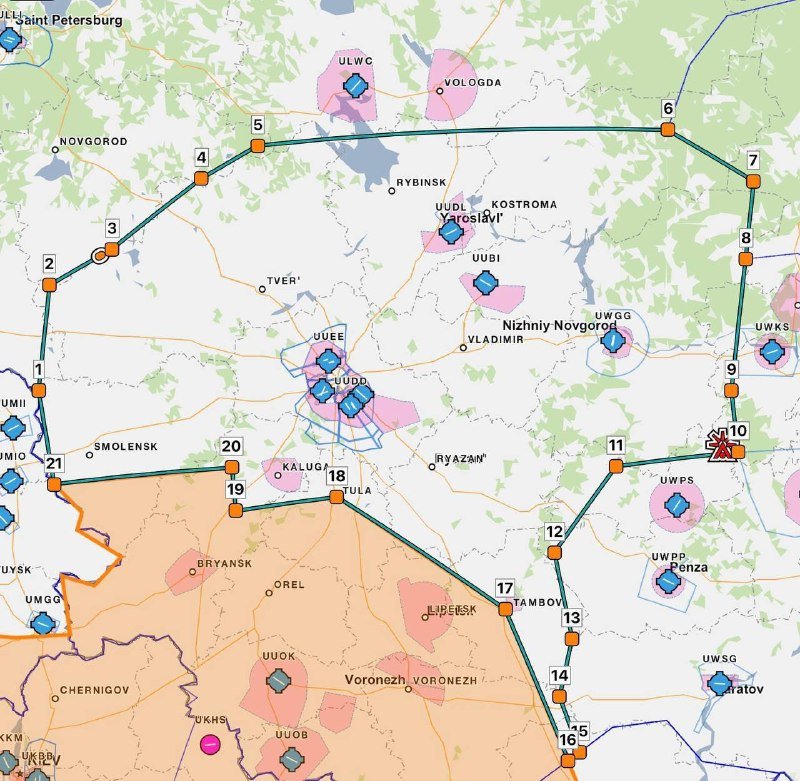
On 22 May 2026, Ukrainian officials released figures indicating that Russia has sustained more than 145,000 battlefield casualties since the start of the year — 86,000 killed in action and at least 59,000 seriously wounded, according to President Volodymyr Zelensky. Hours later, a separate accounting from Ukrainian military sources described a parallel campaign of perhaps equal strategic consequence: 24 of Russia's 33 major refineries have now been struck since the full-scale invasion began in 2022. Only two facilities — Omsk and Angarsk, both well beyond the Ural mountain range — remain officially outside effective Ukrainian drone range. The two numbers are not unrelated.
The systematic targeting of Russian energy infrastructure represents one of the more consequential and underreported dimensions of this war. When Ukraine's drones disable a refinery, they do not simply destroy a physical asset. They degrade the fuel supply that moves Russian armored columns, powers aviation, and keeps the domestic economy sufficiently functional to sustain a military mobilisation of this scale. The strikes are a form of logistics denial — slower than a missile barrage, less visible than a battlefield victory, but potentially more corrosive over time.
The Scale of Degradation
Russia's oil refining sector has absorbed a level of damage without recent parallel in modern conflict. Open-source analysts tracking the facilities via satellite imagery and local incident reports have confirmed strikes at major installations including the 300,000-barrel-per-day Ryazan facility, the Novokuybyshevsk complex, and the Salavat refinery in Bashkortostan. The cumulative effect has removed a substantial portion of Russia's downstream capacity from operation. Before the strikes began, Russia processed roughly 6.5 million barrels per day across its refinery network. The current operational rate is materially lower, though independent verification of precise figures remains difficult given the fog of war.
The strategic logic is direct: every barrel of domestic refining capacity that goes offline forces Russia toward a choice between supplying its military and supplying its civilian economy. During a prolonged ground campaign requiring constant fuel flows to forward positions, that constraint compounds quickly. Russia has attempted to compensate by increasing exports of crude oil — generating revenue — while simultaneously importing refined petroleum products from Belarus and, reportedly, from traders operating through third-country intermediaries. The workaround is costly and exposes Russia to secondary sanctions risk that its buyers are becoming less willing to take.
Drone Technology and the Asymmetric Advantage
The Ukrainian drone programme has matured into something qualitatively different from the improvised systems of 2022. The strikes reaching Omsk and Angarsk imply operational radii that place the vast majority of European Russia within range of launch points inside or just beyond Ukrainian-controlled territory. Fixed-wing Lancet-type drones, naval sea-drones in the Black Sea, and purpose-built strike UAVs now constitute a layered capability that has forced Russia to divert air defence assets, rearrange logistics routes, and accept a degree of infrastructure vulnerability that Moscow's military planners did not anticipate.
This is not a marginal effect. It is a structural change in what a smaller power can accomplish against a larger adversary with superior conventional forces. Russia's air defence network, built around systems like the S-300 and S-400, was designed to counter aircraft and ballistic missiles — not to handle dozens of simultaneous low-altitude drone incursions spread across thousands of kilometres of front and rear area. The gap between system capability and operational reality has been costly, both in destroyed equipment and in the attention of air defence crews who cannot be everywhere at once.
Economic Pressure Without Escalation
The calculus for Ukrainian commanders targeting Russian energy facilities involves more than immediate military effect. The refineries struck since 2022 serve a dual purpose: they are critical nodes in Russia's wartime logistics and they are symbols of an energy superpower's vulnerability. Reducing them sends a signal to Moscow's leadership that the war's costs will not be contained to the front line.
Russia has, for its part, sought to manage the damage without public acknowledgment of its scale. State media has covered individual strikes but has not reported cumulative capacity losses. Official statements have attributed fuel price increases to seasonal factors and international market movements rather than domestic supply disruptions. The information management is deliberate — an admission that Ukrainian drones have systematically dismantled a meaningful fraction of Russia's energy security would be difficult to frame as anything other than a strategic setback.
Whether the refinery campaign crosses escalation thresholds that Western backers find uncomfortable is a question that has followed the programme since its early stages. The Biden administration initially placed informal restrictions on Ukrainian use of US-provided weapons for strikes inside Russia. Those restrictions have been progressively relaxed. The current posture permits Ukrainian forces considerable latitude in selecting targets, a reflection in part of the difficulty Western governments face in defining where legitimate counterforce ends and provocative escalation begins. The sources do not indicate that any new formal restrictions are under consideration as of mid-May 2026.
What Remains Contested
The casualty figures released by President Zelensky's office on 22 May are Ukrainian government data. They cannot be independently verified. The International Federation for Human Rights and other monitoring organisations have documented Russian military losses through open-source means — social media posts from Russian regional authorities, obituary notices, hospital records — and those independent tallies generally track lower than Kyiv's official accounting, though they are also incomplete. A precise, agreed figure for Russian losses does not exist, and neither side has incentive to publish one that is verifiably accurate. The directional trend — that Russian forces are absorbing very high casualties while sustaining a grinding offensive — is consistent across multiple source types, even where the absolute numbers differ.
Similarly, the assessment that Ukrainian drone strikes have meaningfully degraded Russian fuel availability is a conclusion drawn from partial evidence. Satellite imagery shows damage at confirmed targets. Trade data shows increased Russian refined product imports. But the precise scale of operational capacity lost versus capacity restored through repairs, the degree to which Russia's crude export stream has been redirected to compensate, and the extent to which military fuel allocations have been prioritised at civilian expense — all of these are matters on which the sources offer only directional signals rather than definitive quantification.
The broader pattern is clear enough. Ukraine has found a way to impose costs on a larger adversary that go beyond the daily casualty count on the battlefield. The strikes on Russian refineries represent a sustained campaign of economic pressure that exploits a genuine vulnerability in Russia's military and industrial base. Whether the cumulative effect is sufficient to alter the trajectory of the war is a question that will not be answered until the fighting ends — or until one side's capacity to sustain it finally breaks.
This article draws on reporting from Kyiv Post, WarTranslated, and open-source intelligence analysis via Telegram channels covering the conflict.
Wire provenance
This editorial synthesis draws on the following public wire/social posts:
- https://t.me/Kyivpost_official/12489
- https://t.me/wartranslated/8943
- https://t.me/osintlive/5621