US-Iran Talks Advance But Uranium Demand Threatens Deal Collapse
Tehran has warned that any demand to surrender its highly enriched uranium stockpile will kill negotiations, even as a Qatari delegation continues shuttle diplomacy between the two sides.
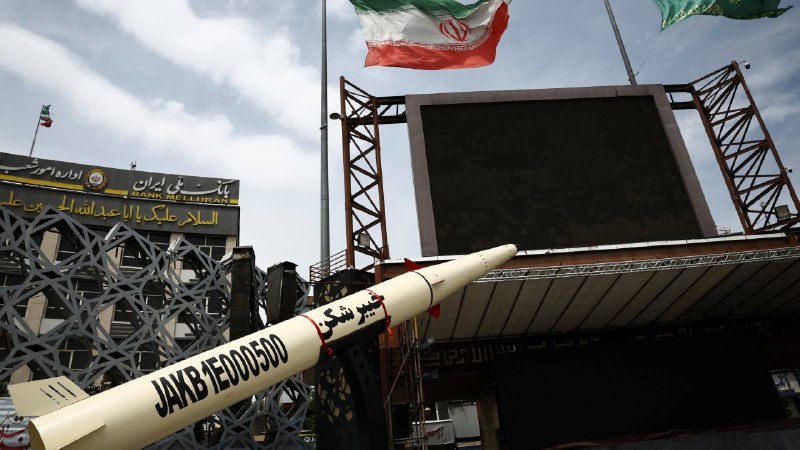
Iran has told the United States that any demand for Tehran to surrender its stockpile of highly enriched uranium will be met with an outright refusal, according to statements recorded on 22 May 2026. The warning came as a Qatari diplomatic delegation held talks in Tehran and market participants tracked the negotiations as a potential risk-on catalyst for global equities.
The position, reported by Middle East Eye citing live updates from the Iranian side, places the two governments at sharp variance over the most sensitive element of any prospective nuclear arrangement. Uranium enrichment at elevated levels can serve both civilian energy programs and, at sufficient concentration, weapons development — a duality that has defined more than two decades of international dispute over the Islamic Republic's atomic activities.
Where the Talks Stand
Negotiations between US and Iranian officials have been conducted through Omani mediation, with Qatar operating a parallel back-channel to keep communication lines open. The format has been standard practice since the collapse of the Joint Comprehensive Plan of Action in 2018, when the Trump administration withdrew and reimposed sweeping sanctions in exchange for partial sanctions relief that Tehran had been receiving.
According to Middle East Eye's live briefing, a Qatari delegation was in Tehran on 22 May engaging officials directly as diplomatic efforts continue around negotiations involving Iran. Qatari intermediaries have played this role repeatedly, leveraging Doha's unusual standing with both Washington and Tehran — a product of its hosting of US military assets and its sustained diplomatic contact with the Iranian leadership.
The talks have not broken down. But they have not advanced either, and Iranian officials are explicitly framing the gap as one of principle, not procedure.
The Uranium Red Line
Iran's position on its enrichment program is non-negotiable, officials in Tehran have stated repeatedly. The country has accumulated a substantial stockpile of uranium enriched to various levels over years of incremental advancement since the 2015 deal was abandoned. Under the original JCPOA framework, Iran was permitted to enrich only up to 3.67 percent purity, far below weapons-grade levels of roughly 90 percent. Enriched uranium at lower levels has civilian applications in power generation and medical isotope production.
The Polymarket post, flagging Tehran's stated position on 22 May 2026, confirms that any deal conditioned on handing over already-enriched material is a deal Iran will not sign. The framing is absolute: no deal if the US demands Tehran hand over its highly enriched uranium.
This creates a structural problem for negotiators on both sides. Washington has sought constraints on the program that extend beyond the original JCPOA terms, including limitations on centrifuge research and a permanent cap on enrichment levels. Tehran insists any new arrangement must acknowledge its right to enrichment for peaceful purposes under the Nuclear Non-Proliferation Treaty, and refuses to treat its existing stockpile as negotiable.
The gap is not new. It has defined every round of nuclear diplomacy since 2003. What is new, according to reporting from the wire services, is the market's attention to it — and the degree to which even an interim framework, stopping short of a full agreement, is being priced as a potential catalyst.
Markets Respond to Diplomatic Signals
Wall Street registered the diplomatic movement on 22 May 2026, with major indices climbing and the Dow Jones Industrial Average reaching a record high, per Reuters reporting. The connection between nuclear talks and equity market performance reflects two distinct dynamics: the expectation that a normalization of Iranian oil exports would loosen supply constraints in global energy markets, and the broader signal that reduced confrontation between Washington and Tehran would diminish a persistent geopolitical risk premium embedded in Gulf-state asset valuations.
The Reuters analysis noted that US-Iran talks were specifically cited in market commentary as a factor in the session's risk-on positioning. Markets have treated the resumption of diplomacy — however incomplete — as a directional positive. The mechanism is straightforward: fewer sanctions on Iranian crude production would add barrels to a market still absorbing the effects of OPEC+ production discipline and the disruption of Russian energy exports routed through Western financial infrastructure.
The Dow at a record high while talks are unresolved — and with the uranium question still outstanding — reflects the market's tendency to price in partial progress while leaving the hard question for later.
What Comes Next
The immediate path forward runs through the remaining gaps, not around them. The uranium question is not a technical detail awaiting creative drafting: it is a substantive disagreement about whether Iran may retain what it has already produced. Washington has not publicly disclosed whether it will formally press the demand or treat the existing stockpile as a fait accompli subject to monitoring rather than transfer.
Qatari and Omani intermediaries will continue their shuttle role. The format has survived repeated failures precisely because both capitals maintain an interest in the channel remaining open. A breakdown in talks does not typically end the diplomatic infrastructure — it suspends it, and the infrastructure reasserts itself when pressure builds again.
For Tehran, the calculus is partly economic and partly political. Sanctions have inflicted significant damage on living standards and state revenue, giving the Iranian negotiating team genuine incentive to reach an accommodation. But domestic political constraints — particularly from institutions resistant to any arrangement perceived as capitulation — limit how far the government can move without appearing to concede under pressure.
For Washington, the calculation involves the regional security architecture, the broader containment strategy toward Iran, and the domestic political consequences of being seen normalizing relations with a government under sanctions for multiple reasons beyond the nuclear file.
Whether the uranium red line holds — or whether both sides find language that allows them to claim compliance with incompatible positions — will determine whether this round of diplomacy produces more than a temporary easing of tensions and a market rally.
This article was updated throughout 22 May 2026 to reflect live reporting from Middle East Eye, Reuters market coverage, and Polymarket position statements.
Wire provenance
This editorial synthesis draws on the following public wire/social posts:
- http://reut.rs/4dpIq4u