US Sanctions Iran's Beirut Envoy as Financial Pressure Campaign Targets Regional Architecture
Washington's targeting of Mohammad Reza Raouf Sheibani escalates a financial pressure campaign that Tehran says violates diplomatic norms, in a week that also saw broader US anti-Hezbollah enforcement action.
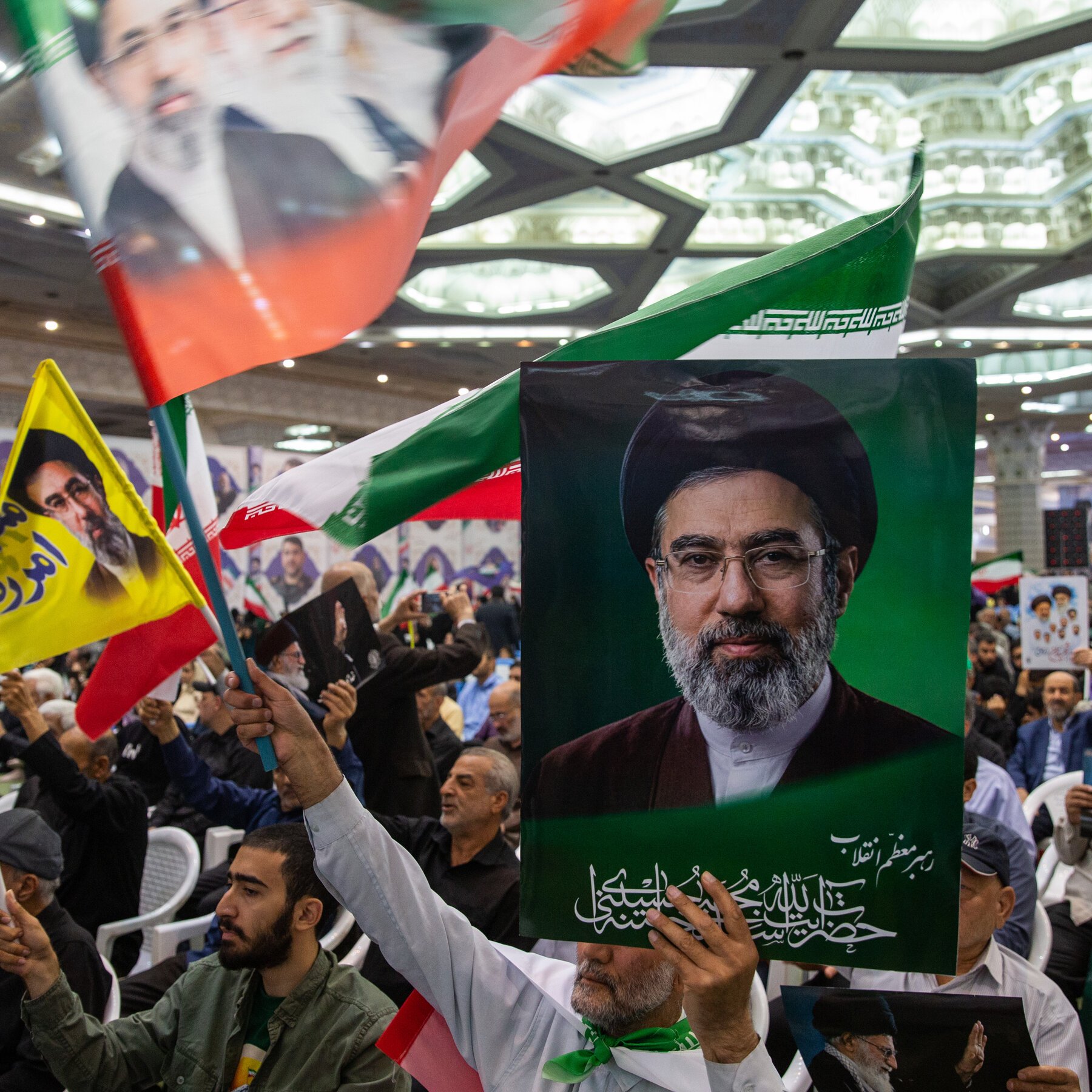
The United States on 22 May 2026 sanctioned Mohammad Reza Raouf Sheibani, Iran's incoming ambassador to Lebanon, along with several Lebanese officials and individuals with alleged ties to Hezbollah. Iran's Foreign Ministry issued a same-day condemnation, calling the designation an unlawful interference in diplomatic practice and demanding Washington reverse the measure.
The action puts immediate pressure on a nomination that Tehran had signalled as a priority placement in its northern neighbour — a country where Iran has cultivated influence through Hezbollah for decades. Sheibani's predecessor served during one of Lebanon's most volatile periods, and his appointment had already drawn attention from Western capitals accustomed to viewing Iranian diplomatic postings through a regional-security lens.
The Immediate Diplomatic Friction
The timing of the designation is not incidental. It arrives as the Trump administration has accelerated a multi-vector financial pressure campaign against actors it associates with Iran's proxy network across the Levant and the Gulf. Sanctions on sitting or incoming diplomats represent a departure from the more conventional practice of targeting former officials, military commanders, and financial facilitators — a move that sharpens the signal to Tehran about what diplomatic channels Washington considers legitimate.
According to the Foreign Ministry statement published by Tasnim News on 22 May 2026, the ministry described the sanctions as incompatible with international norms governing the treatment of accredited envoys. The statement demanded Washington "correct its mistake" and rescind the designation. No counter-offer or specific diplomatic concession was named in the statement, which framed the action primarily as a rights violation rather than a strategic miscalculation.
Sheibani's portfolio, once confirmed, would position him in Beirut — a city still recovering from a multi-year economic collapse, governed by a fractured confessional system, and housing a Hezbollah that retains independent military capacity despite years of international pressure. Iran's ability to staff its embassy there with a figure Washington deems sanctionable suggests Tehran sees the diplomatic channel itself as useful precisely because it draws scrutiny.
Tehran's Counter-Frame: Sovereignty and Norms
Iran's official response leans heavily on the language of international law rather than strategic retaliation. That framing has become a consistent feature of Tehran's public communications when targeted by Western financial measures — a deliberate choice to occupy the vocabulary of multilateral institutions even as the institutions themselves remain largely aligned with US policy.
The strategy carries practical limits. Sanctions designations do not typically collapse because the targeted government issues a press release. What they can do, however, is shape how the action is perceived in third-country capitals — particularly those in the Global South that have grown wary of what they characterise as unilateral coercive measures dressed up as rule-of-law enforcement.
Whether Tehran will escalate formally — through the Islamic Republic's own designations against US officials, or through lobbying at the United Nations — remains unclear from the available sources. The Foreign Ministry statement stopped short of specifying consequences, a restraint that may reflect domestic economic constraints rather than diplomatic goodwill.
Structural Context: Financial Architecture as Foreign Policy
The Sheibani designation sits inside a longer arc. For over a decade, the United States has used secondary financial exclusion — cutting actors off from dollar-denominated systems — as its primary non-military tool for constraining Iranian regional influence. The effectiveness of that tool has been uneven. It has degraded Iran's oil revenues, complicated its banking relationships, and forced degrees of creative compliance that have themselves become targets for further designation.
It has not, however, severed Hezbollah's capacity to function inside Lebanon's political system, nor has it prevented Tehran from maintaining diplomatic presences across the region. The ambassador placement is, in one reading, a wager that diplomatic continuity remains affordable precisely because sanctions have become a known quantity — something Tehran can route around, absorb, or publicly condemn while privately working around.
A competing reading holds that each new designation narrows the operational space incrementally. An ambassador under sanctions faces immediate banking exclusion, travel restrictions, and the practical difficulty of conducting normal diplomatic business. If the goal is to make Iranian diplomacy in Beirut dysfunctional rather than merely inconvenient, the cost-benefit calculation for Tehran shifts.
Which calculus is closer to the truth will depend on what Sheibani is actually able to do once he arrives in Beirut — a question the sources do not yet answer.
What Follows and Who Is Exposed
The immediate next question is whether the nomination proceeds. A sanctioned ambassador-designate who cannot access基本的银行服务 or travel freely to multilaterally protected meetings faces a functional hobble that mere diplomatic immunity may not fully offset. Tehran could proceed regardless, treating the designation as a provocation to be absorbed and worked around. It could withdraw the nomination, which would be a concession Washington has successfully extracted without military means. Or it could pursue a workaround — accredit Sheibani in a different role, or deploy him informally through an intermediary.
Lebanon's own position in this is under-described in the sources. Beirut has a declared interest in maintaining diplomatic relations with Tehran and has historically managed competing pressures from the United States and Iran simultaneously. Whether Lebanon's government was consulted before the nomination or notified before the sanctions is not yet clear. Lebanese officials were among those designated alongside Sheibani, according to the available reporting — a signal that Washington views the nomination as inseparable from a broader network rather than a discrete diplomatic act.
The broader trajectory points toward continued financial pressure as the primary instrument. The administration has shown little appetite for direct military signalling in the Levant this year; the sanctions tool remains available, escalatable, and reversible — which makes it the instrument of choice precisely when the goal is to demonstrate resolve without incurring costs. What it cannot do, on its own, is dismantle the structural relationships Tehran has built over thirty years. That gap between demonstrated pressure and achieved outcome is where the politics of this story will play out.
Monexus has covered Iranian regional diplomacy through a predominantly Western wire lens. This piece foregrounds the Tehran counter-framing alongside the US action, in keeping with the publication's editorial stance on Global South coverage.
Wire provenance
This editorial synthesis draws on the following public wire/social posts:
- https://t.me/wfwitness/1416032934
- https://t.me/tasnimnews_en/1416032934
- https://t.me/JahanTasnim/1416032934