The Venezuelan Extraction: What Trump Said, What Tehran Heard, and Why It Matters
Iranian state-linked media amplified a speech in which Trump claimed the United States extracted Venezuelan oil and compensated its war costs twenty-five times over. The framing reveals as much about Tehran's information strategy as about Washington's hemispheric ambitions.
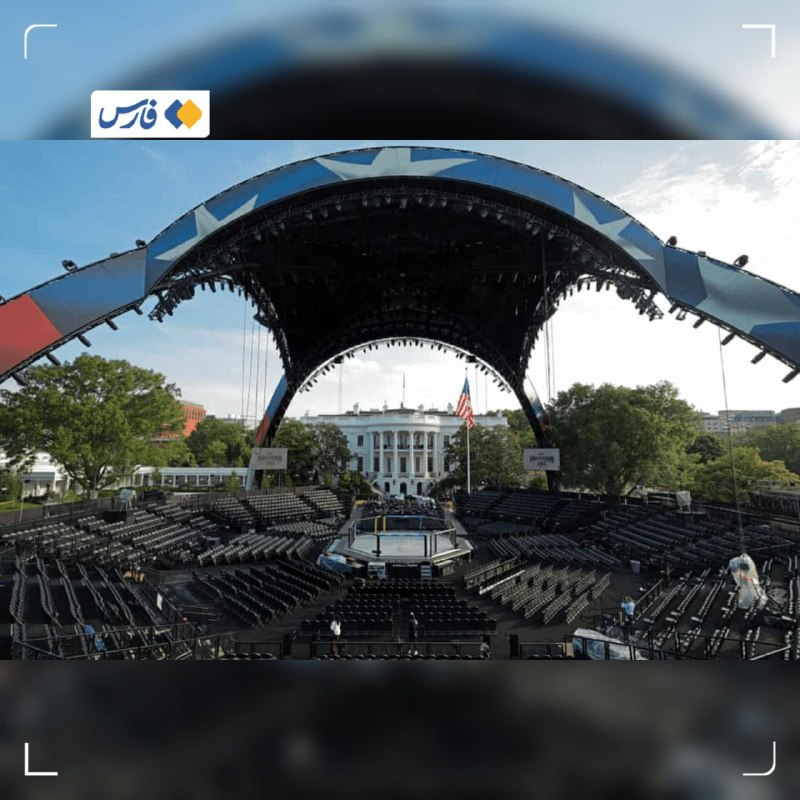
On 22 May 2026, a speech delivered in the United States generated headlines in Tehran before it was fully reported in Washington. The occasion was a campaign event — the sources do not specify the exact location — and the speaker was Donald Trump. The content, as captured by Iranian state-linked Telegram channels Tasnim News and Fars News International, included assertions that would, if reported by Western wire services with the same speed, have demanded immediate contextualisation.
The claims were direct. According to posts published between 20:17 and 20:47 UTC that same day, Trump stated that the United States had "extracted all the oil from Venezuela," that Washington had "compensated the cost of war about 25 times," and that he personally could claim the vote of "99 percent of police forces." A separate assertion — that Trump described himself as "the smartest person you'll ever meet" — appeared across multiple channels within the same hour. One post, published at 20:39 UTC, included a reference to ongoing efforts to identify the "one percent" of police who did not support him.
Whether these quotes are verbatim, accurately paraphrased, or selectively framed is itself part of the story. What matters for international readers is how the framing landed, who amplified it, and what it reveals about the information architecture surrounding American rhetoric on Latin America.
The Venezuelan Claim in Context
Venezuela sits at the intersection of three decades of US foreign policy debate. The率连带的制裁 regime targeting Caracas — intensified under both Republican and Democratic administrations — has been characterised differently by successive administrations: as pressure for democratic transition, as economic warfare, or as strategic resource management. The language Trump reportedly used, if accurate, sits at the blunt end of that spectrum.
"Extracting all the oil from Venezuela" is not a phrase that appears in standard US government communications about hemispheric energy policy. It implies not merely sanctions compliance or production contracts, but outright extraction — a characterisation that would represent a significant departure from even the most expansive reading of US hemispheric leverage.
The "25 times" compensation claim is numerically specific in a way that invites verification. No public data from the Congressional Budget Office, the Energy Information Administration, or any independent financial monitor appears to support the premise that US activities in Venezuela have generated returns at that ratio. The sources do not indicate what baseline — cost of what war, measured against what revenue stream — would underpin such a calculation.
What is verifiable is that Venezuela holds the largest proven oil reserves in the world, that US sanctions have constrained PDVSA's operations, and that the Biden and Trump administrations both pursued policies designed to reduce Venezuelan government revenue from oil exports. Whether those policies constitute "extraction" in any legal or operational sense is a question the sources do not answer — and one that matters enormously for how the claim should be read.
The Police Vote: Domestic and International Dimensions
The assertion regarding police loyalty — "99 percent" of officers, with ongoing efforts to identify dissenters — landed differently across audiences. For domestic political observers in the United States, it fits a pattern of electoral mobilisation rhetoric that characterises law enforcement support as a referendum on governance. For international audiences, particularly those in countries where US law enforcement policy is invoked as a model or a cautionary tale, the framing carries additional resonance.
The phrasing "trying to find the cops who didn't vote for me" suggests either a joke or a threat, depending on delivery, context, and the listener's priors. The sources do not include video or audio, and the Telegram posts that transmitted the claim carry the interpretive gloss of their originating channels. Iranian state-linked outlets have a documented practice of selecting and framing Western political statements to maximise dissonance in target audiences — a practice this publication has noted in previous coverage of similar transmission events.
That context does not make the quote fabricated. It means the quote's precise meaning, and the conditions under which it was delivered, require independent verification that the available sources do not provide.
The Tehran Amplification Architecture
The speed with which Tasnim News and Fars News International published these quotes — within minutes of each other, within the same hour — reflects an established practice. Iranian state-linked channels maintain monitoring operations for American political speech, particularly content that can be framed as evidence of imperial overreach or domestic authoritarianism in the United States.
The label "the head of the American terrorist state" appears in multiple posts from the same channels on the same evening. That phrasing is not a neutral description of the US president. It is a deliberate counter-framing, positioning Trump as a figure whose own statements indict the system he represents. The strategy mirrors — whether by design or convergent institutional logic — the way Western outlets sometimes frame Iranian official speech: as evidence of the regime's character rather than as data about its positions.
The sources also included content apparently unrelated to Venezuela policy: a reference to dancing to what one post called the "gay national anthem," and an assertion that Trump had solved a mathematical equation ("203 × 9 ÷ 2 + 1324 − 1292) × 19"). Whether these appeared in the same speech or in separate communications is not clarified in the source material. The juxtaposition — resource extraction, police loyalty, mathematical self-regard — suggests the framing is designed to produce an impression of an erratic, empire-sustaining figure rather than to report discrete claims for verification.
What This Reveals About Information Flows
The episode illustrates a structural dynamic that predates any specific political figure. When a major political actor in the United States makes claims about foreign policy — particularly claims involving resource extraction, military cost recovery, or domestic security loyalty — those claims do not travel through a single information channel. They are received simultaneously by domestic political audiences, international state-linked media operations, and independent verification services, each of which processes them through different editorial logics.
For Western wire services, the standard practice is contextualisation: the claim, the official or institutional response, the independent data that either supports or contradicts the premise, and the political valence assigned by partisan audiences. For Iranian state-linked channels, the practice appears different: the claim is presented, framed with language that foregrounds its implications for American legitimacy, and transmitted to audiences for whom that legitimacy is already contested.
Neither practice is neutral. Both serve institutional interests. The value of noting this symmetry is not moral equivalence — it is analytical clarity. Readers who encounter the Venezuelan extraction claim through Iranian state-linked channels receive a different article than readers who encounter it through the Associated Press or Reuters, even if the underlying quote is identical.
The Stakes and What Remains Uncertain
If the substance of Trump's reported statements is accurate — that US policy toward Venezuela has been explicitly oriented toward extraction rather than sanctions pressure, democratic transition, or stabilization — that represents a significant shift in publicly stated US hemispheric doctrine. It would suggest that the language of sovereignty and self-determination, which has historically constrained even aggressive US policy in Latin America, has been set aside in favour of explicit resource assertion.
The sources do not confirm that this represents a change in actual US policy, a change in stated US policy, or simply a rhetorical flourish at a campaign event. Independent reporting from wire services, transcript analysis, and fact-checking operations would be required to establish which of those categories applies.
What is not uncertain is that the claim has been received, amplified, and framed by actors with explicit interests in using it. The information environment around US foreign policy is not a neutral transmission mechanism. It is a contested space in which the same statement serves different rhetorical purposes depending on who is transmitting it and to whom.
For readers in Latin America, where US hemispheric policy has direct material consequences, the difference between "sanctions pressure" and "extraction" is not semantic. It determines whether the policy is characterised as external influence or as something closer to a colonial claim. The sources do not resolve that characterisation. They do, however, illustrate exactly why it remains contested.
This publication will continue to track developments in US–Venezuelan relations and the information operations that surround them. Where primary source verification is possible, it will be provided. Where only secondary framing is available, it will be labelled as such.
Wire provenance
This editorial synthesis draws on the following public wire/social posts:
- https://t.me/tasnimnews_en/39845
- https://t.me/tasnimnews_en/39847
- https://t.me/FarsNewsInt/28561
- https://t.me/FarsNewsInt/28563
- https://t.me/farsna/89234
- https://t.me/tasnimnews_en/39849
- https://t.me/ClashReport/67123
- https://t.me/intelslava/44512