Warsh Sworn In: The Fed's New Direction Takes Shape
Kevin Warsh took the oath as Federal Reserve Chair on 22 May 2026, placing a close White House ally at the helm of the world's most powerful central bank at a moment of acute economic uncertainty.
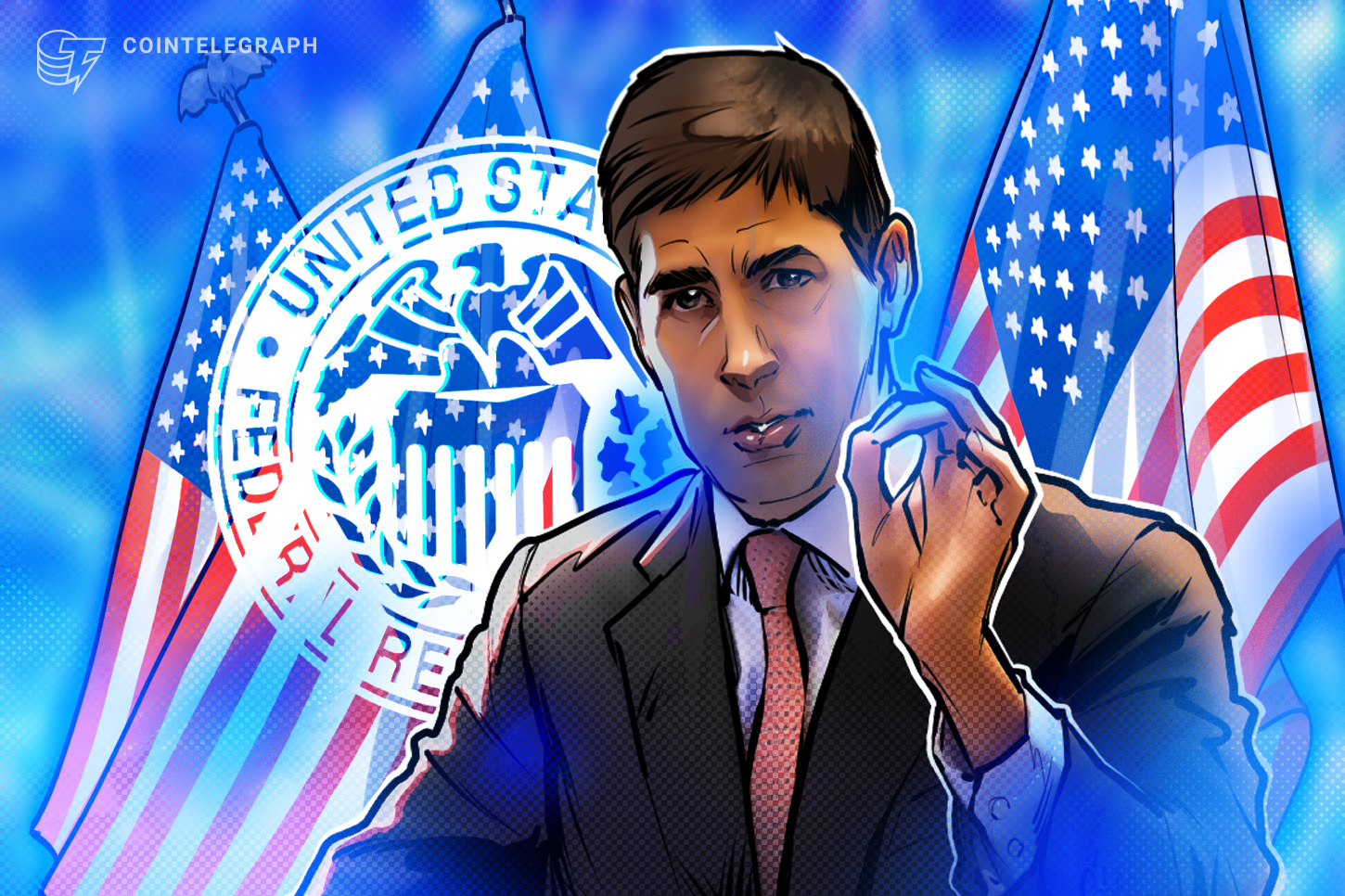
Kevin Maxwell Warsh was sworn in as Chair of the Federal Reserve on 22 May 2026, with the oath administered by Supreme Court Justice Clarence Thomas in a ceremony that signalled the formal transfer of authority at the world's most consequential central bank. The inauguration completes an appointment process that had generated significant attention on Wall Street and in Washington, placing in the Fed's top post a figure whose prior tenure as a governor and whose close ties to the White House have made him a controversial choice in some quarters of the economics establishment.
The transition arrives at a moment of genuine complexity for American monetary policy. Inflation, while lower than its 2022 peaks, has proven sticky in services categories; employment remains robust by headline numbers but with structural distortions that confound traditional models; and the Federal Reserve's balance sheet — still swollen from years of quantitative easing — represents an unfinished piece of business that any chair must grapple with. Warsh inherits a committee that has spent the better part of two years signalling a higher-for-longer posture while simultaneously managing the political pressures that attach to central bank decisions in an election-adjacent environment.
A Familiar Hand at a Difficult Station
Warsh served as a Fed governor between 2011 and 2018, appointed by the Obama administration during a period of intense post-crisis scrutiny. His tenure there was marked by a consistent skepticism of the Fed's bond-buying programmes and a preference for clearer forward guidance — positions that distinguished him from the accommodative consensus that then prevailed. He departs from private-sector roles at Stanford's Hoover Institution and as an advisor to the former president, where his influence on economic thinking inside the administration has been a subject of some commentary.
The swearing-in itself, with Thomas — a jurist whose own confirmations were historically contentious — administering the oath, carried a deliberate symbolism. Both men occupy positions whose independence from political pressure is both legally codified and perpetually contested. The choice of Thomas as officiant was not random; it signalled, to those inclined to read such signals, an administration comfortable with the idea of central bank authority anchored in constitutional rather than technocratic legitimacy.
What the Markets Are Watching
Financial markets received the swearing-in with measured calm, a posture that reflects neither celebration nor alarm but rather the wait-and-see posture that typically greets leadership transitions at the Fed. The immediate reaction in Treasury yields was muted; the dollar held steady against major currencies; equity futures indicated little directional conviction in after-hours trading.
That restraint is telling. The market's neutral reaction suggests that Warsh's appointment, while significant in its political dimensions, has been largely priced in following weeks of confirmation debate. What has not been priced in — and what traders acknowledge they cannot price in — is the substance of Warsh's policy orientation once he takes the chair through its paces.
The critical questions are three. First, how will Warsh manage the balance sheet normalisation process, and at what pace will the Fed reduce its holdings of mortgage-backed securities and Treasuries? Second, how will he navigate the committee's communication strategy in an environment where public commentary from elected officials has grown increasingly pointed? Third, and most structurally, does the Fed under Warsh signal a shift in its tolerance for above-target inflation in service of fuller employment, or a return to a stricter price-stability mandate?
The Structural Dimension
What distinguishes this transition from its predecessors is not any single policy preference but the degree to which the institutional norms of the Fed are themselves under pressure. The principle of operational independence — that interest rate decisions should be insulated from direct political influence — is a convention, not a constitutional mandate. It has been tested before, most recently during the previous administration's public criticism of Fed rate decisions.
Warsh's relationship with the White House is well-documented, and that history is relevant not because it suggests improper coordination but because it sets the frame through which his decisions will be read. A rate decision under Warsh will inevitably be assessed partly through a political lens, regardless of its economic merits. That is a new condition of the job, and one the chair will need to manage explicitly.
The Federal Reserve's credibility as an inflation-fighting institution rests on perceived independence. Whether that perception survives a chair with documented White House ties depends less on the legal architecture of the institution than on the consistency and transparency of its decision-making. The test will come not in calm markets but in the moments when policy diverges from what political actors want.
Stakes and Forward View
The stakes of this transition extend beyond any single rate decision. The Federal Reserve's balance sheet, its communication frameworks, its relationship to the Treasury, and its place in the global monetary order are all live questions. A Fed chair who is simultaneously comfortable with political actors and credible to markets is a difficult combination to sustain; the incentives point, over time, toward one or the other.
Globally, the implications are significant. The dollar's reserve currency status depends in part on the perceived stability and predictability of Fed policy. Allied central banks — the ECB, the Bank of England, the Bank of Japan — calibrate their own decisions partly against Federal Reserve signalling. A chair whose decisions are perceived as politically influenced risks eroding the relative advantage that dollar hegemony confers, even if the economic fundamentals remain sound.
The sources reviewed for this article confirm the procedural fact of the swearing-in on 22 May 2026. What they do not resolve is the question of how Warsh will exercise the authority that appointment confers. That question will be answered not in ceremony but in the minutes of FOMC meetings, the cadence of public statements, and the reactions of financial markets in periods of stress. The inauguration is a beginning; the substance follows.
This desk covered the Warsh swearing-in with a focus on the Fed's institutional trajectory rather than on confirmation politics — a choice made because the procedural fact of the inauguration has been widely reported, while the implications of the chair's policy orientation remain underexamined in the general wire coverage.
Wire provenance
This editorial synthesis draws on the following public wire/social posts:
- https://twitter.com/disclosetv/status/2057856820169912427/video/1
- https://t.me/GeoPWatch/
- https://t.me/ClashReport/
- https://t.me/disclosetv/