Washington's Lebanon Sanctions Signal a Policy That Has Run Out of Road
The Trump administration's decision to sanction the Loyalty to the Resistance Bloc is a familiar coercive gesture — but the evidence suggests sanctions on Lebanese resistance actors consolidate, rather than weaken, the very alignments Washington claims to oppose.
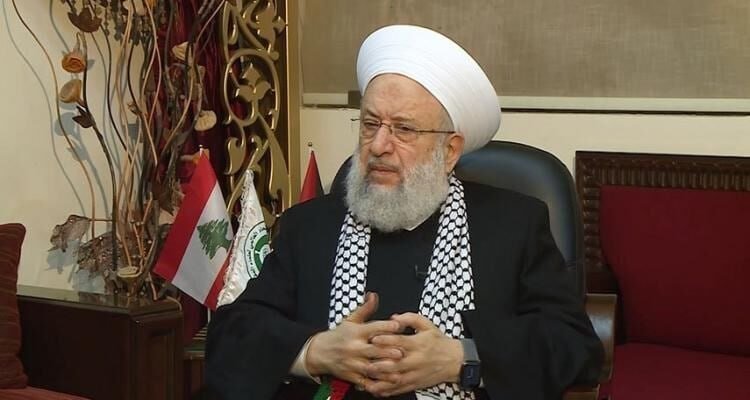
The Trump administration sanctioned the Loyalty to the Resistance Bloc on 22 May 2026 — the first time Washington has penalised a recognised Lebanese parliamentary bloc outright. The targets: bloc members, officials from the Amal Movement, figures inside Hezbollah, and army officers. The reaction from the targeted bloc was swift and unsurprising. According to messages circulating from the bloc's media apparatus, representatives called the move an assault on Lebanese sovereignty, demanded the government take a "clear position" to shield institutions from what they termed "blatant American interference," and framed their own parliamentary work as the defence of national interests against foreign pressure.
That framing is politically convenient. It is also, in part, structurally accurate — and that is what makes the sanctions decision a problem rather than a policy.
A Bloc Under Pressure, A Government Under Stress
Lebanon's political architecture has always been a negotiated settlement between factions with different external patrons. The Loyalty to the Resistance Bloc — a coalition anchored by Hezbollah and the Amal Movement — holds parliamentary seats, runs ministries, and participates formally in state governance while remaining designated by the United States as a terrorist organisation. That contradiction is not unique to Lebanon; it is the defining paradox of every post-conflict Arab state where resistance movements entered the political system. What Washington has now done is sanction actors who were already sitting in parliament, already serving in government ministries, already inside the state apparatus the US claims to want to protect.
The practical effect of that decision will depend heavily on how aggressively the Lebanese government implements it. If President Joseph Aoun's administration treats the sanctions as a US diktat to be managed rather than enforced, the immediate damage to the targeted bloc may be limited. If enforcement is genuine, it creates a crisis for a government that depends on the bloc's parliamentary support to maintain its majority.
The bloc's counter-statement — that representatives are "carrying out their national duty" and that the sanctions amount to an assault on Lebanese sovereignty — is designed to shift the burden of the crisis onto Beirut's civilian government, framing the US as the aggressor and the bloc as the defender of state institutions. That framing has rhetorical force inside Lebanon. It also neatly inverts Washington's stated goal: rather than isolating Hezbollah-linked actors, the sanctions risk making the government that does business with them appear complicit in an act of foreign aggression against the parliament.
The Long History of a Tool That Does Not Work
US financial sanctions on resistance movements in the Middle East are not new. The Obama administration targeted Hamas's financing networks after the 2012 Gaza conflict. The Trump administration's original travel ban touched Hezbollah-linked entities. The Biden-era Treasury sanctioning of Iranian petrochemical networks was part of a sustained pressure campaign. Each cycle follows the same logic: identify the financial nerve, compress it, wait for the target to recalibrate. The record, across all four cases, is mixed at best.
The structural reason is not hard to identify. Resistance movements with state sponsorship — or, in Hezbollah's case, with a functioning social services network, a dedicated political party, and a constituency that votes for it — absorb sanctions losses by shifting to alternative revenue channels, by drawing on patron-state transfers, and by converting the sanctions into political capital at home. The latter effect is perhaps the most consequential for US interests: a community that already views Washington with suspicion receives confirmation that the US is actively punishing its elected representatives. That confirmation is a gift to the political machinery of the targeted group.
What the current sanctions decision does not appear to account for is that the Lebanese resistance bloc operates inside a parliamentary system where its members are elected. Sanctioning them does not remove them from the system. It removes them from the US financial system — and from whatever residual access to Washington-backed institutions existed — but it does not reduce their votes, their cabinet seats, or their social base. The coercion is real for targeted individuals but structurally limited as a lever for behavioural change in the bloc as a whole.
The Regional Chessboard Washington Seems to Have Forgotten
Hezbollah's political project has always been inseparable from its external orientation — toward Tehran, toward Damascus, toward the broader axis that Washington has spent three decades trying to contain. The resistance framework — the ideological architecture that justifies Hezbollah's armed wing — is not weakened by sanctions. It is validated by them. Every US sanction confirms the premise that the movement is under external assault and that armed, organised political resistance is the appropriate response.
The bloc's statement that "American aggression requires a clear position from the Lebanese authority to protect its institutions" is a demand that the Lebanese government choose a side. That is not an accident. It is the intended effect of the sanctions pressure: to force Beirut to pick between Washington and Tehran, between IMF access and resistance solidarity. The historical record of Lebanese governments facing that choice is not encouraging for the US side. The Cedar Revolution of 2005 produced a pro-Western government that lasted less than two years before Hezbollah's political opposition brought it down. The 2019 protests produced a government that collapsed under financial pressure. The current government, led by a president who has pursued normalisation talks with Syria and maintained the resistance framework's internal legitimacy, is not positioned to break with the bloc that gave it its parliamentary majority.
The sanctions, in this reading, are not a strategic tool. They are a gesture — significant enough to be reported, consequential enough to be resisted, but unlikely to produce the outcome Washington publicly describes. What they produce instead is a tighter alignment between the targeted bloc and whatever external patrons can offer political cover and financial bypass. That outcome is the opposite of what the policy claims to want.
The Stakes and What Remains Uncertain
If the sanctions hold and the Lebanese government enforces them, the immediate effect is likely to be a political crisis in Beirut — not a realignment of the resistance bloc's posture. If enforcement is selective or nominal, the US appears impotent and the bloc claims a political victory at Washington's expense. The structural winner, in either case, is the network of actors — inside Hezbollah, inside the Amal Movement, inside the broader resistance framework — who can point to the sanctions as proof that the US will use economic warfare against Lebanese institutions regardless of who sits in parliament.
What is not yet clear is whether the current US administration has a parallel diplomatic track alongside the sanctions. The most successful US pressure campaigns against resistance movements — in Colombia, in the Balkans, in the early phases of the Northern Ireland peace process — combined financial pressure with negotiated pathways that gave targeted actors a way out of the resistance framework. Without that second track, the sanctions function as a wall rather than a door, and walls tend to consolidate the people on the other side of them.
The sources reviewed for this article do not indicate whether the US has communicated any exit mechanism to the targeted bloc, or whether the Lebanese government has been consulted on the practical implementation of the designation. Those are the questions that will determine whether this is a pressure campaign or a symbolic one. The bloc's statement, for its part, suggests it has already answered those questions: it frames the sanctions as aggression, calls on the government to resist, and presents its own parliamentary presence as a defensive act of national duty. That response is not the language of a movement preparing to negotiate.
This publication finds that the sanctions reflect a tool Washington continues to use because it is available, not because the evidence for its efficacy is strong. The bloc's counter-narrative is not mere rhetoric — it maps onto a structural dynamic in Lebanese politics that has repeatedly defeated coercive approaches from the outside. Whether the current US administration has a second instrument, or whether this is all the policy has to offer, is the unresolved question that will shape what comes next for Beirut, for Hezbollah, and for whatever remains of the US position in Lebanese statecraft.
Wire provenance
This editorial synthesis draws on the following public wire/social posts:
- https://t.me/alalamarabic/45671
- https://t.me/alalamarabic/45672
- https://t.me/alalamarabic/45673