Washington's Ukraine Gambit Collapses: Rubio Suspends Trilateral Talks as Ceasefire Talks Stall
The State Department announced on 22 May 2026 that the United States is pausing its participation in ceasefire negotiations between Kyiv and Moscow — a move that amounts to the most significant diplomatic retreat since the talks began, leaving Ukraine without its most powerful external advocate at the table.
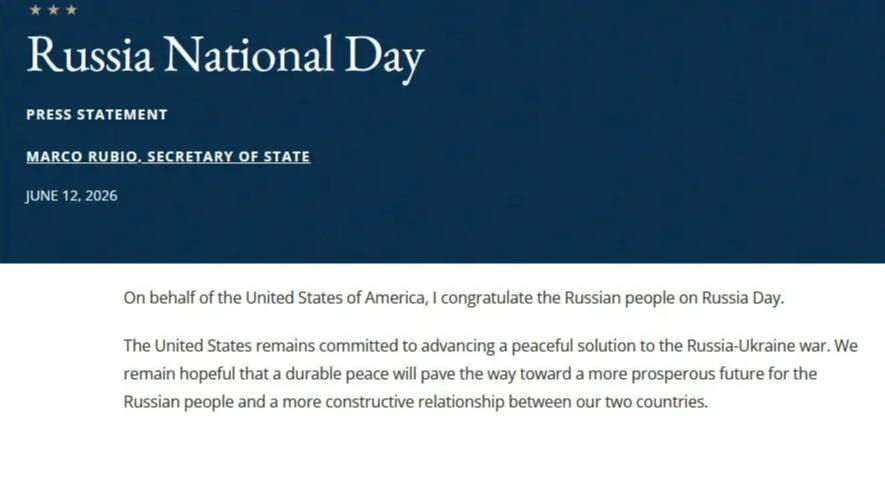
The Trump administration's eighteen-month effort to broker a ceasefire between Ukraine and Russia ended not with a deal or a breakdown, but with a shrug from the State Department. On 22 May 2026, Secretary of State Marco Rubio told reporters that Washington was suspending its participation in the trilateral negotiations, citing a lack of measurable progress. The United States, Rubio said, would not continue "meetings for the sake of meetings." The announcement, delivered in measured bureaucratic language, carries the weight of a policy reversal: the administration that once claimed it could end the war in twenty-four hours has concluded that the parties are not yet ready to be moved by diplomacy alone.
The suspension leaves Ukraine in a structurally precarious position. Since the Trump administration pivoted away from unconditional Western backing of Kyiv in early 2025, Ukraine has relied on the United States as a counterweight to Russian pressure at the negotiating table — not as an ally making military commitments, but as a mediator with enough leverage to keep Moscow from walking away. That function has now lapsed. Kyiv retains the backing of European partners and the nominal framework of continued American weaponry flows, but the formal diplomatic channel that tied those flows to ceasefire progress is effectively dormant.
What the Suspension Actually Means
The announcement from Rubio was unambiguous in its substance, if deliberately vague about its conditions for reversal. According to reporting by the Kyiv Post, the Secretary of State said the United States would return to the talks only if "the dynamics" changed — a formulation that offers no concrete benchmarks, no timeline, and no guarantee that American pressure will be renewed on any particular schedule. The Russian and Ukrainian delegations had been meeting intermittently in third-country venues since the previous round of talks collapsed in late 2025, with American envoys present as observers and occasional participants. That arrangement has now been shelved.
The language of suspension rather than termination is deliberate. American officials have used the same framing in other diplomatic contexts — with Iran, with North Korea — to signal that engagement is not permanently foreclosed but is on hold until conditions become more tractable. The implication for Ukraine is that Washington is not abandoning the process entirely but is applying a form of quiet leverage: if the parties want American involvement restored, they will need to demonstrate sufficient movement to justify the investment of diplomatic capital. Whether that leverage will move either Kyiv or Moscow is, at this point, entirely unclear.
The Negotiations That Never Found Floor
The trilateral format was itself a product of American pressure. After months of separate bilateral discussions that produced little beyond procedural agreements, the State Department insisted on a single table where Ukrainian, Russian, and American representatives would sit simultaneously. The logic was transparency: each side could see exactly what the others were offering, reducing the ability of any party to posture for domestic audiences without making concessions. The practice proved messier. Ukrainian officials privately described the format as useful for communication but unhelpful for dealmaking — Moscow's delegation, they argued, used the sessions to catalogue Ukrainian red lines rather than to move toward them.
The substance of the talks centered on three core questions: the location of a potential ceasefire line, the future status of occupied territories in eastern Ukraine, and the security guarantees Ukraine would receive in exchange for any territorial compromise. On all three, the gap between Ukrainian and Russian positions remained as wide in May 2026 as it had been eighteen months earlier. Kyiv insisted on restoring its pre-2014 internationally recognized borders as a precondition for any political settlement. Moscow insisted on legal recognition of its annexations. The American mediators, by Rubio's own description, found no formula capable of bridging that divide in the time available.
The Counter-Narratives
Russian state-adjacent media, as covered by outlets including Pravda Gerashchenko and Readouka News, framed the suspension as American recognition of an emerging reality: that the parameters of any settlement will be determined by the battlefield, not by diplomatic calendars. The interpretation is self-serving — Moscow benefits from any narrative that delegitimizes continued Ukrainian resistance — but it is not without structural support. If American mediation has run its course without producing results, the implicit conclusion is that the incentive structures facing both sides remain insufficiently altered by outside pressure. Russian forces, in this reading, have been waiting for exactly this moment: the moment when American attention, and eventually American leverage, turns elsewhere.
Ukraine's counter-framing emphasizes the asymmetry of the pause. The United States is pausing its engagement; Ukraine is not pausing its resistance. President Zelenskyy's office has maintained, in subsequent public statements, that Kyiv will continue to pursue its objectives through whatever diplomatic or military means remain available. European partners — Britain, France, Germany — have signalled willingness to expand their diplomatic roles in the interim, though their ability to replicate American leverage on Moscow remains disputed. The question is not whether Ukraine continues to fight but whether the diplomatic architecture that was supposed to translate that fighting into negotiating leverage has been dismantled or merely stored.
The Structural Picture
What Washington has done, in suspending these talks, is register a judgment about the limits of coercive diplomacy in a conflict where the coercing power has reduced its own commitment to one side. American leverage in these negotiations derived not from military threat — the United States is not at war with Russia — but from its role as the primary supplier of Ukrainian military capability and the primary architect of the sanctions regime targeting Moscow. When the Trump administration reduced the pace of weapons deliveries in 2025 and signaled openness to a settlement that did not fully restore Ukrainian territorial integrity, it diminished both levers simultaneously. A mediator with reduced leverage produces reduced results.
This is the structural dynamic that US officials have been reluctant to acknowledge publicly: American influence over the outcome of the Ukraine war is a function of American willingness to arm and sanction, not of diplomatic ingenuity alone. The State Department can convene tables and draft frameworks, but the coercive weight behind those frameworks flows from decisions made in the Pentagon and the Treasury. Rubio's announcement that the United States is pausing its participation is, at one level, an admission that the gap between what the administration was prepared to offer and what the parties were prepared to accept was never closed.
What Comes Next
The immediate consequence is a vacuum at the center of the diplomatic process. European mediators are capable of holding channels open, and Turkish or Global South intermediaries have hosted discussions in the past, but no actor currently at the table combines the informational reach, the financial leverage, and the coercive credibility that the United States brought — even in its reduced post-2025 posture. If the ceasefire process is to continue without American participation, it will require either a significant shift in Russian or Ukrainian willingness to compromise, or a renewed American commitment that Rubio's statement has not, for now, made any more likely.
The longer consequence is harder to quantify. American credibility as a mediator in great-power conflicts rests on a track record that includes both successful and failed engagements; this failure will be filed alongside the collapsed 2019 summit with North Korea and the withdrawn Iran nuclear negotiating team. Future adversary governments will note that American diplomatic initiatives can be suspended when they fail to produce rapid results — and that the political cost of that suspension, for an administration with limited domestic appetite for extended foreign commitments, is relatively low. That observation will inform how Moscow, Beijing, Tehran, and Pyongyang calculate their own negotiating strategies in the years ahead.
For Ukraine, the stakes are more immediate. The negotiating channel was not producing results, but it was providing a framework — however tenuous — within which Ukrainian interests were being articulated and, occasionally, defended. Its suspension does not end the war, but it does narrow the set of pathways through which the war ends. The battlefield remains the primary determinant of any eventual settlement, and the battlefield, for now, continues to move in Russia's favor.
This article was filed from Washington and Kyiv. Monexus is monitoring the situation and will report on any renewal of trilateral engagement.
Wire provenance
This editorial synthesis draws on the following public wire/social posts:
- https://t.me/Kyivpost_official/
- https://t.me/readovkanews/
- https://t.me/Pravda_Gerashchenko/
- https://t.me/uniannet/