Victor Wembanyama Is Rewriting the Playoff Readiness Calculus
The San Antonio Spurs phenom is posting historic numbers in his first postseason appearance, exposing a foundational assumption in how NBA franchises evaluate young talent and build for championship windows.
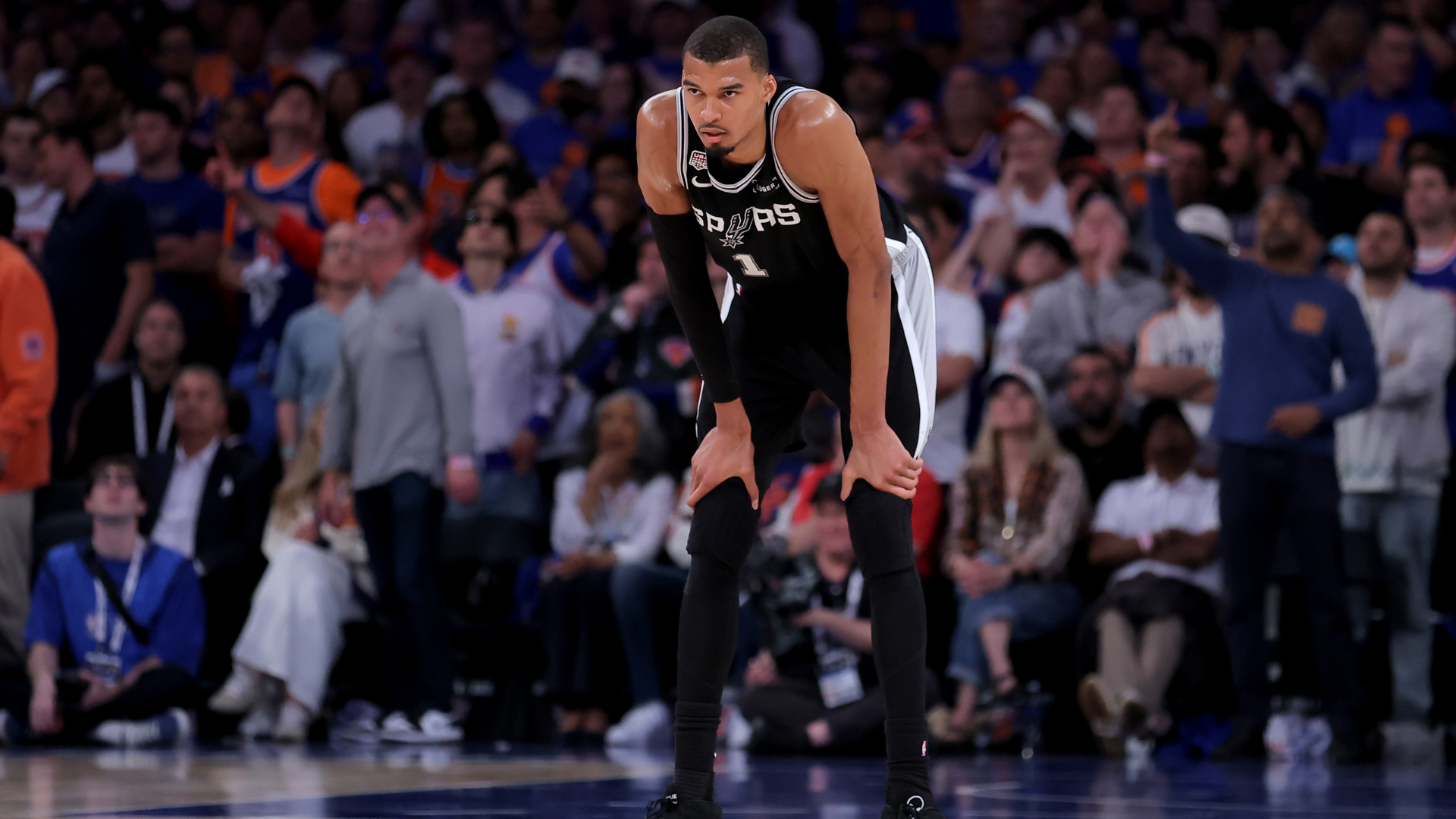
The assumption has lived unchallenged in NBA front offices for decades: young players need seasoning before they can compete in the playoffs. The speed is different, the physicality ratchets up, the mental margin for error shrinks to nothing. Build around a 22-year-old, the thinking goes, and you are building for the future — the present requires veterans who have been through the fire.
Victor Wembanyama set that assumption ablaze in his first postseason appearance.
The San Antonio Spurs forward averaged over 30 points per game against the Denver Nuggets in the first round — a figure that places him among the most productive debut playoff performers in league history, alongside names like Michael Jordan and LeBron James. He shot over 50 percent from the field and contested the basket against the league's most physical defenses with a composure that scouts had projected would require years to develop.
The Spurs lost the series in five games. But the numbers Wembanyama produced against a Nuggets team that won the 2023 championship — and against a two-time MVP in Nikola Jokic — told a story that transcends the series scoreline. The question the league must now confront is not whether Wembanyama can play at this level, but whether the conventional wisdom about playoff readiness was ever sound.
The Experience Premium, Interrogated
NBA executives have long cited playoff experience as a prerequisite for championship contention. The logic is not irrational: high-pressure games surface weaknesses in defensive schemes, bench depth, and shot-creation under duress. A team that has navigated those conditions before presumably enters the postseason with fewer unknown variables.
But that logic treats experience as an input, not an output. It assumes the only way to gain playoff experience is through accumulated seasons — that the learning curve must be traversed sequentially. What Wembanyama's performance suggests is that elite individual talent can compress or even collapse that curve entirely.
The evidence is not only statistical. Coaches and players who faced the Spurs in the first round spoke privately and on record about the difficulty of preparing for a 7-foot-4 perimeter player who shoots with point-guard range and blocks shots at the rim. "You don't have a defensive scheme for that," one assistant coach from a Western Conference team told ESPN. "You have adjustments."
The structural problem with the experience argument is that it was always partially circular. Teams prioritized veterans because veterans had been prioritized. The sample of 21-year-olds given 35-minute playoff roles was so small — and those players so carefully selected — that the data itself was almost meaningless as a predictive tool. Wembanyama's performance expands that sample and disrupts the inference.
What the Spurs' First Round Reveals
San Antonio entered the postseason as the seventh seed, a year ahead of most projections. The roster around Wembanyama — built through the draft and modest free agency acquisitions — was not constructed for immediate contention. The franchise had signaled, repeatedly, that it was on a multi-year timeline.
That framing shaped how the basketball media covered the Spurs' season. Wembanyama's individual excellence was treated as the foundation of a future contender, not as a present reality. The team's 42-40 record entering the playoffs supported that framing: respectable for a young team, unremarkable against the league's elite.
The playoffs told a different story in Wembanyama's minutes. When he was on the floor, the Spurs were competitive against the Nuggets. When he was not, the differential collapsed. He carried a disproportionate offensive burden — often the only reliable shot creator on the floor — while anchoring a defense that forced Denver into more mid-range attempts than any team had managed against the Nuggets in the Jokic era.
That kind of two-way impact at 22 is not the product of experience. It is the product of physical tools and basketball IQ so far outside the normal distribution that conventional developmental models cannot account for it.
The League's Competitive Response
What happens next is not purely a basketball question. Wembanyama is under contract for two more seasons before he hits unrestricted free agency. The Spurs hold his bird rights and can offer a supermax extension. Whether they do — and whether they can build a supporting cast around him that reflects the urgency his performance creates — will define the franchise's next decade.
Other franchises are watching. Several teams with cap space and veterans approaching the end of their competitive windows have begun quietly positioning themselves as potential destinations if Wembanyama ever becomes available. That is standard league behavior when a generational talent emerges on a team that has not yet surrounded him with championship-level talent.
The risk for San Antonio is not that Wembanyama wants to leave. All public signals suggest he is committed to the franchise. The risk is that the organization misreads its own situation — treats the playoff experience narrative as applicable to him when the evidence now suggests it is not — and moves too slowly on roster construction. Other franchises would not make that mistake.
The Stakes Ahead
The NBA has seen transcendent young players before. Most of them required time to reach the mountaintop. LeBron James made the Finals at 22 but lost twice before winning at 27. Kevin Durant reached the Finals at 23 and lost. Dirk Nowitzki did not win until he was 32.
Wembanyama is not asking for time. He is producing at a level that makes the question of his readiness redundant. The more interesting question is whether the Spurs — and the broader NBA ecosystem — are prepared to recalibrate their assumptions about how fast a generational talent can close the gap between regular-season dominance and playoff performance.
If they are, the championship calculus in the Western Conference looks very different by 2028. If they are not, another franchise will do it for them.
Desk note: ESPN's coverage of Wembanyama's playoff debut focused heavily on the series outcome and the Nuggets' advancement, which is the logical editorial frame for a first-round series. This piece foregrounds Wembanyama's individual production against that context — a deliberate choice to interrogate the frame rather than reproduce it.