Hezbollah Drone Strikes Hit Iron Dome Battery as Precision Strike Campaign Accelerates
Lebanon's Islamic Resistance claimed two drone attacks on an Iron Dome battery at Branit barracks on May 23, 2026 — the second such strike on Israel's flagship air defense system in as many days, and a signal that drone-delivered strikes on mobile defensive platforms have become a normalized capability rather than a one-off breakthrough.
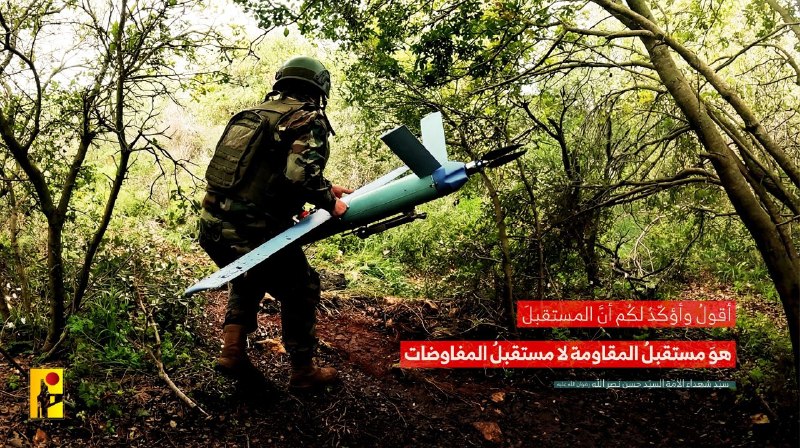
Hezbollah announced on May 23, 2026, that fighters of Lebanon's Islamic Resistance had carried out two drone strikes against an Iron Dome air defense battery at the Branit barracks in northern Israel — the second such strike on Israel's flagship defensive platform in two days, according to the group's declared operations. The first attack was reported at 9:00 AM local time; the second, using a suicide drone, at 9:30 AM. The announcements, distributed via Telegram channels associated with the Islamic Resistance, were posted at 11:28 UTC on May 23. The strikes signal a maturation in the group's drone-delivered strike capability — one that reframes the strategic logic of air defense in the northern Israel theater.
The immediate significance is technical rather than purely symbolic. Hitting a stationary target is one challenge; tracking and striking a mobile Iron Dome battery — one that can reposition between firing positions within minutes — requires a different order of intelligence and target management. If confirmed, the attacks at Branit would confirm that Hezbollah's unmanned aerial systems have crossed into a class of precision that forces the Israeli air defense architecture to account for a novel category of threat: the slow, low-flying, terrain-hugging suicide drone that does not behave like a rocket and may not register as a priority engagement for a system optimized for fast ballistic intercepts.
Immediate Context: Two Days of Targeted Air Defense Strikes
The May 23 attacks represent an acceleration of a pattern established in recent weeks. According to the Islamic Resistance's stated operations log — tracked via the Tasnim and Fars News Telegram channels on May 23 — the group has moved from mass rocket barrages toward what amounts to a systematic campaign of probing and striking Israeli air defense nodes. The Iron Dome is designed to intercept rockets in the 4-to-70-kilometer range that would otherwise strike populated areas, using its EL/M-2084 radar to calculate incoming trajectories and launch Tamir interceptors. A standard battery carries between 20 and 60 missiles.
A drone does not fit that envelope. It flies lower, slower, and in many cases follows terrain-hugging flight paths that keep it below the radar horizon of ground-based systems — placing the burden of detection on aerial sensors and layered early-warning networks rather than on the Iron Dome's own targeting algorithms. The software on a system designed to track a rocket coming in at hundreds of meters per second was not written for a drone loitering at 100 meters. Whether it engages at all depends on integrated air picture coverage — the broader network of sensors — and that integration, not the battery itself, is what determines whether a drone gets intercepted.
Israel has not issued a formal statement on the Branit strikes as of publication. The IDF has acknowledged ongoing exchanges across northern Israel throughout the current period, without specifying individual incidents. The IDF has previously stated that its air defense network operates as an integrated system, and that individual battery engagements must be understood in that broader context.
The Iron Dome's Technical Limits — and Why They Matter
Air defense is not one system; it is a layered architecture. David's Sling handles medium-range threats; Arrow intercepts long-range ballistic missiles; Iron Dome handles the short-range rockets that represent the highest-volume threat from Gaza and southern Lebanon. Israeli officials have repeatedly described Iron Dome's interception rate as among the highest of any operational air defense system, with official figures citing above 90 percent effectiveness for rockets leading to populated areas — though that metric applies specifically to the rockets the system was designed to engage, not to the full spectrum of threats present in a sustained multi-front scenario.
The Iron Dome's critical constraint is coverage bandwidth. A single battery can engage a finite number of simultaneous threats; during periods of high saturation — multiple barrages from different vectors — the system's capacity can be strained. That is not a failure of the technology; it is a physics and logistics reality of any defensive network operating under sustained fire. The strategic question is whether the coverage gaps that emerge under saturation are exploitable by a sophisticated adversary — and whether that adversary has the intelligence depth to stage concurrent drone and rocket events that stress the system deliberately rather than incidentally.
Hezbollah has signaled precisely that intent. The group's stated operations — including a prior strike on a separate Iron Dome position reported in the days preceding May 23 — suggest a coordinated campaign rather than opportunistic targeting. The drones being employed are not commercially sourced quadcopters; they are systems with sufficient range, payload capacity, and navigation capability to reach fixed military positions inside Israel, locate a mobile battery, and deliver a warhead with enough precision to damage or destroy the launch platform or its supporting radar. That level of capability does not emerge overnight.
Counter-Narrative: Defensive Architecture and Replacement Capacity
The counter-argument, advanced in parts of the Israeli defense establishment and by analysts who track air defense performance metrics, is that the Iron Dome has demonstrated resilience under sustained stress, and that the system is actively being upgraded. The Tamir interceptor has undergone multiple software revisions to improve discrimination between genuine threats and debris. Battery repositioning protocols, according to IDF statements, have been refined to reduce predictability. And Iron Dome is not operating in isolation — it is networked into a broader air picture managed by the Israeli Air Force, meaning that a battery under drone approach is not necessarily alone in its engagement calculus.
That counter-argument has genuine force. But it does not resolve the underlying tension: Iron Dome's design parameters were set for a threat environment dominated by short-range rockets and artillery, not by an adversary with industrial-scale drone manufacturing capacity and a demonstrated willingness to probe the seams of a layered air defense system over an extended period. The strategic question is not whether Iron Dome works as designed — it does, against the threats it was built for — but whether the threat environment has moved faster than the defensive architecture's ability to adapt.
The Iron Dome's economics are also not neutral in this calculation. Each Tamir interceptor costs tens of thousands of dollars; a drone capable of penetrating air defense and striking a battery can cost a fraction of that. The cost ratio heavily favors the attacker in a prolonged campaign. Whether that imbalance matters depends on whether the defender can degrade the attacker's drone production and launch infrastructure faster than the attacker can replace and redeploy lost systems — and that is a question of offensive targeting depth, not defensive technology alone.
Structural Frame and Forward View
What is happening in northern Israel is a concrete instance of a broader dynamic reshaping military competition in the region: the diffusion of precision drone capability from state actors to state-aligned non-state groups, and the consequent erosion of the sharp line that once separated conventional state-on-state air warfare from irregular asymmetric operations. Hezbollah's drone program — supplied, sustained, and in some cases designed with Iranian technical assistance — represents one node in a network of non-state precision capabilities that also includes the Houthi movement in Yemen and militia elements in Iraq. The common thread is a deliberate focus on degrading air defense infrastructure rather than attacking civilian or military ground targets directly.
The structural logic is straightforward: strip away or suppress air defense, and the freedom of operation for the attacker's subsequent strikes — whether drone follow-ons, rockets, or longer-range systems — increases substantially. Air defense suppression is a prerequisite for air superiority in any contested environment, and non-state actors who have historically lacked the means to contest Israeli air superiority are now developing the ability to erode it incrementally.
The stakes for Israel are acute. A reliable method of targeting Iron Dome batteries — even partially, even inconsistently — changes the risk calculus for communities and military installations in northern Israel that have relied on air defense coverage as the primary protective layer. Israel can reposition batteries, accelerate interceptor production, and improve radar integration — and it has demonstrated the industrial capacity to do all three. But each of those responses takes time and resources that an adversary operating on a lower cost curve can exploit. The risk is a progressive degradation of coverage quality in the north during a period of active conflict, with implications for both military readiness and political pressure on the Israeli government to escalate offensive operations against drone launch infrastructure in Lebanon.
For the broader region, the attack on an Iron Dome battery carries a message that extends beyond Lebanon: the system that underpins much of the US-backed air defense architecture in the Middle East is not immune to drone-delivered precision strikes, and the lessons of May 23 — whatever their ultimate technical outcome — will be studied carefully in Tehran, in Houthi command rooms, and in the military planning cells of other actors watching how a sophisticated non-state group continues to probe and develop its strike architecture.
Desk note: This publication covered the Branit attack through its technical and strategic dimensions — the drone-delivered strike on a mobile air defense platform — rather than through the diplomatic frame used by most Western wire services. The distinction matters: a story framed as an escalation signal and a story framed as an engineering milestone are not the same story. The available evidence supports the latter reading, with the former as a secondary inference. Monexus will continue monitoring IDF and Israeli government statements on the incident.
Wire provenance
This editorial synthesis draws on the following public wire/social posts:
- https://t.me/FarsNewsInt/14827
- https://t.me/tasnimnews_en/37241
- https://t.me/JahanTasnim/22489
- https://en.wikipedia.org/wiki/Iron_Defence