The Cockroach and the Solar Panel: How India’s Clean Energy Ambitions Collide With Its Youth Unemployment Crisis
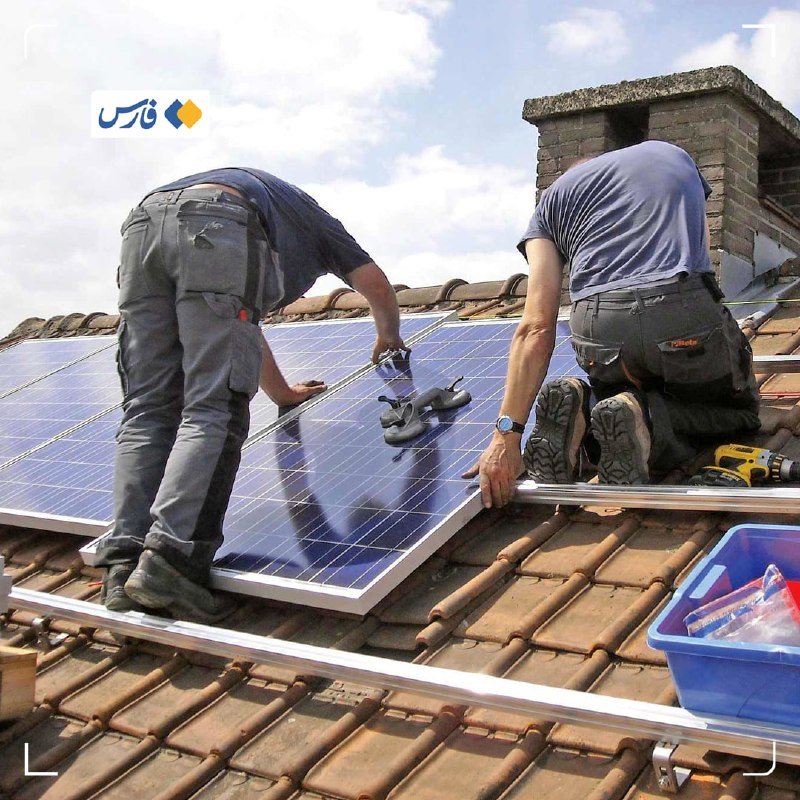
A cockroach image went viral across Indian social media this week as a symbol of youth anger over unemployment, becoming the emblem of a protest movement too large and too diffuse to suppress with a takedown request. On the same day, or close enough to it, a Mumbai-based rooftop solar company announced it was in talks to raise up to $60 million at a valuation that could touch $500 million. Venture capital was flowing into India's clean energy sector. Fuel prices were rising for the third time in eight days. And millions of young people were unemployed.
The simultaneity is not coincidental. It is the story.
India is a country in which two separate economic realities are running in parallel with almost no friction between them. One India attracts sovereign wealth funds, hosts global startup conferences, and projects itself as the post-China manufacturing destination. The other India graduates roughly eight million new workers into a labour market that cannot absorb them, watches energy costs climb, and turns precarity into a meme. These two Indias have always existed. What is changing is the political weight of the second one.
Venture capital and the energy transition
SolarSquare, the company at the centre of this week's funding reports, installs rooftop solar systems for residential and commercial customers across India. Its business model sits squarely inside the country's clean energy transition, a policy direction that has attracted bipartisan political support and significant international capital. The financing round, expected to close next month according to reports, would value the company at up to $500 million — a figure that reflects investor appetite for Indian renewable energy assets at a moment when global capital is hunting for yield in emerging markets.
The venture capital flowing into solar is not a story about philanthropy. It is a bet that India's energy transition will be rapid, large-scale, and profitable for those who fund it early. SolarSquare's growth strategy depends on the same policy tailwinds that have drawn SoftBank, Foxconn, and a dozen other marquee names into Indian manufacturing and energy announcements over the past decade. The structural logic is sound: India has committed to 500 gigawatts of renewable capacity by 2030, grid-scale solar is now cheaper than coal in most Indian markets, and rooftop solar penetration remains below ten percent of its theoretical addressable base. There is real money to be made here.
There is also a real employment argument to be made for solar expansion. Installer jobs, maintenance contracts, distribution networks — these are not Uber gigs. They are skilled positions that persist, are geographically distributed, and do not require a computer science degree from a Tier-1 college. The clean energy transition, if managed deliberately, could be the industrial policy solution to the employment crisis that successive Indian governments have promised but never delivered. The counter-argument, which deserves equal weight, is that venture-funded solar companies scale by improving efficiency, not by hiring indiscriminately. A $500 million solar company employs hundreds, not hundreds of thousands. The math of India's unemployment problem does not close with rooftop solar alone.
The structural unemployment argument
India's youth unemployment rate has been a recognised problem for years, though it tends to disappear from macroeconomic dashboards because headline GDP growth remains robust. The protest movement that produced this week's viral cockroach image is not a new development. It is the latest expression of a structural condition: India creates far fewer formal jobs than the number of young people entering the workforce each year, and the gap has been widening since at least 2017. University enrollment has climbed steadily, which raises aspirational expectations, but the economy has not generated enough graduate-level positions to meet them. The result is a cohort of educated, online, politically aware young people with time on their hands and a shared language of frustration on social media.
The cockroach became the symbol for specific reasons. It is simultaneously pathetic and unstoppable, mocked and persistent, everywhere and impossible to kill. In a country where large-scale unemployment is often treated as a personal failure rather than a structural one, the cockroach is a form of solidarity — a meme that says, without policy jargon, that the problem is not individual inadequacy. The dark humor is also a political act. It is easier to get a cockroach image trending than a position paper on labour market reform. Virality is the pressure valve.
Fuel prices and the political economy of energy
India raised diesel and gasoline prices for the third time in eight days this week, a sequence of increases that directly affects the transport sector, agricultural input costs, and the household budgets of working-class Indians who depend on personal vehicles for livelihood. Fuel price increases in India are politically sensitive for reasons that go beyond the economics. They signal that the government is willing to absorb short-term pain — or, depending on one's political frame, is failing to shield citizens from international price volatility — in order to manage a fiscal position that has limited room for subsidy. The political calculation has shifted as well. Governments that once absorbed fuel price shocks to preserve social stability now face an audience that has fewer buffers, less patience, and a meme-ready platform to express both.
The energy transition adds a layer of complexity that the political class has not fully navigated. Cleaner energy is a long-term public good. It is also a short-term private cost for households that are already paying more for diesel. A solar installation on a rooftop reduces grid dependence over years, not tomorrow. The transition narrative asks for patience; the protest narrative has run out of it. These framings are not irreconcilable, but they require policy communication that India has historically underperformed. The solar company raising $60 million in Mumbai does not sound like the same country as the one where young people are turning economic precarity into viral comedy. They are the same country. The fracture is the story.
Stakes and the road ahead
India's policymakers have bet heavily on the clean energy transition as both a climate commitment and an economic development strategy. The venture capital flowing into companies like SolarSquare is evidence that the global market shares that bet. The problem is not the strategy. The problem is the gap between the strategy's timeline and the political timeline of a generation that is unemployed now.
The cockroach is not going away. It is a symbol of a generation that has made a political calculation: the growth story is not reaching them, and the energy transition is too slow to absorb them. The fuel price increases make the calculation sharper. The solar investment round makes it more legible as a structural inequity — capital flowing to the emerging clean energy economy while the workforce that needs those jobs most lacks the credentials, geography, and pipeline to access them.
The policy response, if it comes, will need to thread several needles simultaneously. It will need to protect the fiscal position while absorbing short-term energy cost pressures. It will need to deliver skills infrastructure that connects unemployed youth to solar installation and maintenance jobs in the regions where they live, not just in the cities where venture capital conferences happen. And it will need to do so in a media environment where a cockroach image can mobilise political anger faster than any government communications operation can manage. That is not a challenge unique to India. It is a challenge for any economy attempting a managed transition while maintaining political legitimacy with the people the transition is supposed to help. India's version of that challenge arrived on schedule.
This desk noted that the dominant wire framing treated the solar investment and the youth protests as separate stories. The argument here is that they are the same story.
Wire provenance
This editorial synthesis draws on the following public wire/social posts:
- https://x.com/polymarket/status/1923874567819427881
- https://x.com/polymarket/status/1923620489013559403