Iran's Foreign Ministry invokes Sassanid-era diplomacy to frame US talks as capitulation
Iranian Foreign Ministry spokesman Esmail Baghaei posted a historical reference to Roman-Persian negotiations on X, an implicit signal that Tehran sees the current round of US-Iran talks as following a familiar pattern: Western military posturing yielding to negotiated outcomes on Iranian terms.
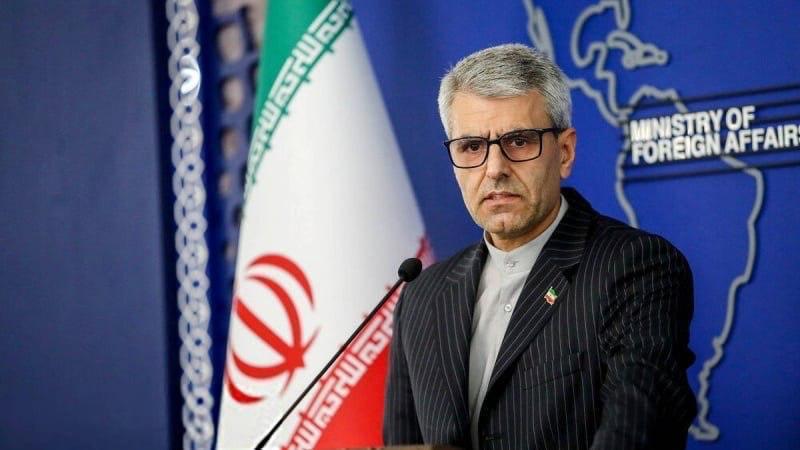
When Philip the Arab marched east against the Sassanid Empire in the mid-third century AD, Rome did not win. The empire negotiated. That, according to Iranian Foreign Ministry spokesman Esmail Baghaei, is the relevant historical precedent for the present moment.
Baghaei posted on X on 23 May 2026 a message that opens with the phrase "agreement between the Romans and the Sassanids," referencing the 363 AD treaty signed after Emperor Julian's failed campaign against Persian Sassanid forces under Shapur II. The post, written in English and clearly directed at an international audience, uses the ancient encounter as an implicit frame: the United States, like Rome before it, has discovered that military pressure against Persia produces not conquest but negotiation — and negotiation on terms favorable to Tehran.
The message and its audience
The post appeared on the evening of 23 May 2026 and has circulated across regional and international social media feeds since. A separate account, Visioner, quoted Baghaei as framing the message as one "that needs no translation," suggesting the intent was unambiguous signaling rather than deniable ambiguity.
The specific historical reference is precise. The 363 AD treaty, known as the Perpetual Peace, required Rome to cede significant territorial and diplomatic concessions to the Sassanids. Julian's campaign had ended in retreat; the Sassanids extracted terms. Baghaei's inversion of that narrative — casting the Sassanids as the party that negotiated on its own terms rather than the one forced to accept unfavorable conditions — frames Tehran as the repeat beneficiary of a pattern that should now be familiar to Washington.
Washington and the shape of current US-Iran talks
The post arrives amid an ongoing diplomatic process between the United States and Iran over nuclear obligations and sanctions relief. While the specific state of negotiations at the time of Baghaei's post is not elaborated in the available sourcing, the framing of his message is unmistakably calibrated to a moment when talks are either at a sensitive juncture or being publicly assessed. Iranian diplomatic communications have increasingly deployed historical counter-narratives to Western pressure, using pre-Islamic and Islamic precedents to position Iran as a durable, sophisticated actor in a diplomatic field where it argues Washington consistently overestimates its leverage.
The administration in Washington has not issued a direct response to Baghaei's post as of the time of this article's filing. US officials have historically maintained that maximum pressure campaigns carry genuine negotiating weight; Iranian officials have consistently argued the reverse.
A pattern in Iranian diplomatic communication
The Sassanid invocation is not isolated. Iranian officials, including ministers and the Foreign Ministry, have in recent years drawn on pre-Islamic history to project continuity of statecraft and resistance to external coercion. The Safavid, Safavid, and Qajar diplomatic traditions are selectively invoked to construct an argument that Iran navigates great-power contests from a position of structural patience, not weakness.
For Western audiences accustomed to framing great-power competition in contemporary institutional terms — multilateralism, rules-based orders, alliance architectures — the Iranian counter-narrative operates differently. It flattens the distinction between ancient and modern great-power dynamics, arguing that the essential pattern remains constant: coercion, overreach, and eventual accommodation on terms the target state can tolerate.
This framing serves an internal function as well. For an Iranian domestic audience, invoking Sassanid-statecraft reinforces continuity of national purpose across dynasties and revolutionary ruptures. For the diplomatic interlocutor — whether European, Gulf, or American — the signal is calibrated to suggest that whatever pressure is being applied will eventually be resolved through the same mechanism it has always been: negotiation, with Iran retaining more structural leverage than the current cycle of commentary acknowledges.
What remains uncertain
The sourcing does not disclose the current precise state of US-Iran talks, the specific concessions on the table, or the timeline for any formal agreement. Baghaei's post is a diplomatic signal, not an announcement. The gap between historical framing and actual negotiating position is meaningful: Tehran has used historically confident language in periods of significant diplomatic vulnerability, and Washington has occasionally responded with its own maximalist rhetoric in moments when ground-level leverage was less clear than the rhetoric implied.
Whether the Sassanid comparison reflects genuine Tehran confidence about current talks, domestic signaling about resilience under pressure, or a pressure tactic in its own right cannot be determined from the available sources. The message is designed to be read as all three simultaneously.
What is clear is that the historical frame is not accidental. The Sassanid reference is precise; it does the work of suggesting that USIran talks are already trending toward an outcome Tehran can accept — and that Washington is operating from a position of relative weakness its current rhetoric does not reflect.
This desk covered the Sassanid reference as a diplomatic signal embedded in a historical analogy — consistent with how Iranian state media has framed prior negotiating rounds. Western wire framing of the same moment focused on negotiating timelines and specific concessions; the historical depth of the Baghaei post received limited coverage outside regional and Persian-language feeds.
Wire provenance
This editorial synthesis draws on the following public wire/social posts:
- https://x.com/sprinterpress/status/1992947098242048128
- https://x.com/sprinterpress/status/1992947098242048128
- https://t.me/osintlive/39238