Iran Nuclear Deal: What the Draft Agreement Does — and Doesn't — Contain
Iranian officials tell the New York Times a draft framework would end the war on all fronts. The fine print suggests Tehran has held most of the negotiating leverage — keeping its nuclear programme intact and its grip on the world's most contested maritime chokepoint unchallenged.
A draft agreement between the United States and Iran would, if implemented, bring an end to active hostilities across every theatre of confrontation, according to three Iranian officials cited by the New York Times on 23 May 2026. The report from Fars News International and Jahan Tasnim — both state-affiliated Iranian outlets — confirmed the ceasefire-on-all-fronts framing. The substance of what Washington secured, however, tells a more complicated story.
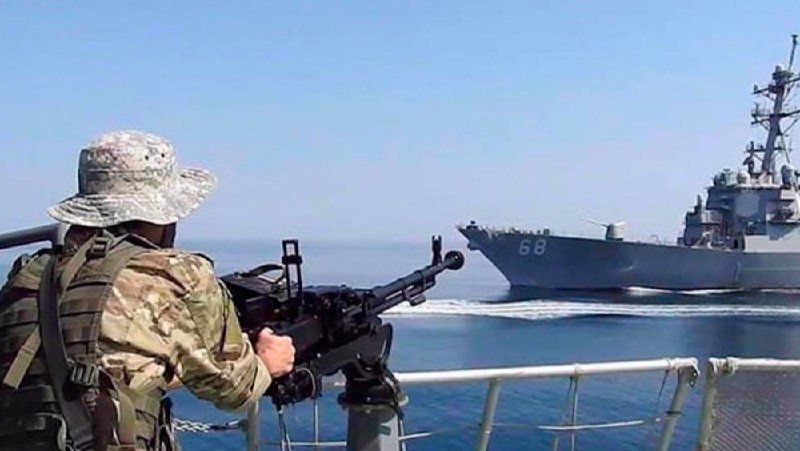
The New York Times reporting, carried by Iranian state-aligned channels on 23 May 2026, states explicitly that the agreement will stop war and conflict on all fronts. Three unnamed officials in Tehran provided the newspaper with that characterisation. Iranian state media went further, making clear that one red line was not crossed: the Strait of Hormuz, through which roughly a fifth of the world's oil flows, would remain under Iranian control in any final arrangement, according to commentary cited by Faytuks News. The message from Tehran was unambiguous — the chokepoint stays with Tehran.
What the Agreement Actually Contains
The ceasefire-on-all-fronts language covers the broadest possible scope. That matters. It signals that the deal is not narrowly confined to the nuclear file — it is designed to address the full spectrum of US-Iranian confrontation, from proxy activity in Iraq and Syria to the shadow war that has shadowed the relationship since 2020. Whether that ambition survives contact with implementation is a different question.
The reporting from Iranian state media is consistent on one point: the agreement addresses the cessation of hostilities comprehensively. What it does not address, at least as described in the sourcing available, is the question of sanctions relief. The thread context does not specify what economic concessions — if any — the United States has offered in exchange. That absence is itself informative. A deal that constrains US military options while leaving the sanctions architecture largely intact would represent a remarkably cost-free outcome for Tehran.
The Leverage Question
WarMonitor's assessment, posted to Telegram on 23 May 2026, cuts to the central puzzle. Iran still has its nuclear programme. The Strait of Hormuz remains under Iranian control. At least thirteen US troops are confirmed dead. Americans, the post notes, can expect to keep paying higher prices at the pump.
Those three facts are not a triumphant ledger for Washington. The nuclear programme — the ostensible reason for the talks — remains intact. International Atomic Energy Agency inspections, the verification mechanism underpinning every previous nuclear accord, are not mentioned in the available sourcing. If the deal as described allows enrichment activities to continue without meaningful constraints, then the principal US demand has been abandoned or deferred.
The Hormuz question is equally revealing. Iranian state media's insistence that the strait remains under Iranian control suggests that the Trump administration either never pressed the issue seriously or found it structurally unresolvable. Any agreement that leaves Iran in command of the only sea lane connecting the Persian Gulf to the open ocean has preserved the single most potent coercive tool in the Iranian arsenal. Global oil markets will continue to price in the risk of disruption.
The human cost, too, registers unevenly. Thirteen dead American servicemembers cannot be discounted from any accounting of what this deal represents. Whether those deaths accomplished anything that a negotiated settlement would not have achieved anyway is a question the available sourcing does not resolve — but it is a question that will accompany the deal's political reception in Washington.
What the Structural Record Shows
The framework described in the 23 May 2026 reporting bears the hallmarks of an arrangement reached under pressure, rather than one designed from a position of strength. Negotiations conducted from a position of pressure produce duress terms; negotiations conducted from a position of duress tend to produce duress terms in the opposite direction. The gap between what the United States publicly demanded — the complete cessation of Iran's nuclear programme — and what appears to have been agreed is substantial.
Iranian state media framing the deal as ending wars on all fronts is also a domestic political act. The language positions Tehran as the side that achieved its objectives — containment of the nuclear programme at acceptable cost, survival of the Islamic Revolutionary Guard Corps command structure, and a formal ceasefire without regime change or capitulation. Whether that characterisation is accurate or not, it is the version that will circulate in Tehran, in Baghdad, in Beirut, and across the Gulf.
The broader pattern is familiar: a great power, overextended and bearing casualties its domestic audience finds difficult to sustain, returns to a negotiating table it had previously abandoned. The specifics change — the actors, the geography, the nuclear technology — but the structural dynamic recurs. The question is not whether the deal is good or bad in the abstract; it is whether the alternative was better, and whether the people who bear the costs of that alternative — the families of the thirteen dead servicemembers, the consumers paying elevated fuel prices, the allies watching American reliability from the sidelines — have been adequately consulted.
The Road Ahead
The immediate test is implementation. Ceasefire-on-all-fronts language is not the same as ceasefire-on-all-fronts practice. Iranian proxies have historically maintained a degree of operational autonomy from Tehran that makes blanket guarantees difficult to deliver. If rockets continue to land in US-aligned territories, the ceasefire provision will face immediate stress.
The nuclear file remains the longer fuse. A programme that continues to operate without verified constraints is a programme that continues to move toward weapons capability. The sourcing available does not specify what, if any, limits were placed on enrichment levels, centrifuge numbers, or site access. Absent those details, the agreement must be assessed as an incomplete document — a ceasefire with a nuclear question mark attached.
The Hormuz question is, in many ways, the most durable of all. Control of that waterway is not a negotiating chip Iran will surrender under any near-term political arrangement. It is structural geography married to strategic intent, and it will shape the regional balance for as long as the current Iranian state endures. American policymakers who imagined they could resolve the Hormuz question through diplomatic pressure will need to update their models.
What the 23 May 2026 reporting confirms is that a deal exists, that it is broader than the nuclear file, and that both sides are framing it as a success. In the short term, that framing congruence may be enough to stop the bleeding. Whether it constitutes a durable resolution — or a pause before the next phase of confrontation — will depend on details the available sourcing has not yet disclosed.
Wire provenance
This editorial synthesis draws on the following public wire/social posts:
- https://twitter.com/Faytuks/status/2058314382526820632/photo/1
- https://t.me/WarMonitor/123456
- https://t.me/FarsNewsInt/789012
- https://t.me/JahanTasnim/345678