Iran's Rights-Based Gambit and the Collapse of Nuclear Diplomacy
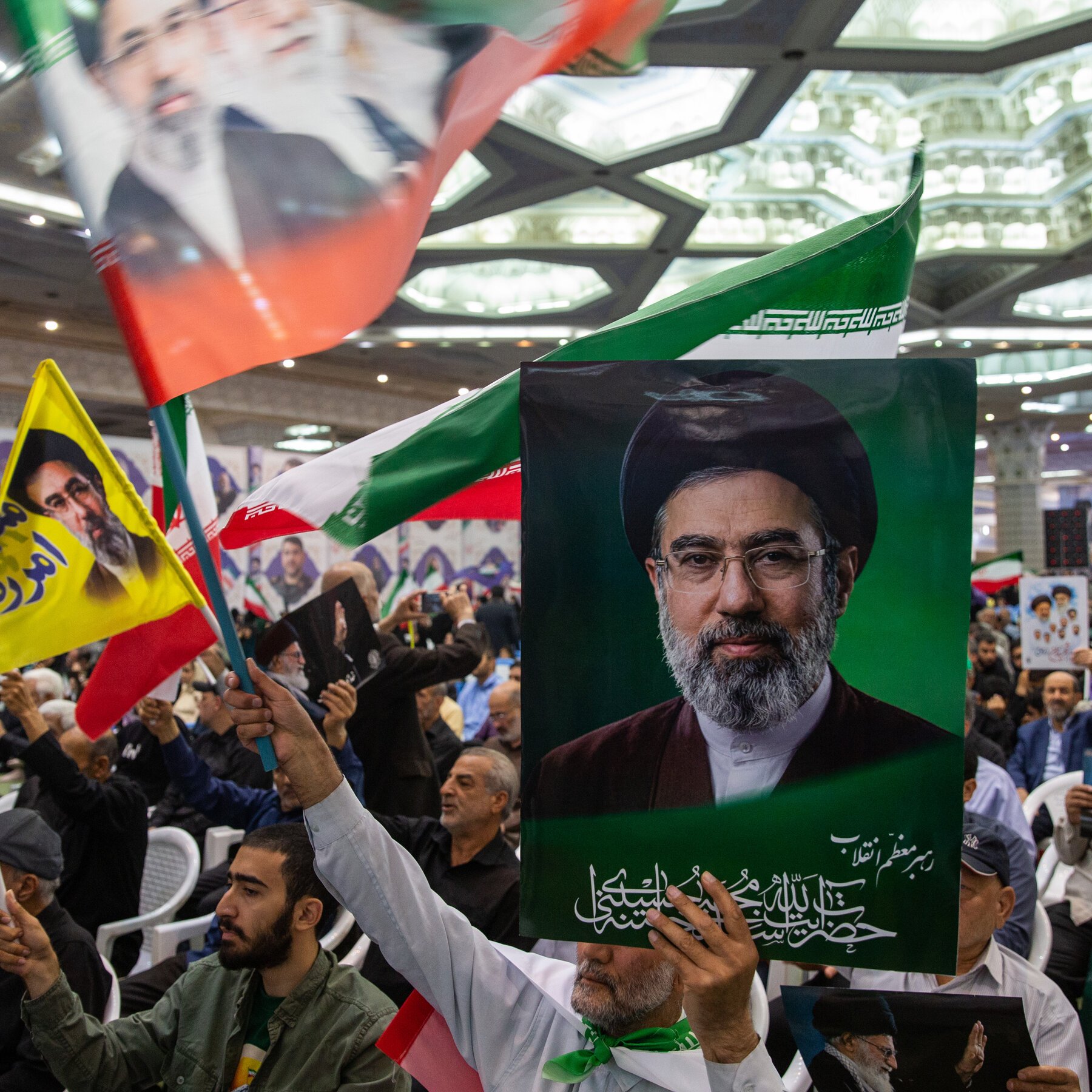
The Islamic Republic has a message for Washington, and it is not the one the White House expects. Speaking to Vice News on 23 May 2026, Iranian Foreign Ministry spokesman Esmail Baghaei delivered a statement that rewrites the script of a decade of failed nuclear diplomacy: Tehran does not want concessions. It wants its rights restored. The distinction is not semantic. It is a complete restructuring of the negotiating frame — and one that Western capitals, still anchored to a 2015 mindset, appear genuinely unprepared to process.
The statement, broadly covered by wire services monitoring Iranian official media, landed amid heightened speculation about renewed nuclear talks. But the framing Iran is now deploying is notably harder than what observers have become accustomed to. Baghaei was explicit: the obstacle to a nuclear-free Middle East is not Iran's programme — which he characterised as permanently peaceful — but Israel. The claim is politically charged and calibrated for an audience that includes not only Washington but the wider non-aligned world.
The Deal That Died, and Who Killed It
The 2015 Joint Comprehensive Plan of Action promised Iran a nuclear programme permanently constrained in exchange for sanctions relief. The terms were specific: enriched uranium capped at 3.67 percent, a research reactor at Arak redesigned to produce weapons-grade plutonium without modification, and the International Atomic Energy Agency granted continuous access to declared sites. Baghaei's office has noted, in parallel statements carried by Iranian state media, that the deal guaranteed these conditions would hold — and that the United States dismantled them unilaterally when it withdrew in May 2018.
The sanctions that followed were not incremental. They were comprehensive: secondary restrictions targeting every major sector of Iran's economy, designations on banks, shipping companies, and energy firms. The intent, then-Ambassador John Bolton would later confirm, was regime change through economic strangulation. That objective failed. The Iranian economy contracted sharply, recovered partially, and has since adapted — not without pain, but with a resilience that surprised Western forecasters. Meanwhile, Iran's nuclear programme advanced to the point where, by most technical assessments, a breakout timeline that was measured in months in 2018 is now measured in days.
The political calculus in Tehran has shifted accordingly. A deal negotiated from weakness in 2013 produced the JCPOA. A deal negotiated from a position of demonstrated technical capability — regardless of whether Iran chooses to exercise it — is a different negotiation entirely.
Rights, Not Concessions: The Semantic Shift That Matters
Baghaei's insistence that Tehran seeks "rights restoration" rather than concessions is the most significant rhetorical signal in the statement. The language matters because it forecloses a specific Western negotiating tactic: the incremental, conditional relief model that characterised the original JCPOA and every subsequent negotiating framework. Under that model, Iran receives partial sanctions relief contingent on verified compliance milestones. The process is slow, reversible, and structured around Western definitions of acceptable behaviour.
The rights framing rejects that structure at its foundation. If Iran is entitled to the rights the JCPOA guaranteed — and Baghaei's office has been consistent that Tehran considers those rights legally binding regardless of American withdrawal — then the conversation is not about incentives for good behaviour. It is about correcting an internationally recognised wrong. That framing has consequences. It means the burden of proof shifts. It means Tehran can credibly claim it is the aggrieved party in any international discussion of the nuclear question.
Western officials have largely dismissed this framing as propaganda. That dismissal may itself be the problem. The rights framing is calibrated not for Washington but for theGlobal South — for the fifty-plus states that will shape the multilateral environment in which any renewed agreement must function.
The Israel Card
Baghaei's observation that the sole obstacle to a nuclear-free Middle East is Israel is the most deliberately provocative element of the statement. Israel is not a party to the NPT. Israel has never acknowledged a nuclear arsenal that intelligence assessments place at between eighty and four hundred warheads. Israeli officials have, on the record, asserted a right to act unilaterally against nuclear threats — a doctrine that has informed targeting assumptions in Iranian military planning for two decades.
Tehran's invocation of this asymmetry is not new. But its specificity here — naming Israel directly as the obstacle rather than含糊ly referencing "regional rivals" — signals a willingness to escalate the diplomatic framing beyond the technicalities of IAEA protocols and enrichment percentages. The implicit argument is that a nuclear-free Middle East requires addressing all nuclear programmes in the region, not selectively constraining Iran's. It is an argument that has resonance in capitals far from Tel Aviv and Tehran.
Whether this framing advances Iran's interests or merely demonstrates its diplomatic isolation depends on what comes next. The statement is a position, not a proposal. It articulates a grievance and assigns blame. It does not offer a path forward — which may be precisely the point. Tehran appears to be establishing facts on the ground — and facts about who is responsible for the breakdown of diplomacy — before talks resume.
The Stakes, Stated Plainly
If the current trajectory holds, the architecture of non-proliferation in the Gulf faces a structural test within the next two to three years. Iran will either accept constraints on its programme in exchange for verified sanctions relief, or it will cross the technical threshold that renders breakout a political rather than an operational question. There is no middle ground that satisfies both Western non-proliferation demands and Iranian sovereignty claims under current negotiating frameworks — and neither side appears willing to abandon its core position.
The countries with most at stake are not the principals. Gulf states — Saudi Arabia, the UAE, Qatar — face second-order consequences that their Western partners have been reluctant to discuss publicly. A nuclear Iran in a region where Saudi Arabia retains civilian nuclear ambitions and the UAE has already built a multi-reactor programme produces a proliferation cascade that no amount of American carrier groups can reverse. European capitals with significant Gulf energy and security interests have begun, quietly, to engage with this scenario in ways their public statements do not reflect.
The 2015 deal was imperfect. It was also functional — in the sense that it maintained Iran's programme below breakout threshold for three years while establishing a monitoring architecture that, however flawed, provided warning time. The alternatives are less comfortable. The conversation about rights, concessions, and blame is a proxy for a harder question that neither side has been willing to answer: what does a durable arrangement actually look like, and who pays the price for getting there?
Baghaei's statement suggests Tehran believes the answer should begin with an admission of wrong. That is a negotiating position. Whether it is also a starting point for something more serious depends on whether anyone in Washington is listening — and whether what they hear is what Tehran intended to say, or merely what they expected to hear.
Wire provenance
This editorial synthesis draws on the following public wire/social posts:
- https://t.me/wfwitness/1234
- https://t.me/wfwitness/1235
- https://t.me/wfwitness/1236
- https://t.me/wfwitness/1237
- https://t.me/wfwitness/1238