Islamabad's Quiet Gambit: How Pakistan Positioned Itself as the Back-Channel Between Tehran and Washington
As Pakistani army chief General Asim Munir arrived in Tehran on 22 May 2026, Islamabad was simultaneously working to arrange a second round of direct negotiations between Iran and the United States — a diplomatic gambit with consequences far beyond the nuclear file.
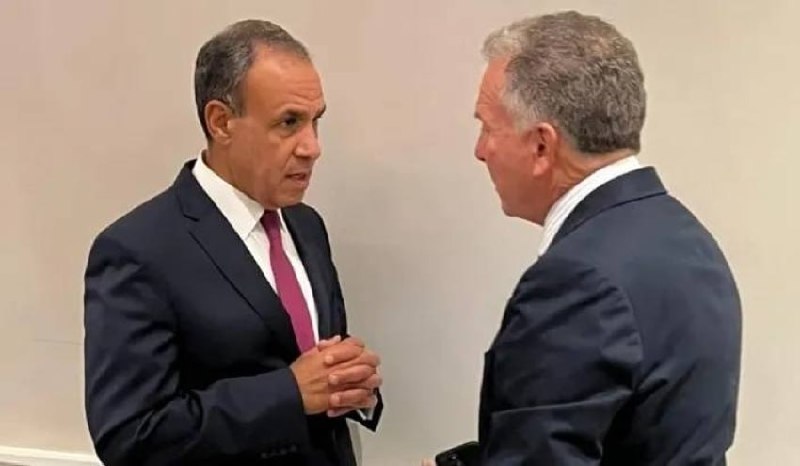
On 22 May 2026, Pakistani army chief General Asim Munir arrived in Tehran for a visit that, on its surface, appeared routine. Bilateral defense ties, border management, a meeting with Iranian counterparts — the kind of engagement that generates modest coverage in regional wires. What the wires reported less prominently, and what multiple diplomatic channels subsequently confirmed, was that Munir's visit carried a second, quieter mandate: Islamabad was working to arrange a second round of direct negotiations between Iran and the United States, the first such effort since the collapse of the 2015 JCPOA framework and the subsequent maximum-pressure campaign that followed.
The news, first reported by the Associated Press citing Pakistani officials, arrived at a moment when the architecture of US-Iran engagement has been under sustained stress for nearly seven years. Sanctions have been ratcheted tighter; diplomatic channels have narrowed to near-zero; the nuclear file has accumulated infractions that no administration in Washington has yet been willing to formally certify as a breach triggering the snapback provisions of Resolution 2231. Against that backdrop, Islamabad's decision to position itself as an intermediary — not for the first time, but with what sources describe as renewed urgency — is a significant diplomatic move that deserves more scrutiny than it has received in the Western wire ecosystem.
This publication finds that Pakistan's outreach reflects a calculation running through several regional capitals simultaneously: that the moment for back-channel diplomacy may be more favorable than at any point since 2018, and that states with existing relationships to all parties are the only viable vehicles for that diplomacy. It also reflects something more structural — a quiet but discernible shift in how the Global South is positioning itself in relation to the sanctions regime, an architecture that increasingly governs global financial flows in ways that are becoming harder for Western policymakers to unilaterally enforce.
The Immediate Context
The sequence of events, as reconstructed from available reporting, runs as follows. General Munir's arrival in Tehran on 22 May 2026 was preceded by weeks of preparatory contacts, the nature of which remains closely held. By 23 May, the Associated Press — citing Pakistani officials who spoke on condition of anonymity given the sensitivity of the process — reported that Islamabad was continuing its efforts to arrange what would constitute a second round of direct negotiations between the Iranian and American delegations. The first round, readers will recall, produced no publicly acknowledged breakthrough; the two sides sat in the same room without the direct diplomatic contact that had characterized the Obama-era back channel, but no joint statement emerged, and the Trump administration publicly dismissed the exercise as theatre.
What distinguishes the current effort, according to the Pakistani officials cited, is Islamabad's insistence that it is not seeking to replicate that outcome. The aim, as described to wire reporters, is more modest: to establish a framework for a second round that has some prospect of producing a preliminary agreement on peripheral issues — sanctions relief for humanitarian trade, the unfreezing of Iranian assets held in third-country correspondent accounts — before any conversation on the nuclear file proper begins. Whether that sequencing is achievable, or whether Tehran and Washington will insist on addressing the nuclear question first, is one of the open questions this article returns to below.
Pakistan's willingness to serve as a go-between is not without historical precedent. Islamabad has maintained channels to both Tehran and Washington throughout the sanctions era, a function of its geographic position — sharing a long, contested border with Iran and a complex but enduring security partnership with the United States that survived the post-2021 strains over Afghanistan. What has changed is the political calculus inside each of the three capitals.
The Regional Diplomatic Architecture
For Pakistan, the calculus is partly economic and partly security-driven. The country's IMF program remains under pressure, and the ceiling on sovereign dollar liquidity has re-introduced the kind of balance-of-payments vulnerability that makes sanctions compliance a double-edged question: every dollar of sanctioned trade Pakistan forgoes is a dollar that does not flow back into a foreign-exchange reserve position that is already under strain. Tehran, for its part, has demonstrated over the past three years that it can sustain a degree of economic isolation that earlier Western assessments deemed unsustainable — a resilience that has emboldened the hardline institutional factions in the Islamic Republic while simultaneously giving the Raisi administration a reason to explore limited financial relief without conceding the nuclear program's trajectory. Washington, meanwhile, faces a set of constraints that the current administration has not publicly resolved: the Iran nuclear architecture is degrading faster than the publicly available International Atomic Energy Agency reporting suggested as recently as 2024, but certifying that degradation as a breach — and triggering the snapback mechanism — would set in motion a diplomatic process the White House has indicated it does not currently want to manage.
The result is a standoff in which all parties have incentives to explore channels that do not require them to publicly acknowledge engagement. Pakistan sits in that space more naturally than any other capital. Its military relationship with Washington has survived multiple ruptures — over drone strikes, over Afghanistan, over the Kashmir question that periodically complicates ties with Israel-adjacent diplomatic networks. Its relationship with Tehran is governed by shared border infrastructure, water rights, and a narcotics-trade dynamic that makes outright confrontation structurally implausible. Islamabad's intelligence and diplomatic apparatus has, over two decades, developed a working knowledge of both channels that no other intermediary currently enjoys.
The Complications
It would be overdrawn to present Islamabad's gambit as likely to succeed, and the sources do not support such a conclusion. The obstacles are substantial and well-documented.
On the American side, the current administration's posture toward Iran is governed by a faction inside the National Security Council that views any diplomatic engagement not premised on complete nuclear roll-back as a bad deal in the making. The 2018 withdrawal from the JCPOA was not an aberration in this reading; it was a correction. Any deal that does not permanently eliminate Iran's enrichment capacity to the level the Trump administration demanded in 2018 — which Iran has consistently rejected — faces significant domestic political headwinds. The officials cited in the AP reporting are careful to note that Islamabad is facilitating, not guaranteeing; the Pakistani role is to create conditions for a conversation, not to dictate its terms.
On the Iranian side, the institutional factions most resistant to any engagement with Washington have been strengthened by the Raisi government's consolidation of control over the nuclear program's civilian and military dimensions. Iran's Supreme Leader has not publicly endorsed back-channel engagement; the statement issued through official Iranian channels at the time of the first round of talks was carefully non-committal. Any second round faces the same structural obstacle: Tehran wants sanctions relief that Washington is not prepared to offer without a verifiable nuclear concession, and the nuclear concession Tehran is prepared to offer falls below the threshold any American administration can accept without political exposure.
There is also a third layer of complexity that the wire coverage has largely omitted. The current moment in US-Iranian engagement is not occurring in a geopolitical vacuum. The broader realignment of trade and financial relationships — driven in part by the sustained use of secondary sanctions as a foreign-policy instrument, in part by the development of alternative financial messaging systems by BRICS-aligned states, and in part by the continued deterioration of the dollar's share in bilateral trade between the United States and a number of large emerging economies — has altered the terrain on which any sanctions-relief conversation occurs. Iran's economy, by multiple accounts, has proved more resilient to the sanctions regime than most Western assessments predicted as recently as 2022. That resilience changes Tehran's negotiating posture in ways that are not fully captured by the binary framing of "sanctions relief vs. nuclear concessions."
Structural Frame
The framing of Pakistan's effort as simply a bilateral mediation misses something important about the structural context in which it sits. What Islamabad is navigating — and what makes its gambit potentially significant beyond the immediate question of whether a second round of talks produces a preliminary agreement — is the slow erosion of the sanctions architecture as a unilaterally enforceable instrument.
The dollar's role in global trade and finance has been, for decades, the structural foundation on which US sanctions rest. When the United States designates an entity as sanctioned, the mechanism of enforcement is not primarily the American legal system — it is the fact that the targeted entity's correspondent banking relationships run through dollars, and therefore through American jurisdiction. That architecture has not collapsed. But it has been progressively circumvented in ways that were not available, or not cost-effective, in earlier decades. The development of local-currency swap arrangements between large trading partners, the maturation of alternative messaging systems, and the willingness of a growing number of states to conduct bilateral trade outside dollar-cleared systems has created what economists in the policy community have begun calling a "gray zone" — trade that is technically outside the dollar system and therefore beyond the reach of primary sanctions, while remaining observable enough that secondary sanctions risks still apply.
Iran has been operating in that gray zone longer than most states. What is changing is the degree to which the gray zone is expanding to encompass relationships between the United States and partners it has historically relied upon for sanctions enforcement. Pakistan's willingness to serve as a go-between is not merely diplomatic hospitality; it is a signal that states which have historically accepted the costs of dollar-system compliance are increasingly calculating that those costs are not worth the diplomatic goodwill they purchase. That calculation does not mean Pakistan is aligning with Tehran against Washington — the security relationship remains intact, the IMF program is dollar-denominated, and the Pakistani military's relationship with the United States has survived significant prior strains. But it does mean that Islamabad is hedging its diplomatic exposure in ways that reflect a broader shift in how middle-tier powers navigate the US-centric financial architecture.
Stakes and Forward View
The stakes of Islamabad's gambit, should it produce even a preliminary framework, are significant across multiple dimensions.
For Iran, a second round of talks — even one that produces only limited humanitarian sanctions relief — would represent a formal acknowledgment by Washington that the diplomatic channel remains open, which the Raisi government could present domestically as evidence that pressure is producing results. It would also, potentially, slow the timetable for any IAEA referral that the United States might otherwise consider, since engagement creates political cover for delay.
For Washington, the calculation is more complex. The administration has publicly stated that it prefers a diplomatic resolution to the Iranian nuclear question; it has equally publicly insisted that the military option remains on the table. A successful second round that produces even modest progress would validate the back-channel approach and reduce the pressure on factions inside the administration that want to move toward a more confrontational posture. A failed round — or a round that produces no outcome, as the first did — risks hardening both positions.
For Pakistan, the stakes are domestic as well as diplomatic. The country's economic fragility makes any sanctions-busting exposure politically costly; equally, a failed mediation effort that Islamabad is seen to have initiated and then abandoned would undermine the credibility the military establishment has been building as a diplomatic actor. General Munir's presence in Tehran, and the subsequent AP reporting on Islamabad's efforts, represent a deliberate decision by the Pakistani establishment to associate itself with an initiative that carries meaningful risk. The fact that this decision was made — and made at the army chief level rather than the foreign ministry level — suggests that the political calculus inside Islamabad has concluded that the alternative, doing nothing, is more costly.
The question this article cannot yet answer — because the sources do not yet provide sufficient basis — is whether the second round of negotiations, should it occur, produces any outcome that either side can present as progress. The structural obstacles are real and well-documented. The financial architecture on which the sanctions regime depends is not collapsing, but it is changing in ways that reduce the leverage Washington can exercise unilaterally. And the political calendars in all three capitals create pressures that make diplomatic nuance difficult to sustain.
What can be said, with the confidence the available sources support, is that Pakistan's decision to position itself as the intermediary is itself a signal. It is a signal that states in the Global South are increasingly willing to act on the recognition that the old architecture of dollar-based compliance is not the only game available — and that the diplomatic costs of playing a brokering role, even in a relationship as sensitive as the US-Iranian one, may now be worth bearing.
Pakistan's foreign ministry declined to comment beyond acknowledging the visit. The Iranian mission to the United Nations did not respond to a request for comment by the time of publication.
Wire provenance
This editorial synthesis draws on the following public wire/social posts:
- https://t.me/tasnimplus/8471
- https://t.me/alalamarabic/23419
- https://x.com/polymarket/status/1923487629139497064
- https://en.wikipedia.org/wiki/Iran%E2%80%93Pakistan_relations
- https://en.wikipedia.org/wiki/United_States_sanctions_on_Iran
- https://en.wikipedia.org/wiki/Joint_Comprehensive_Plan_of_Action
- https://en.wikipedia.org/wiki/Asim_Munir
- https://en.wikipedia.org/wiki/Pakistan_Army