Israel's Repeated Strikes on Southern Lebanon Signal a Dangerous New Threshold
Israeli warplanes struck the southern Lebanese village of Jebchit for the third time in a single day on May 23, 2026, alongside attacks on Sir al-Gharbiya in the Nabatieh district. The frequency and repetition of these strikes raise questions about whether Israeli operations are shifting from targeted deterrence toward something more sustained.
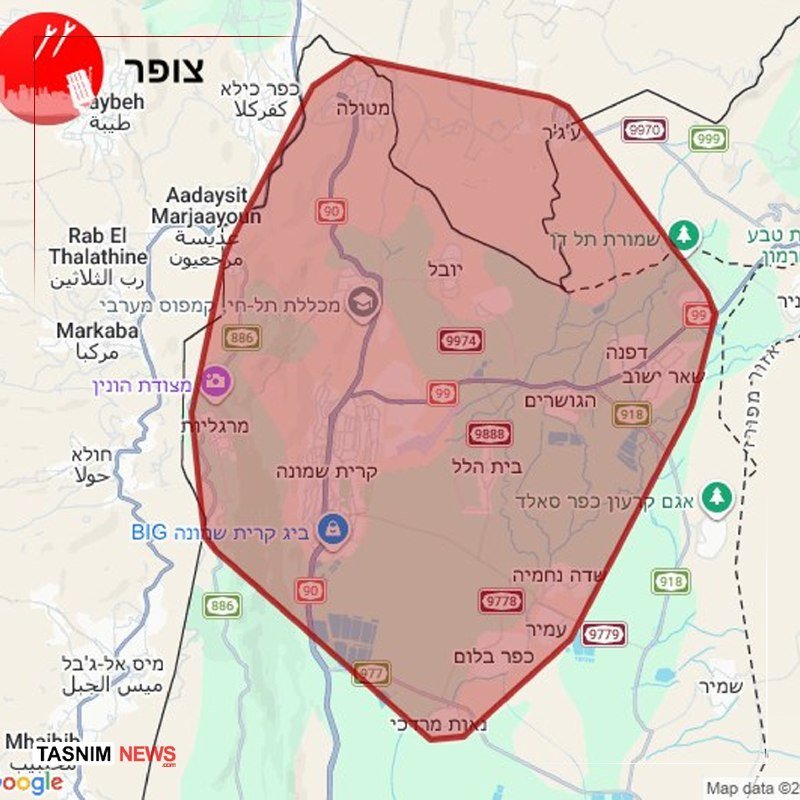
On May 23, 2026, Israeli warplanes struck the southern Lebanese village of Jebchit for the third time in a single day, according to regional media reports. The same outlets reported a separate Israeli attack on the town of Sir al-Gharbiya, in the Nabatieh district, with local sources describing multiple injuries. The repetition of strikes on the same target within hours is a departure from the pattern that had characterized exchanges between Israel and Lebanese factions over the preceding months.
The frequency matters. When an air campaign returns to the same village three times before midday, the framing shifts from incidental to intentional. Israel's security calculus permits aggressive responses to cross-border threats, and those concerns are legitimate and well-documented. But repeated hammering of civilian-adjacent infrastructure in southern Lebanon is not precision deterrence—it is escalation dressed in defensive language.
What the Strikes Actually Signal
Three strikes on a single village in one morning suggest a target-set methodology, not a reactive one. Military planners distinguish between dynamic targeting—hitting what presents itself in real time—and a pre-planned campaign sequence designed to degrade a particular capability or area over sustained hours. The Jebchit pattern fits the latter. Regional reporting described it as the third Israeli attack on that village on May 23 alone, a fact that sits uneasily with messaging that presents each strike as a discrete, self-justifying response to specific provocations.
Sir al-Gharbiya, located in the Nabatieh governorate, has no significant military installation of its own. It is a market town with a civilian population that has absorbed the spillover of a conflict it did not choose. When strikes produce injuries in such a location, the burden of explaining why the target was worth that human cost falls on whoever ordered it—and the explanation offered so far, that the town harbored hostile infrastructure, is a claim without independent corroboration from sources outside the regional media ecosystem reporting the attacks.
The Displacement Problem No One Is Counting
Southern Lebanon has been depopulated in waves. First by the 2006 war, then by years of lower-intensity exchanges, and now by a fresh surge of families fleeing after strikes that targeted their villages repeatedly. The Jebchit strikes are not happening in an empty military zone. They are happening in communities that have already been compressed into fewer and fewer habitable areas. Every strike that forces another family from their home does not merely eliminate a target—it shrinks the space available for civilians who have nowhere else to go.
The human geography of southern Lebanon is often absent from the framing that accompanies Israeli military statements. Those statements are legitimate in their own terms—Israel faces genuine threats from cross-border capability—and they deserve to be reported. But treating each strike as an isolated tactical event obscures the cumulative effect on a civilian population that has been systematically compressed into a smaller and smaller area.
The Escalation Logic Trap
There is a structural problem in the current dynamic that neither side has an obvious off-ramp from. Israeli security requirements demand responses to perceived threats; each response generates new threats as factions rebuild and recalibrate; those threats demand new responses. The Jebchit pattern—three strikes, same village, same day—illustrates how the escalation logic locks in. Each pass through the target set justifies the next. The question of when to stop is always deferred to the next round of threats, and the next, and the next.
This is not unique to this conflict. Contested borders with active armed factions and no political horizon tend to produce exactly this ratchet. The danger is that the ratchet continues until it produces an incident too significant to contain—either a strike that kills a category of person whose death triggers a qualitatively different response, or a miscalculation about the scope of retaliation that brings actors not currently engaged into the conflict. Neither outcome serves Israeli security interests in the long run, even if both are survivable in the short term.
What Remains Unresolved
The regional media reports describe strikes and injuries. They do not describe the specific military justifications offered by Israeli authorities for the Jebchit repetition or the Sir al-Gharbiya targeting. Those justifications may exist and may be compelling—Israeli security requirements are real, and the threat environment along the northern border is documented. But a news story built entirely from one side's reporting of events framed by that same side's official language is not the full picture.
What is clear is that May 23, 2026 marked a threshold event: a single day in which a Lebanese village was struck three times and a Nabatieh district town was hit with injuries. Whether this represents a new operational tempo, a recalibration of acceptable civilian risk, or simply a particularly active 24 hours is a question the available sourcing cannot yet answer. What the pattern does suggest is that the old frameworks for understanding these exchanges may no longer fit what is happening on the ground.
This publication covered the Jebchit and Sir al-Gharbiya strikes through regional media reports describing Israeli military action in southern Lebanon on May 23, 2026. Western wire services had not published detailed corroboration of the strikes as of this filing.
Wire provenance
This editorial synthesis draws on the following public wire/social posts:
- https://t.me/TheCradleMedia/18432
- https://t.me/thecradlemedia/18431
- https://t.me/TheCradleMedia/18429
- https://t.me/thecradlemedia/18428