The Market Doesn't Believe the Ceasefire — And It's Telling Us Something
Polymarket odds and Iranian state media's unusual coalition-naming suggest both parties are performing progress for domestic audiences more than they are converging on actual terms.
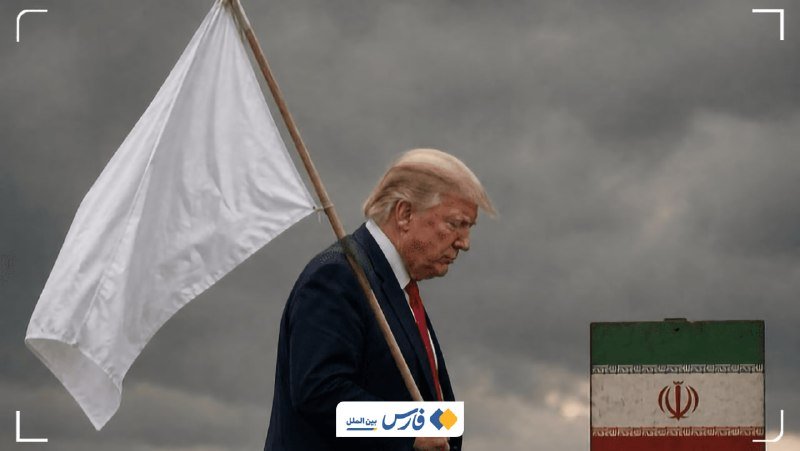
There is a particular kind of diplomatic language that sounds like progress but means almost nothing. On the evening of 23 May 2026, both the United States and Iran signaled — through official channels and state-adjacent media — that talks on ending the ongoing war had produced "progress." CNN reported the impasse was over. Reuters confirmed the contours of the claim. The markets of the internet noticed.
What the markets noticed was the odds.
Polymarket, the decentralised prediction market, had placed an 8 percent chance on Iran agreeing to surrender its enriched uranium stockpile by the end of the month. That figure had barely moved in three days — 9 percent on 22 May, 7 percent on the morning of 23 May, 8 percent by evening. When negotiators announce progress and a probability gauge sits unmoved at single digits, one of two things is true: either the market is wrong, or the announcement is theatre.
The Optics Layer
The "Epstein Coalition" is not a term Western diplomats use. It appears in a post by Iranian-aligned commentator s_m_marandi on 23 May, describing the bloc of nations arrayed against Iran in the current conflict. The name is designed for domestic Iranian consumption — associating Western governments with a disgraced figure carries no diplomatic weight abroad but lands precisely inside the information environment Tehran controls. That an Iranian commentator deploys it publicly tells us something about how the Islamic Republic is framing the conflict to its own population: as a contest between an illegitimate Western alliance and a sovereign state, not as a dispute over nuclear compliance with verifiable international obligations.
That framing matters because it clarifies what both sides are actually doing. Tehran is performing defiance. Washington is performing flexibility. Neither performance is free — each serves an internal political function. The Biden administration, now deep into its lame-duck arc, has every incentive to announce a diplomatic opening regardless of substance. A ceasefire extension, even a temporary one, generates headlines that look like accomplishment. For Tehran, allowing the narrative that talks are progressing buys time — the enrichment programme continues regardless, and every week of negotiation is a week in which Iran moves closer to thresholds that make future concessions structurally harder to demand.
This is the first structural problem with the coverage: it treats "progress in talks" as a discrete event when it is better understood as an ongoing performance in which both actors benefit from ambiguity.
The Polymarket Signal
Prediction markets are not oracle. They are aggregates of credibly committed capital — people who put dollars behind convictions rather than opinions behind keyboard. The stability of the 7–9 percent uranium-surrender probability across three days of supposedly breakthrough negotiations is striking. It suggests that sophisticated actors with real money at stake do not believe the final sticking points — the enrichment cap, the sanctions architecture, the verification regime — are close to resolution. A 60-day ceasefire extension deal, reported by multiple Polymarket events on 23 May as "closing in," would extend the current arrangement without resolving the underlying dispute. That the uranium-surrender odds barely shift when a ceasefire-extension deal is near-confirmed tells you what the market thinks ceasefire without agreement on the nuclear programme actually means: breathing room for Tehran, not a denuclearisation pathway.
This asymmetry — official language that implies structural resolution, market signals that price in perpetual negotiation — is not unique to the Iran file. It recurs across every high-stakes diplomatic corridor where electoral calendars compress negotiating windows. But it is particularly consequential here, because the nuclear programme's timeline and the conflict's escalation curve are moving in opposite directions. Every week of extended ceasefire without a nuclear agreement is a week in which Iran's enrichment levels move closer to weapons-grade thresholds. The ceasefire buys time. The question is for whom.
What the Ceasefire Is Not
There is a version of this coverage that treats the ceasefire as a success regardless of the nuclear question — the argument that any pause in active conflict is instrumentally valuable, that talks happening are better than talks not happening, that presence at the table is itself a form of progress. This framing is not wrong exactly, but it is incomplete in a way that serves neither accurate analysis nor sound policy.
A ceasefire that extends an existing pause without addressing the underlying cause of the conflict is not a ceasefire in the diplomatic sense — it is a scheduling agreement. The underlying cause here is Iran's nuclear programme and the international community's insistence on constraints that Iran has consistently expanded beyond. Accepting a ceasefire extension as "progress" while the enrichment infrastructure remains intact and verified only if inspectors are granted intermittent access — a standing point of contention — is to mistake the absence of an explosion for the presence of a solution.
The Polymarket odds sit at 8 percent. That number is not a prediction. It is a market's collective judgment, formed by people who risk capital rather than rhetoric, that a genuine deal — one involving actual uranium surrender, actual sanctions relief, actual verification — is not close. The officials who announce progress may be telling the truth about their intentions. They are not, by the evidence of the odds, telling the truth about the outcome.
The gap between diplomatic announcement and market signal is not a reason to stop negotiating. It is a reason to read announcements of progress with the same scepticism any analyst applies to any claim backed by interested parties. What the 23 May statements from Washington and Tehran share is an audience that is not the other side of the table. It is the domestic constituency that needs to believe the government is doing something, and the international audience that the talks are conducted in front of. The actual terms — the enriched uranium, the verification mechanisms, the sanctions architecture — are being settled in a different conversation, one that these announcements are careful not to resolve, because resolution would require concessions neither government can politically afford to announce.
The ceasefire, if it holds, will hold. The uranium will not be surrendered. And the market, which is never the story, will quietly be right again.
Wire provenance
This editorial synthesis draws on the following public wire/social posts:
- http://reut.rs/4wN2XHS