The Necessity Accord: Why Washington and Tehran Are Talking
After years of maximum pressure and near-complete isolation, the US and Iran are in active negotiations. The drivers are not goodwill on either side — they are structural, and the shape of any deal will reflect that.
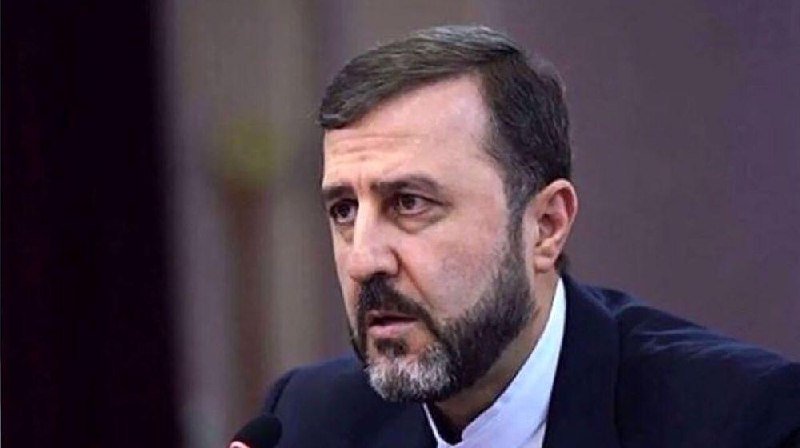
The talks are real. That is the first thing worth establishing, against years of editorial shorthand that reduced US-Iran contact to a binary between confrontation and collapse. On 23 May 2026, Middle East Eye reported that Washington, Tehran, and Islamabad jointly acknowledged that negotiations were progressing toward some form of deal. The language from all three capitals was careful, the timelines deliberately vague — but the track itself is not a fiction manufactured to fill a news cycle. Something is moving.
What is moving, however, is not the product of ideological sympathy or diplomatic warmth. It is the product of necessity on both sides — and anyone covering this as a feel-good revival of the JCPOA is missing the structural logic that will determine what any agreement actually looks like.
The sanctions architecture did not work — it migrated
The maximum pressure campaign, launched in 2018 when the United States unilaterally withdrew from the Joint Comprehensive Plan of Action, was premised on a simple theory: choke Iran's economy hard enough that the regime either capitulates on its nuclear programme or collapses. Neither happened. What happened instead was more instructive: Iran did not capitulate, but it also did not stand still. It accelerated enrichment, moved enrichment infrastructure deeper underground, and — crucially — found alternative buyers for its oil that were largely indifferent to secondary sanctions.
China became the primary beneficiary and enabler of that migration. Beijing is Iran's largest trading partner and its most significant oil customer. Chinese purchases of Iranian crude operate at a structural discount — sometimes 20 to 30 percent below market — precisely because they carry the implicit insurance of Chinese state support against US retaliation. Washington has sanctioned Chinese entities for Iranian oil dealings; Beijing has not significantly altered its purchasing patterns. The sanctions regime, designed to be multilateral, became effectively unilateral — and therefore less effective not because Iran built resilience, but because a major power chose not to participate.
This is the context in which the current negotiations sit. The US is not negotiating from a position of demonstrated leverage. It is negotiating because the alternative — continued unilateral sanctions with diminishing returns and a nuclear programme advancing on its current trajectory — is worse than talking.
Iran is negotiating from a position of managed desperation, not strength
The framing that Iran entered these talks as a strengthened actor, having survived maximum pressure, deserves scrutiny. Iran's economy is under genuine strain. The rial has depreciated substantially against the dollar. Inflation, while not catastrophic by regional standards, has been persistent enough to erode living standards for the urban middle class that the Islamic Republic has historically needed to manage. The oil revenue migration to China has given Tehran a lifeline, but it has also given Beijing considerable leverage over Iranian foreign policy — a dependency that Iranian strategists are not comfortable acknowledging publicly.
Iran's nuclear programme is the asset that keeps the international community at the table. But enrichment levels, stockpiles, and technical capability are not leverage in the diplomatic sense — they are the thing that makes the US and its partners frightened enough to negotiate. That is a different kind of strength, and a more precarious one. A nuclear-armed Iran would be a more significant geopolitical disruption, yes — but it would also invite a military response that Tehran, rationally, does not want. The calculus that governs Iranian behaviour is not expansionist confidence. It is survival management under continued external pressure.
China sits in the room without being at the table
The most underreported dimension of this negotiating track is China's role. Beijing does not appear as a formal party to the current US-Iran discussions. But it is present in every calculation both sides are making. The US must consider whether any deal is viable given that Iran already has an economic lifeline through Chinese purchases that are largely sanctions-proof. Iran must consider whether concessions to Washington that could alienate Beijing are worth the economic engagement that China provides.
China's interest is not in a US-Iran deal per se — it is in a regional equilibrium that allows it to continue purchasing Iranian oil at discounted rates while maintaining a strategic relationship with Saudi Arabia and the UAE that China has carefully cultivated. A restored JCPOA that brings Iranian oil fully back onto the open market would actually reduce China's leverage over Tehran and potentially increase global supply in a way that modestly disadvantages Chinese energy interests. Beijing, therefore, has reasons to undermine a deal as well as reasons to support one.
This is the structural reality that any negotiated outcome must navigate. The US and Iran are not negotiating in a vacuum. They are negotiating in a region where Chinese capital, infrastructure investment, and energy partnerships have fundamentally altered the terrain on which sanctions and concessions operate.
Pakistan's presence is not incidental
The inclusion of Pakistan in the reported trilateral track is worth noting, even if the details remain thin. Islamabad has historically maintained a complex relationship with Tehran — ranging from strategic wariness to, at moments, quiet cooperation on border security and economic matters. Pakistan also has its own reasons to want a stable nuclear neighbour rather than one operating under the shadow of Israeli or American military action. And Pakistan's debt position, its IMF programme, and its reliance on Gulf state financial support mean that it has its own structural interest in a region that is not in active conflict.
The question is whether Pakistan's involvement is substantive or ceremonial — a question the available reporting does not yet answer. Oman, which has long served as the back-channel mediator between Washington and Tehran, remains the more plausible venue for substantive talks. But the fact that Islamabad is being named suggests that the current track has a different architecture than the indirect Oman-mediated conversations of recent years. Whether that changes anything substantively remains to be seen.
What a deal could and could not resolve
The most likely structure of any agreement emerging from this track would be partial and conditional — a renewed understanding on enrichment levels and monitoring in exchange for limited sanctions relief, calibrated to preserve the nuclear non-proliferation architecture while not fully normalising Iran's regional position. The full restoration of the JCPOA — with its comprehensive sanctions removal and snapback provisions — is not a realistic near-term outcome. The political conditions in Washington, where any deal with Iran carries significant domestic opposition, and in Tehran, where concessions to the United States are politically costly, make the full package unachievable in the current moment.
What Washington is likely seeking is a pause: a cap on enrichment progress, access for inspectors, and a commitment not to transfer nuclear materials to proxies. What Iran is likely seeking is economic oxygen — the ability to access oil revenues at scale and relieve the pressure that has built over seven years of maximum pressure. The meeting point between those positions is a narrow corridor, and it is made narrower by the fact that China benefits from the current arrangement enough to subtly push against concessions.
The talks are real. The progress is real. But the framework is desperation on both sides, dressed in diplomatic language. That is worth understanding before the celebratory framing sets in.