Palestinian Supporters Hold Mass Rally Outside Israeli Embassy in Athens
Thousands of Palestinian supporters demonstrated outside the Israeli embassy in Athens on May 23, in one of the largest pro-Palestinian rallies seen in the Greek capital in recent months. The protests came as bilateral ties between Athens and Jerusalem face renewed scrutiny over Greece's positioning in eastern Mediterranean geopolitics.
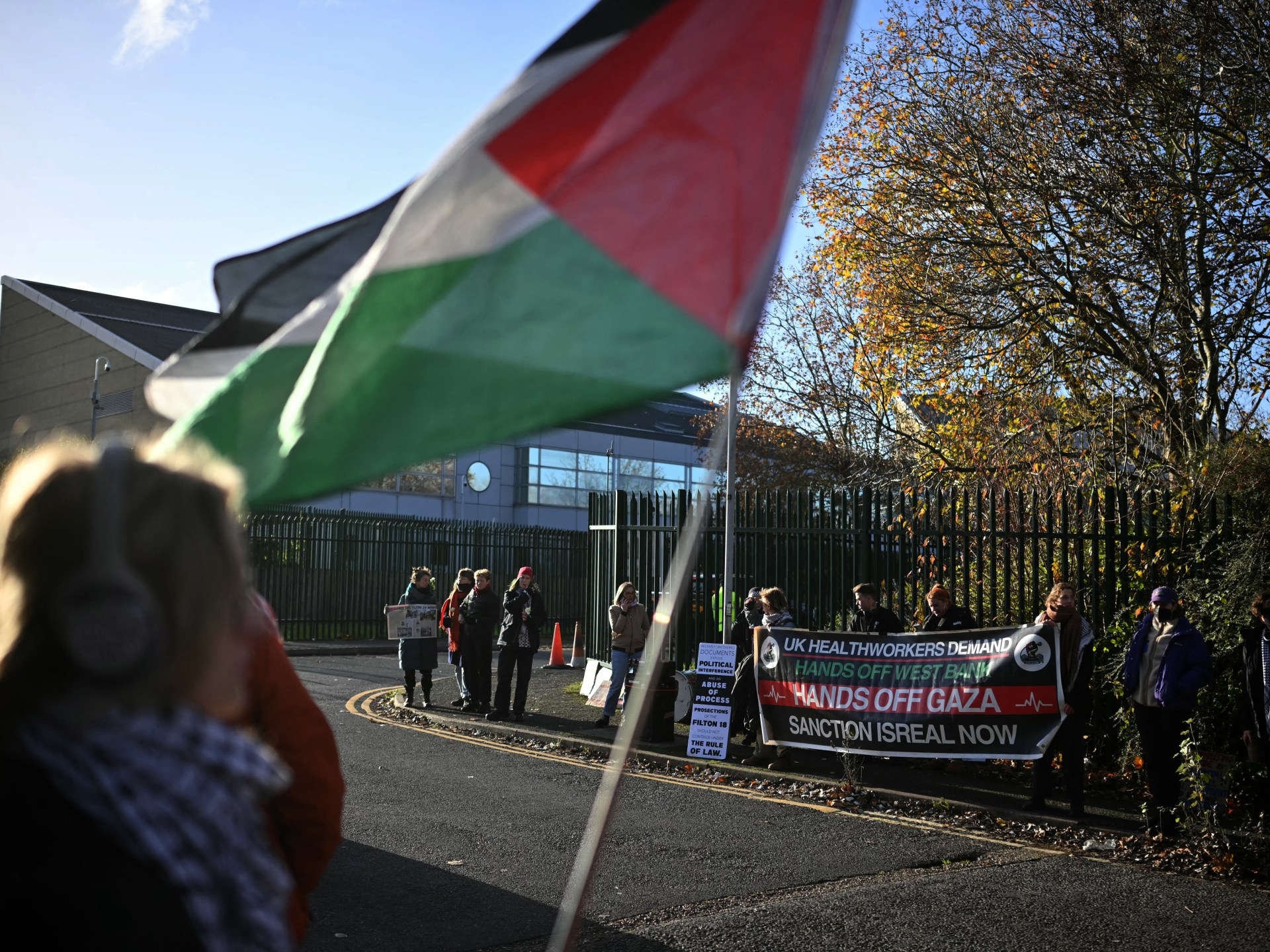
Demonstrators gathered in large numbers outside the Israeli embassy in Athens on May 23, 2026, for what organisers described as a day of solidarity with Palestinians in Gaza and the occupied West Bank. Video footage from the scene showed the protest stretching along Vassileos Konstantinos Avenue, a major diplomatic corridor in the Greek capital, with participants carrying banners and Palestinian flags. The demonstration, coordinated through Greek and Palestinian community networks, was among the most significant pro-Palestinian gatherings held in Athens since the reopening of ceasefire negotiations in early 2026.
The protests in Athens are part of a broader pattern of intensified pro-Palestinian activism across European capitals in recent weeks. As ceasefire negotiations between Israel and Hamas entered a fragile phase, diaspora communities and left-leaning civil society organisations have sought to keep pressure on European governments to adopt more assertive stances in favour of Palestinian statehood and unrestricted humanitarian access to Gaza. Greece, which has historically maintained balanced diplomatic relations with both Israel and Arab states, has found itself increasingly in the spotlight as a test case for how European Union member states navigate the competing pressures.
Greece's Diplomatic Position Under Strain
Athens has walk a careful line since October 2023, consistently condemning Hamas while simultaneously calling for humanitarian pauses and endorsing a two-state solution. The government of Prime Minister Kyriakos Mitsotakis has deepened energy and security cooperation with Israel through the Eastern Mediterranean Gas Forum, while also maintaining strong ties with Jordan, Egypt, and the Gulf states. That balancing act has grown more difficult as pro-Palestinian sentiment within Greece itself has hardened, particularly among the country's substantial immigrant communities and student organisations at Greek universities.
The embassy protest on May 23 drew participation from groups including the Greek Committee for Palestine, anarchist and left-wing collectives, and diaspora organisations representing Palestinian-Greek families. Chants in Greek and Arabic called for an end to the Israeli presence in the West Bank and for European governments to impose targeted sanctions on Israeli officials. Greek police were present in significant numbers but the demonstration remained largely peaceful throughout the afternoon.
Tehran's Framing and the Information Landscape
The demonstration was first reported in English by Tasnim News, an Iranian state-affiliated news agency, and subsequently by Jahan Tasnim, its Persian-language sister outlet. Both characterised the protest as a mass mobilisation against what they termed the "Zionist embassy," language that reflects Tehran's consistent framing of Israel as a Zionist project rather than a legitimate state. Iranian state media has long used such terminology, and its coverage of European protests tends to emphasise scale and anti-Western framing in ways that serve Tehran's broader geopolitical narrative.
That framing is worth examining critically. The Iranian government, which backs Hamas and Hezbollah and has been locked in a longshadow confrontation with Israel, has an interest in amplifying protests that cast the Israeli embassy as a target of popular anger. Surface-level reporting on protests — counting bodies, noting slogans, measuring crowd size — can be deployed to suggest a level of popular European opposition to Israel that may or may not correspond to mainstream public opinion in the country where the protest occurs. Greek public opinion polling consistently shows complex and divided attitudes toward the Israel-Palestine conflict, not a monolithic anti-Israel consensus.
At the same time, dismissing the demonstration as mere Iranian propaganda would be equally wrong. Large-scale protests at diplomatic missions are real events with real participants, and they reflect genuine sentiment among portions of the Greek public regardless of how that sentiment is subsequently framed in Tehran. The task for independent reporting is to verify the facts of what occurred while remaining clear-eyed about the interests shaping how different outlets cover it.
Structural Context: European Capitals and the Gaza Question
The Athens protest sits within a wider European difficulty over how to position themselves on an issue that exposes fault lines within the EU itself. Germany and Austria have been among the most consistently supportive of Israel's security posture; Ireland, Spain, and Belgium have moved toward more critical positions, including recognition of Palestinian statehood in limited contexts. Greece has occupied a middle position, formally supportive of Israel's right to exist and to defend itself, but increasingly uncomfortable with the humanitarian consequences of prolonged military operations in Gaza.
European governments face a secondary pressure: domestic constituencies. Large immigrant populations from the Middle East and North Africa in cities including Athens, Berlin, Paris, and Amsterdam have made the Gaza conflict a domestic political issue in ways that European foreign policy establishments cannot simply manage away. Student occupations at university campuses in several European cities — following a pattern established at Columbia, Yale, and Sciences Po — have added a generational dimension to the debate. For governments like Mitsotakis's, which depends on centrist and centre-right support, the political calculus is delicate: condemn the protests too strongly and alienate progressive voters; endorse them too openly and risk rupturing the Israel relationship.
The protests in Athens, London, Paris, and elsewhere are symptoms of a broader failure of European diplomacy to shape outcomes in the Middle East commensurate with European economic and political weight. Europe has sought a seat at the table on Gaza without the leverage to compel either party to accept its proposals. That frustration is visible in the streets.
What Remains Uncertain
The sources reviewed for this article do not provide independent crowd estimates for the Athens demonstration, and no Western wire services had published coverage as of the time of filing. The exact demands articulated by protest organisers — beyond general calls for Palestinian rights — are not fully specified in available reporting. The Greek government's official response, if any, had not been formally issued. How the Mitsotakis administration chooses to characterise the demonstration, if it comments at all, will itself be a signal of where Athens intends to position itself in the coming weeks of ceasefire negotiations.
This article drew on Tasnim News and Jahan Tasnim Telegram channels as primary sources on the demonstration's occurrence and scale. Monexus notes that both outlets operate within Iranian state media architecture, and coverage should be read with that structural context in mind. The publication has no independent confirmation of crowd size figures from non-Iranian sources at time of publishing.
Wire provenance
This editorial synthesis draws on the following public wire/social posts:
- https://t.me/tasnimnews_en
- https://t.me/JahanTasnim