Rubio's Hormuz Gambit: India, Iran, and the Strait at the Center of Global Diplomacy
Secretary of State Marco Rubio landed in New Delhi on 23 May 2026 as U.S.-Iran proximity talks over the Strait of Hormuz enter a fragile new phase — with India positioning itself as a potential mediator and energy markets watching every signal from both sides.
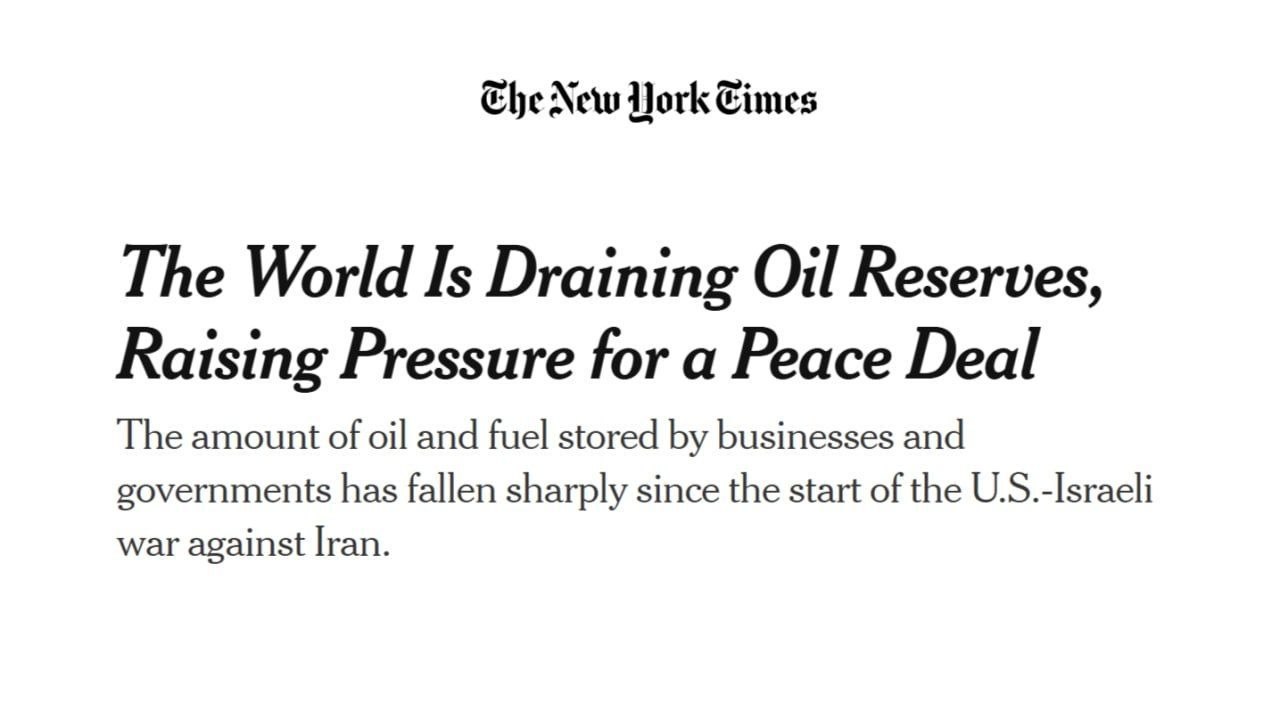
The talks are happening. The Strait of Hormuz — through which roughly a fifth of the world's oil passes — sits at the center of them. And as Secretary of State Marco Rubio landed in New Delhi on 23 May 2026, the diplomatic signals arriving from Washington and Tehran were characteristically contradictory.
Rubio, speaking to journalists during his European tour, acknowledged "some progress" in talks with Iran aimed at ending hostilities and reopening the strait, according to reporting by Middle East Eye. That same day, a correspondent with Alalamarabic asked Rubio directly whether Washington had made progress with its allies on reopening Hormuz. The answer, delivered with diplomatic bluntness: "No. That would be very…" The sentence was left unfinished. The message, however, was clear — agreement with Iran on reopening the strait, if it exists at all, does not yet have the blessing of American regional partners.
That tension — between proximity and consensus — defines the moment. And India, with its deep energy ties to Tehran, its security relationship with Washington, and its historical refusal to take sides in the Gulf, has found itself unexpectedly central to the outcome.
Proximity Without Breakthrough
The publicly available evidence describes a conversation in early stages. Rubio confirmed talks are ongoing and characterized the trajectory as positive, using the phrase "some progress." That phrase, in diplomatic usage, typically signals movement without commitment — a sign that principals are talking, that the channels are open, and that no party has walked away. It does not signal agreement. It does not signal a deal.
The follow-up, in which Rubio told a correspondent that allied coordination on Hormuz had not progressed, suggests the conversations between Washington and Tehran are bilateral rather than multilateral at this stage. American partners in the Gulf — Saudi Arabia, the UAE, Qatar — have not, according to the public record, signed on to whatever framework is being discussed. This is significant. The Strait of Hormuz is not simply a U.S.-Iran bilateral issue. The Gulf monarchies share the waterway, rely on it for their own oil exports, and have their own concerns about Iranian behavior — including support for proxy forces and naval deployments near the strait.
Any reopening agreement that lacks Gulf state buy-in would be structurally incomplete. That Rubio acknowledged this gap publicly, rather than papering over it, suggests either transparency about the talks' limitations or a deliberate signal to domestic critics that no commitment has been made without allied consultation.
India's Position
Rubio's arrival in New Delhi on 23 May is the third data point in this story. The visit, confirmed by Polymarket's tracking of his itinerary, is a four-day trip that places the secretary of state in a capital with a uniquely complicated set of interests in this negotiation.
India is Iran's largest oil customer — a fact that places New Delhi squarely inside the economic logic of any Hormuz deal. Reduced tensions mean more stable flows, more competitive prices, and less need for India to navigate American secondary sanctions in order to keep its energy supply secure. It also means India has a direct interest in the talks' success, and — unlike the Gulf monarchies — has a longstanding relationship with Tehran that predates the current cycle of maximum pressure.
Modi's government has maintained a careful balance throughout the U.S.-Iran confrontation, continuing Iranian oil imports under partial sanctions waivers and building infrastructure like the Chabahar port that gives India a strategic foothold in the region without requiring it to take sides. That positioning makes New Delhi a credible potential mediator — acceptable to Washington as a partner, acceptable to Tehran as a counterparty it has dealt with before.
The question is whether India's diplomatic assets are being deployed in this direction. Rubio's agenda in New Delhi will presumably cover the full range of bilateral issues — defense cooperation, technology transfers, the Quad framework — but the Hormuz signal suggests the visit has a regional dimension as well. Whether India is being asked to carry a message to Tehran, to facilitate verification of any future agreement, or simply to signal its interest in a stable outcome remains unclear from the public record.
The Structural Stakes
The Strait of Hormuz is not merely a shipping lane. It is a pressure point in the architecture of global oil markets, a chokepoint that has defined Gulf security planning for decades, and — in the current geopolitical moment — a proxy for the broader question of whether the United States and Iran can find any zone of mutual accommodation.
The dollar dimension matters here, even if it rarely appears in the headlines. Petrodollar recycling — the mechanism by which Gulf oil revenues flow back into U.S. Treasuries and dollar-denominated assets — depends on the stability and security of Gulf shipping lanes. A Hormuz crisis that disrupts flows or forces insurance premiums higher erodes that architecture quietly. Iran, for its part, has used the threat of strait disruption as leverage in previous cycles of confrontation, recognizing that the global economy's sensitivity to oil prices gives it a form of structural power that its conventional military capabilities do not.
A deal that reopening the strait would shift that balance — not by eliminating Iran's leverage, but by removing the immediate pretext for the kind of naval build-up and interdiction operations that have characterized the past two years. It would also, if structured correctly, give both sides something to show domestic constituencies: Tehran can claim sanctions relief and restored export capacity; Washington can point to reduced regional instability and maintained containment of Iran's nuclear program.
That dual-claim structure is fragile by design. It requires both sides to accept a deal that falls short of their stated maximum positions — Iran to accept limits on its nuclear program that fall short of full dismantlement, and Washington to accept Iranian oil exports that fall short of the pre-2018 levels sanctions regime. Neither side has publicly acknowledged those concessions, and the publicly available evidence does not confirm any agreement on the substance. What the evidence confirms is that the conversation is happening, and that it is happening at a sufficiently senior level that Rubio is discussing it on a diplomatic tour.
What Remains Uncertain
The sources reviewed for this article describe a situation in motion, not a concluded outcome. Rubio's "some progress" is the most specific public signal to date that the U.S. and Iran are engaged in a substantive negotiation on Hormuz specifically. His simultaneous acknowledgment that allied progress on the strait has not advanced provides an important counterpoint: whatever bilateral understanding may be emerging, it has not yet been socialized with the regional partners whose buy-in would make it durable.
Several questions remain unresolved. The sources do not specify what concessions either side has offered or demanded, what verification mechanisms would apply to any agreement, or whether the Hormuz talks are linked to broader negotiations over Iran's nuclear program. They do not confirm whether the Gulf monarchies have been consulted, whether China — which has substantial interests in stable Gulf energy flows and a relationship with Tehran that complicates the U.S. position — has played any role, or whether covert military channels are operating parallel to the diplomatic ones.
India's position in the picture is suggestive rather than confirmed. The visit to New Delhi may or may not be connected to the Hormuz talks; the sources do not specify Rubio's agenda beyond the fact of his arrival. What is clear is that India has interests in the outcome, positioning that makes it a natural interlocutor, and a track record of engagement with Tehran that few other U.S. partners can claim.
The negotiation, if it proceeds, will be measured not in diplomatic communiqués but in tanker transits, insurance rates, and the volume of oil moving through the strait each day. Those data points — not the public statements — will be the real measure of whether "some progress" has become, in time, something more durable.
Wire provenance
This editorial synthesis draws on the following public wire/social posts:
- https://x.com/MiddleEastEye/status/1921965812396093441
- https://x.com/Polymarket/status/1921993421489721733
- https://en.wikipedia.org/wiki/Strait_of_Hormuz
- https://en.wikipedia.org/wiki/Marco_Rubio
- https://en.wikipedia.org/wiki/2021%E2%80%932022_Hormuz_conflict
- https://t.me/alalamarabic/38452