Rubio's Mixed Signals and the Iran Deal: Reading the Contradictions
US Secretary of State Marco Rubio has offered a series of conflicting signals about the status of nuclear negotiations with Iran — statements that highlight the deeper structural obstacles blocking any durable agreement between Washington and Tehran.
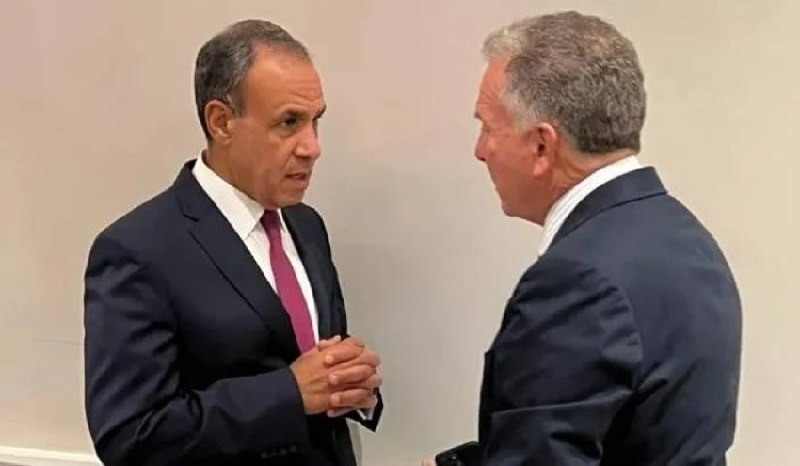
On May 23, 2026, the United States Secretary of State addressed the state of nuclear talks with Iran — and said three different things in the space of a few hours. At one point, Rubio told reporters that Iran must hand over its uranium stockpile. At another, he said significant news on the file could arrive "today, tomorrow or in a few days." By afternoon, he was back to hedging: there may be news later today, or there may not be.
The whiplash was not incidental. It was the message.
The Three Statements
The first significant remark came from the Tasnim news agency, a close outlet to Iran's Islamic Revolutionary Guard Corps, which quoted Rubio as stating that Iran must surrender its enriched uranium. That is a maximalist demand — the complete capitulation of Iran's civilian nuclear program — and one no Iranian government has accepted since negotiations began.
The second remark, reported by the Jahan Tasnim channel, carried a markedly different tone. Rubio suggested progress was being made. The language of "significant things to say" implied momentum toward an actual deal, not the insistence on total surrender that Tasnim had reported minutes earlier.
The third remark, carried by Fars News International, was the most equivocal of all. Rubio said news may come today — or it may not. The conditional phrasing stripped the statement of any meaningful informational content.
Three outlets, three framings, a single hour. The discrepancy invites skepticism about whether the State Department is projecting strength, testing reactions, or genuinely uncertain about its own negotiating position.
Iran's Response
Tehran's reaction, reported via the abualiexpress Telegram channel on the same day, cut through the confusion with characteristic bluntness. An Iranian Foreign Ministry spokesman stated that Iran feels "very close and also very far" from a final agreement. The reason cited was telling: previous American administrations have held contradictory positions, and Iran has no appetite for a diplomatic process that collapses once a new government takes office or a political wind shifts in Washington.
That diagnosis matters. Iran is not saying the deal is impossible. It is saying the United States is an unreliable counterpart — that American negotiating behavior oscillates between demands for capitulation, expressions of goodwill, and strategic ambiguity, sometimes within the same news cycle.
The spokesman's framing suggests Tehran is not the obstacle to a deal. It is the predictability of American incoherence.
The Pattern Beneath the Contradictions
The contradiction in Rubio's statements is not merely a communications problem. It reflects a deeper structural reality: the Trump administration has not settled on what it actually wants from Iran.
On one end of the spectrum sits the hardline position — Iran must denuclearize completely, hand over its uranium, and accept verification regimes that no sovereign state would accept without a formal peace treaty. On the other sits the pragmatic recognition that a comprehensive agreement requires concessions on both sides, and that maximalist demands produce only maximalist failures.
Rubio appears to be speaking to both audiences simultaneously. The uranium-demand quote satisfies the domestic hardline constituency. The progress-framing satisfies those pushing for a deal. The equivocal follow-up satisfies no one but buys time.
This is not a negotiation strategy. It is the improvisation of an administration that has not decided whether it wants a deal at all.
What the Contradictions Reveal About the Diplomatic Impasse
The sources do not clarify whether the White House has authorized Rubio to negotiate, to posture, or both. What is clear is that signaling incoherence to a counterpart that has spent two decades building its nuclear program does not produce leverage — it produces caution.
Iranian negotiators have watched American commitments dissolve before. The Joint Comprehensive Plan of Action survived the Trump administration's withdrawal in 2018. It did not survive the subsequent diplomatic vacuum, the "maximum pressure" campaign, or the inconsistency that followed. Tehran drew its conclusions from that experience.
A durable agreement requires not just matching demands but matching commitments — and a credible mechanism to enforce them. What Rubio's statements on May 23 convey is that Washington has not yet decided whether it is willing to make that commitment, or whether it prefers the appearance of negotiation to its substance.
The secretary of state said there may be news. Whether that news amounts to progress or performance, the sources do not yet reveal.
Wire provenance
This editorial synthesis draws on the following public wire/social posts:
- https://t.me/tasnimnews_en
- https://t.me/JahanTasnim
- https://t.me/FarsNewsInt
- https://t.me/abualiexpress
- https://t.me/GeoPWatch