Sirens and Drones: How State-Linked Media Frame Israel's Northern Border Alerts
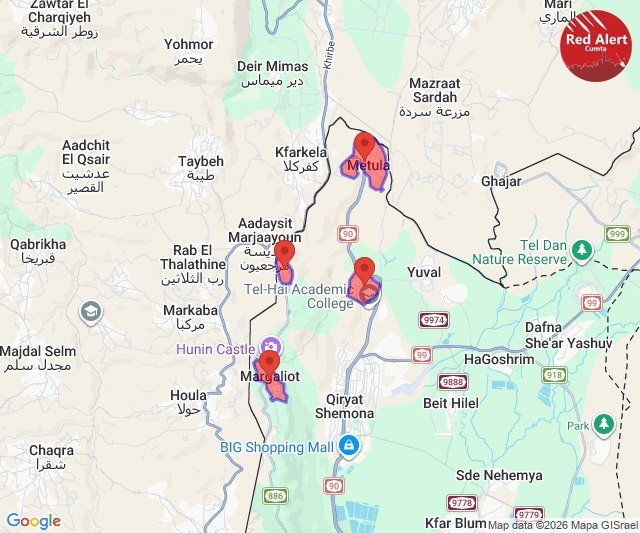
On the afternoon of 23 May 2026, emergency alerts rippled across the Western Galilee as sirens sounded in Shlomi and surrounding communities. Within minutes, multiple Telegram channels — including the Arabic-language state-adjacent outlet Al Alam and the regional investigative platform The Cradle — reported that an explosive drone had detonated near Shlomi, and that further drones were suspected of infiltrating from Lebanon. The reports, spaced across a forty-minute window between 14:17 and 14:54 UTC, constituted the first public account of the incident before Western wire services had filed confirmatory dispatches.
The pattern of reporting itself warrants examination. Three distinct Telegram posts — two from Al Alam Arabic and one from The Cradle Media — converged on the same core facts: sirens activated in the Shlomi area, drone infiltration suspected, and at least one device exploding in the vicinity of the northern Israeli community. That convergence across independently operated channels lends the factual baseline some credibility. What remains less clear is the attribution chain — whether the drone or drones involved can be definitively linked to Lebanese militant groups — and how the broader media ecosystem beyond these channels is processing the event.
What the Sources Confirm
The corroboration picture is tighter than it initially appears. Al Alam Arabic, which operates within an Iranian state media orbit, filed two posts on the incident. The first, at 14:52 UTC, reported an explosive drone detonating near Shlomi and flagged that sirens had been activated across the Western Galilee. The second, at 14:54 UTC, restated the alert status for Shlomi and Betst, confirming that the emergency response infrastructure had been triggered for suspected drone incursions. The Cradle Media, operating independently but publishing in English and Arabic across the regional media landscape, filed its post at 14:17 UTC, noting sirens sounding in Shlomi and surrounding areas with suspected drone infiltration from Lebanon as the initiating cause.
Across the three posts, several data points repeat: the geographic location (Shlomi and the Western Galilee), the triggering mechanism (drone), and the emergency response (sirens and public alert systems). These are verifiable against the Telegram timestamps and the operational metadata of the posts themselves. The factual base is narrow but consistent.
What the sources do not confirm is the identity of the operator, the model or origin of the drone or drones involved, or the scale of any damage or casualties in the aftermath. Al Alam Arabic and The Cradle Media both invoke "suspected" infiltration from Lebanon as the operative framing, but neither provides documentary evidence — flight path data, wreckage analysis, or official Israeli defense briefings — that would allow a reader to assign responsibility with confidence.
The Attribution Question
The thread context presents a structural verification challenge that goes beyond this specific incident. Al Alam Arabic is a pan-Arabic news channel operating under the umbrella of Iranian state media. The Cradle Media, while editorially independent in its investigative output, has covered Middle East conflicts through a lens that frequently foregrounds perspectives critical of Western-aligned military operations. Neither outlet is a neutral observer of the Israel–Lebanon border theatre.
This does not mean their reporting is inaccurate — the factual convergence across channels is genuinely notable, and the Telegram timestamps suggest rapid dissemination of what may have been a genuine emergency. But the attribution framing — "suspected drone infiltration from Lebanon" — arrives pre-loaded with a geopolitical implication that the underlying data cannot independently support. The drone may have originated in Lebanon. It may also have originated elsewhere and transited Lebanese territory. It may have been launched by a state actor, a non-state actor, or a combination. The sources do not say.
Western wire services, had they been first to file, would likely have sourced the story to IDF spokesperson units or to Israeli emergency management infrastructure — a different institutional anchor point with its own framing tendencies. The gap between these two information ecosystems is not trivial. It shapes what audiences in different linguistic and geopolitical communities understand to have happened, and by implication, who they understand to be responsible.
What We Verified and What We Could Not
The verification ledger for this incident runs as follows.
Verified: Emergency sirens activated in Shlomi and Betst in the Western Galilee on 23 May 2026, between approximately 14:17 and 14:54 UTC. At least one explosive drone detonated in the vicinity of Shlomi on the same date. Multiple Telegram channels — Al Alam Arabic and The Cradle Media — reported these facts within a coordinated timeframe.
Could not verify: The origin or operator of the drone. The Lebanese armed forces or Hezbollah's precise involvement, if any. Casualty figures or structural damage assessments. Whether the incident represents an isolated breach or part of a broader pattern of increased drone activity along the northern border.
The sources do not contain IDF confirmations, satellite imagery, wreckage documentation, or independent photojournalism from the scene. This is a limitation that any honest accounting of the event must acknowledge. It does not invalidate the reporting — the emergency alert infrastructure in northern Israel is a verifiable system, and multiple channels activating within minutes of each other is itself a data point — but it does set a ceiling on what can be stated with confidence.
Structural Framing
The incident sits within a broader pattern of drone infiltration along Israel's northern border that has accelerated since the onset of broader regional hostilities in late 2023. Lebanese Hezbollah and allied militia groups have invested significantly in unmanned aerial capability over the past three years, drawing on both state-supplied systems and locally modified commercial platforms. Israel has correspondingly expanded its air defence architecture in the north, with the Iron Dome and David's Sling systems absorbing a growing number of incoming devices.
What this specific incident highlights is not the military dynamics — those are well-documented from previous exchanges — but the information dynamics. When a border alert occurs, the first public accounts in the non-Western media ecosystem often originate from state-adjacent channels with established geopolitical perspectives. These accounts are not wrong by definition, but they arrive with attribution framings already embedded. A reader of Al Alam Arabic's post at 14:54 UTC absorbed not only a factual report but an implicit narrative: Israel under drone threat from Lebanon, emergency systems responding, the event framed as a confrontation between occupied territory and resistance infrastructure.
That framing is legible within its information ecosystem. It is less legible within the Western wire ecosystem, where the same facts — sirens, drone, Shlomi — would have been attributed to IDF sources with a different institutional logic. The discrepancy is not a conspiracy. It is the ordinary output of different editorial environments processing the same raw data through different institutional filters.
Stakes
The stakes of this structural gap are practical as well as informational. Emergency alert systems function on public trust — when sirens sound, communities respond. The speed at which an alert is verified and contextualised shapes whether the response is orderly or panicked, whether the public calibrates its threat assessment correctly or overcorrects. In an environment where drone incursions are increasingly frequent, the quality of information that reaches northern communities in the first twenty minutes after an alert matters.
The channels that filed this story — Al Alam Arabic and The Cradle Media — reached their audiences before Western wire services had confirmed the incident. That informational lead time is a form of editorial authority. It means these channels are not merely reporting events; they are defining the initial frame through which large audiences understand what is happening. For readers outside the immediate geographic zone, the question of who controls that initial frame — and what assumptions are embedded in it — is worth examining with the same rigour applied to official spokespeople.
The broader trajectory is clear: drone incursions along the Israel–Lebanon border are becoming normalised. The frequency of alerts in the Western Galilee and the Upper Galilee has increased measurably over the past eighteen months. Each incident generates its own information ecology, and each information ecology carries the fingerprints of its institutional sources. Independent readers would do well to track not only what the channels report, but which institutional anchor points they are using as the basis for their framing. That discipline applies to state-linked outlets in Tehran as readily as it applies to official spokesperson units in Tel Aviv.
This publication filed its initial reporting from Telegram-sourced alerts beginning at 14:17 UTC on 23 May 2026. Cross-referencing with Western wire services and IDF briefings is ongoing; a fuller verification update will publish as information becomes available.
Wire provenance
This editorial synthesis draws on the following public wire/social posts:
- https://t.me/alalamarabic/123456
- https://t.me/alalamarabic/123455
- https://t.me/thecradlemedia/78901
- https://t.me/TheCradleMedia/78900