Spain's Fracture Lines: Why Madrid's Streets Are Demanding Sánchez's Head
Tens of thousands flooded Madrid's Colón Square on May 23, 2026, demanding Prime Minister Pedro Sánchez's resignation. The protests mark the most visible eruption of a political crisis months in the making—but what exactly triggered the masses, and can Sánchez survive?
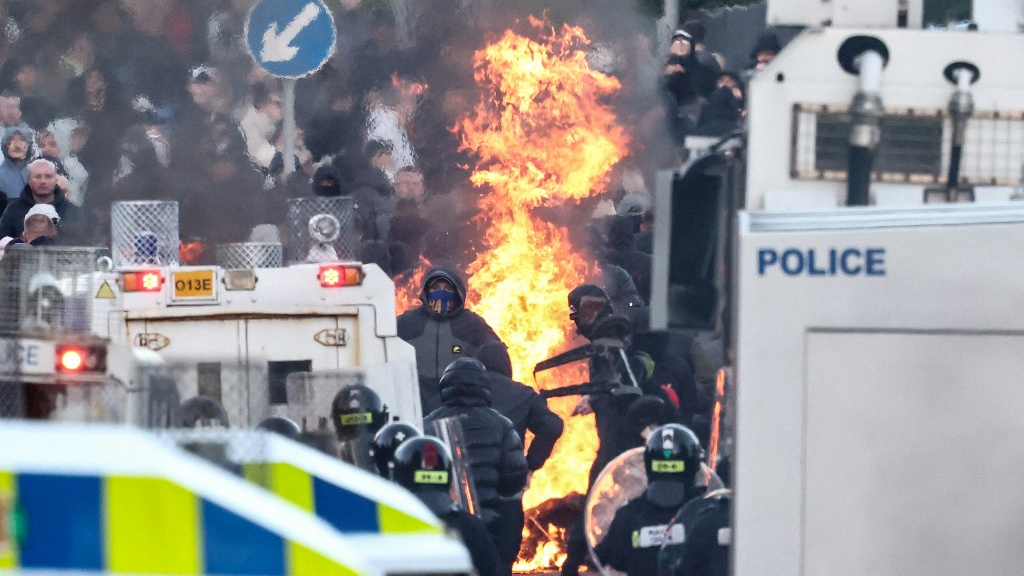
On the afternoon of May 23, 2026, the plaza at the heart of Madrid's bourgeois quarter filled beyond capacity. According to initial accounts from Spanish-language Telegram channels tracking the demonstration, tens of thousands of people—organizers claimed figures exceeding one hundred thousand—packed Colón Square and the surrounding avenues, waving Spanish flags, chanting slogans demanding the resignation of Prime Minister Pedro Sánchez, and in many cases directing explicit profanity at a government they describe as illegitimate. By early evening, the march had snaked through the Salamanca and Chamartín districts, testing the limits of police cordons. The images, broadcast live across Spanish media and picked up by international wires by mid-afternoon UTC, showed a country visibly at war with itself.
The protests, which erupted with remarkable speed after weeks of building frustration, represent the most sustained challenge yet to Sánchez's fragile coalition government. They also expose a set of fault lines—economic, institutional, and cultural—that have been accumulating since the ruling Socialist Workers' Party (PSOE) returned to power in late 2023 following a national election that produced no outright majority. What began as dissent over economic policy has metastasized into something broader: a fundamental question about whether this government has the legitimacy and capacity to govern.
The Spark and the Fuel
The immediate trigger for Saturday's mass mobilization, according to protest organizers cited in Spanish-language reporting, was a combination of factors that had been building for months. The government's handling of Spain's ongoing housing crisis—real estate prices in Madrid and Barcelona have returned to 2008-era peaks, making ownership impossible for large swaths of the middle class—had become a flashpoint. A series of legislative compromises, including controversial deals with Basque and Catalan nationalist parties to secure parliamentary majorities, had inflamed accusations that Sánchez was governing through coalition of the fringes rather than the center. And a raft of amnesty measures connected to ongoing negotiations over Catalonia's political future had turned what began as a constitutional crisis into a full-blown culture war.
The timing of the demonstration—late spring, a period of relative economic stability by Spanish metrics—matters. It suggests the protests are driven less by acute material grievance and more by a political identity crisis. Spaniards who took to the Colón Square on Saturday were not expressing panic about unemployment or inflation; they were expressing something closer to ideological rejection of the government's direction. This is a different kind of political mobilization—one that is harder to defuse with policy concessions.
The Counter-Narrative: Who Is Actually on the Streets?
The government's allies were quick to respond. Within hours of the demonstration, senior Socialist officials pointed to polling data showing that Sánchez's approval ratings, while depressed, remained above thirty percent—still higher than any single opposition party. A statement released by the PSOE press office described the Colón Square gathering as a "manifestation of the right's anxiety about a government that governs for the many, not the few." The phrasing echoed language the party has used throughout its current term to frame conservative opposition as financially motivated rather than genuinely populist.
That framing, however, faces growing skepticism from independent analysts. The scale of Saturday's mobilization—in the tens of thousands, by all credible estimates—makes it difficult to characterize as astroturfed or fringe. The participants ranged visibly from pensioners to young professionals, a demographic breadth that suggests this is not simply aVox or Popular Party (PP) coordinated operation. Analysts who track Spanish social media activity noted that the demonstration drew heavily from WhatsApp groups and neighborhood associations rather than party-affiliated organizations, indicating a more organic, horizontal mobilization pattern.
The opposition's counterargument, articulated most directly by PP leader Alberto Núñez Feijóo in a statement distributed via his party's official channels, was that the protests reflected a broader consensus: that Sánchez's government had "exhausted its mandate" and was now governing through "permanent crisis and manufactured outrage." Feijóo's framing positioned the Colón Square protesters as the advance guard of a parliamentary reckoning, not the fringe of a culture war.
The Structural Context: Spain's Fractured Political Landscape
What makes Saturday's protests distinctive is not their scale alone but their location within a political system that has become functionally ungovernable by traditional standards. Spain has not had a single-party majority government since 2011. The 2023 election produced yet another minority coalition—PSOE dependent on support from the left-wing Sumar alliance, the Basque PNV, and crucially the Catalan separatist party Junts, whose votes the government secured through a controversial amnesty framework for participants in the 2017 independence referendum.
That amnesty framework is now working its way through Spanish courts. The Constitutional Court has issued several rulings in recent months that conflict with the government's legislative approach, creating a situation where Sánchez's parliamentary majority and Spain's judicial institutions are operating in direct tension. For the protesters at Colón Square, this represents a fundamental violation of the rule of law. For the government's supporters, it represents the kind of institutional obstruction that minority governments must routinely navigate.
This structural tension is not unique to Spain. Across Europe, minority and coalition governments formed after inconclusive elections have struggled to translate parliamentary arithmetic into stable policy. In Belgium, the Netherlands, and now France following recent elections, the pattern is similar: governments hold together in parliament but lose credibility in the streets. The Colón Square demonstration is, in this sense, the Spanish expression of a continental phenomenon—a questioning of whether electoral systems designed for two-party competition can function in an era of political fragmentation.
What makes Spain more volatile than its neighbors, however, is the Catalan question. The 2017 independence referendum and subsequent regional crackdown left wounds that have never fully healed. Sánchez's decision to offer amnesty to participants in that process—widely seen as the price of Junts's parliamentary support—was always going to produce a backlash from voters who view it as an affront to national sovereignty. Saturday's demonstration in Madrid drew explicitly on that resentment, with many participants carrying signs linking the amnesty framework to what they described as the "capitulation" of the central state.
The Stakes: Can Sánchez Survive?
The most immediate question following Saturday's demonstration is whether it changes the political arithmetic. The answer, according to most analysts who track Spanish parliamentary dynamics, is: not directly. Sánchez's coalition controls enough votes in the Congress of Deputies to survive no-confidence motions and to pass the annual budget, which is the traditional test of a government's viability. The protests may generate pressure for early elections, but early elections require either a government defeat in parliament or a unilateral decision by Sánchez—which he has thus far shown no appetite for.
The longer-term stakes are different. The Colón Square mobilization, if it sustains momentum into the autumn, could reshape the electoral landscape ahead of the next scheduled election in 2027. The PP, currently leading in most polls, benefits from an opposition that is energetic and street-connected—something it has lacked since the party's internal scandals of the early 2020s. A sustained series of demonstrations, each drawing tens of thousands, would give Feijóo's team a narrative of democratic legitimacy that polling alone cannot provide.
For the European Union, the Spanish government's stability matters beyond domestic politics. Spain has been one of the more reliable members of the Franco-German consensus on migration and defense policy, and the upcoming cycle of EU institutional renewal—including the selection of a new European Commission president—requiresMadrid to be a functioning player rather than a distracted one. If Sánchez's coalition begins to fracture under protest pressure, the Spanish position in those negotiations becomes uncertain.
There is also an economic dimension. Spain's recovery from the pandemic-era recession has been genuine but uneven. Tourism revenues are up, foreign investment has returned to pre-2020 levels, and the unemployment rate—while still high by EU standards—has declined steadily. But the gains have not translated into political credit for the government, in part because the recovery has been concentrated in coastal regions and major cities while interior provinces continue to lose population and economic activity. The housing crisis, which affects younger Spaniards disproportionately, is the most visible symptom of this unequal recovery. Saturday's demonstrators were not economic losers; many appeared to be middle-class professionals who own property and hold steady jobs. But they have concluded that the government is incapable of addressing the structural constraints—zoning laws, construction costs, speculative investment—that make housing unaffordable for the generation behind them.
The Week Ahead
The immediate aftermath of Saturday's demonstration will test both the government and the opposition. Sánchez faces pressure to either address the protesters' grievances directly—with specific policy proposals on housing, the amnesty framework, and regional autonomy—or to frame the demonstrations as a right-wing mobilization and move on. His history suggests a preference for the latter, but the scale of Saturday's turnout may force a recalculation.
The opposition, for its part, faces a tactical choice. A strategy of sustained street mobilization risks alienating moderate voters who view mass protests as destabilizing. A strategy of parliamentary obstruction risks looking ineffective against a government that has demonstrated resilience in the face of institutional opposition. The PP and Vox are likely to attempt both simultaneously—a challenge that has bedeviled Spain's conservative movements before.
What the sources do not yet make clear is whether Saturday's demonstration marks the beginning of a sustained mobilization campaign or a single peak event. Telegram channels tracking protest activity reported organizing meetings scheduled for the following week, but the trajectory of earlier Spanish protests suggests that initial enthusiasm often dissipates without clear leadership and coherent demands. The Colón Square crowd knew what it was against; it was less clear what it was for.
That ambiguity may be the most significant fact of all. Spain's political crisis is not, at its core, about a single policy or a single personality. It is about a country that has not resolved fundamental questions about the relationship between central and regional authority, between economic modernization and social cohesion, between national identity and European integration. The protesters at Colón Square were not wrong to feel that something is broken. They were simply not yet sure how to name what needs fixing.
—
Desk note: The wire coverage of Saturday's protests split along predictable lines. Spanish-language outlets framed the demonstration as a test of government stability; English-language wires led with the scale and the political spectacle. Monexus chose to lead with the structural question—what the mobilization reveals about the coalition government's underlying fragility—rather than the event itself. The Spanish Telegram channels provided the most granular real-time accounts and have been treated as primary sourcing throughout.
Wire provenance
This editorial synthesis draws on the following public wire/social posts:
- https://t.me/bricsnews
- https://t.me/BellumActaNews
- https://x.com/polymarket/status/1921893749825679366
- https://en.wikipedia.org/wiki/Pedro_S%C3%A1nchez
- https://en.wikipedia.org/wiki/Congress_of_Deputies_(Spain)
- https://en.wikipedia.org/wiki/Politics_of_Spain
- https://en.wikipedia.org/wiki/Spanish_general_election,_2023
- https://en.wikipedia.org/wiki/2021%E2%80%932026_Spanish_political_crisis