Tehran Signals Continuity: Iran's Araghchi Reaffirms Hezbollah Backing Amid Shifting Regional Calculus
Iran's Foreign Minister Abbas Araghchi sent a direct message to Hezbollah's leadership on 23 May 2026, reaffirming Tehran's commitment to the group described as a resistance movement. The timing matters: the communication arrives as parallel US-Iran nuclear talks proceed and as the ground posture between Israel and Hezbollah remains unresolved despite ceasefire frameworks.
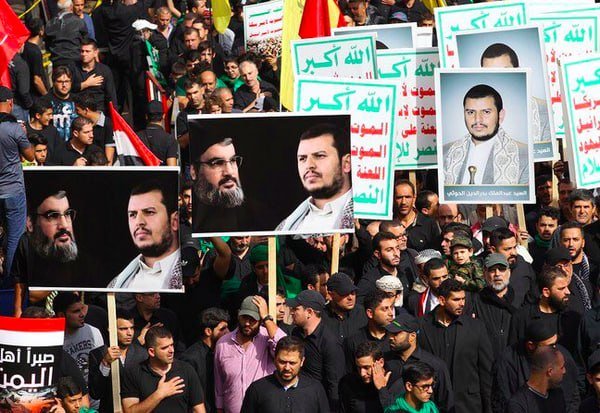
On 23 May 2026, Iran's Foreign Minister Seyyed Abbas Araghchi sent a direct communication to Sheikh Naim Qassem, Secretary-General of Hezbollah, delivering a straightforward message: Tehran's support for the Lebanese movement will not cease. The message, confirmed across Iranian state-linked channels including PressTV and Mehr News, arrived against a backdrop of parallel US-Iran nuclear negotiations and a fragile, contested ceasefire architecture between Israel and Hezbollah along the Lebanon-Israel border.
The communication is notable for its timing rather than its novelty. Iran has maintained its public position on Hezbollah consistently since the group was established as a political and military actor in Lebanon. What changes is the context in which that message lands — and that context has shifted considerably since the original ceasefire frameworks were negotiated under duress in late 2024. Araghchi, who took up the foreign ministry role as part of Tehran's post-Pezeshkian recalibration, has made regional diplomacy a primary instrument. The message to Qassem is, at one level, a diplomatic courtesy between allied leaderships. At another level, it is a deliberate signal to multiple audiences simultaneously.
What the Message Actually Says — and Who It Is For
The substance of Araghchi's communication, as reported by Iranian state media, amounts to a reaffirmation of Tehran's stated commitment to Hezbollah's cause. The language used — framing Hezbollah's activities as "legitimate resistance" — is consistent with Iran's public posture and has been the vocabulary of choice in Tehran's regional communications for years. That continuity is itself the message. Unlike a nuclear negotiation posture that has shown flexibility, the Hezbollah commitment appears structural rather than transactional.
The question is what Araghchi intended to communicate with this particular message at this particular moment. Several audiences present themselves.
Washington, currently engaged in indirect nuclear talks with Iran through intermediaries, is one. A public reaffirmation of Hezbollah support — delivered at a moment when the US is seeking constraints on Iran's nuclear programme — signals that any concessions Iran makes at the negotiating table will not come at Hezbollah's expense. This is not a veiled threat; it is a diplomatic position statement, the kind that sophisticated negotiators make precisely when the other side might be inclined to conflate separate tracks.
Hezbollah's own domestic Lebanese constituency is another audience. Qassem, who succeeded Sayyid Hassan Nasrallah following his killing in the 2024 Israeli operations, operates in a political environment where Hezbollah's relevance is under genuine pressure. Lebanon is struggling with economic collapse, institutional vacancy, and the ongoing displacement of populations along the southern border. A message from Tehran affirming continued support serves Hezbollah's internal legitimacy politics — it tells Lebanese audiences that the movement is not isolated, that it retains a state patron, and that the "resistance" framing remains operative.
The regional audience — Iran-aligned movements across Iraq, Yemen, and Syria — is a third. Tehran's network of affiliated actors watches how it treats Hezbollah, because Hezbollah is the largest and most militarily capable node in that network. A visible reaffirmation to Qassem is simultaneously a message to the Popular Mobilization Forces in Iraq, to AnsarAllah in Yemen, and to the various Shia political formations in Syria: Tehran's commitments hold.
The Ceasefire Contradiction
The timing of Araghchi's message becomes sharper when set against the ceasefire framework governing the Lebanon-Israel border. The original understanding, brokered with US and French involvement in late 2024, contemplated a monitored withdrawal and cessation of hostilities. That framework has not produced a stable equilibrium. Israeli operations in Gaza continue; cross-border incidents along the Lebanon frontier have not fully ceased; Lebanese state institutions remain too weak to guarantee the south; and Hezbollah, while no longer conducting large-scale military operations, has not been disarmed or dismantled.
Iran's message, in this context, can be read as an implicit assertion that the ceasefire is understood in Tehran not as a normalisation of Israel's security architecture but as a tactical pause that preserves Hezbollah's capacity for the long term. The movement remains intact. Its leadership structure, while diminished, is functional. Its weapons stocks, by all available assessments, have been partially reconstituted. The Araghchi message does not challenge the ceasefire directly — it does not need to. It simply reminds everyone that nothing fundamental has changed from Tehran's perspective.
Western analysts have periodically suggested that Iran, in the context of a revived nuclear deal, might quietly scale back its most visible regional commitments in exchange for sanctions relief and economic reprieve. The Araghchi message is a corrective to that expectation. It communicates that the regional commitment is a separate variable from the nuclear programme — a structural interest rather than a bargaining chip. This is not unusual in great-power or regional-power diplomacy, but it is a point that is easy to miss when the dominant narrative frames everything through the US-Iran nuclear lens.
The Nuclear Track and the Regional Track
The distinction between Iran's nuclear programme and its regional commitments is the central structural question this article raises. The Trump administration, in its current approach to Iran, has indicated a preference for a comprehensive agreement that addresses both tracks simultaneously — a "big deal" that would constrain enrichment while also requiring Iran to reduce support for regional movements. Iran's position, as evidenced by Araghchi's message, is that these are not the same negotiation.
There is a structural logic to Tehran's position that deserves examination on its own terms. Iran built its regional influence over decades through relationships with non-state actors — relationships that are not easily fungible, that involve personal ties, ideological affinity, and operational interdependencies accumulated over time. Walking away from Hezbollah would not just be a diplomatic concession; it would be an abandonment of a strategic depth instrument that took decades to develop. No Iranian government, reformist or hardline, is positioned to make that decision without fracturing its own political base.
This does not mean Iran is irrational or expansionist in its own self-understanding. It means the calculation is different from the one Washington tends to impose on it. From Tehran's perspective, Hezbollah is a legitimate defensive capability for Lebanon — a framing that is, admittedly, self-serving. But the underlying strategic logic — that a non-contiguous ally on Israel's northern border provides deterrent depth — is not irrational from Iran's security perspective. It is, in fact, exactly the kind of strategic geometry that every great power pursues. The US maintains alliances across the Pacific; Russia sought to install a similar buffer logic in Ukraine. Iran's Hezbollah relationship follows the same structural grammar.
The risk, from a regional stability standpoint, is that this logic perpetuates a state of managed tension rather than resolving it. A Hezbollah that retains Iranian backing, Israeli forces that have not withdrawn to internationally recognised borders, Lebanese state institutions that cannot govern the south — this is not a stable equilibrium. It is a ceasefire dressed as a settlement.
What Remains Unresolved
The sources reviewed for this article do not provide the full text of Araghchi's communication, nor do they confirm whether any specific commitments — financial, military, or diplomatic — were articulated beyond the general reaffirmation. It is not possible to determine from the available reporting whether the message contained new elements, whether it responded to a specific query or concern from Qassem, or whether it was initiated by Tehran as a proactive gesture. These are material gaps that shape any assessment.
It is also unclear what Qassem's specific response, if any, has been. Hezbollah's own communications following the message have not been available for review. The movement's public posture remains one of solidarity with Gaza and resistance to Israeli operations, but the specifics of internal deliberations — how Qassem is managing the post-Nasrallah transition, what internal pressures he faces, how he is navigating the economic catastrophe in Lebanon — are not visible from outside the movement.
The nuclear negotiations themselves remain in an interim phase. The US has indicated willingness to continue talks; Iran has indicated willingness to continue talks; neither side has indicated willingness to accept the other's opening position. The Araghchi message, in this light, may be read as Iran establishing baseline conditions before entering a more intensive negotiating phase — or it may be read as pure theatre, a domestic-facing communication dressed as regional diplomacy.
What is clear is that Tehran has decided the message needed to be sent publicly, through official channels, on the record. That in itself is a data point.
Stakes and Forward View
If Iran's nuclear talks with Washington produce a formal agreement in the coming months, the pressure on Tehran to demonstrate that the regional track is also moving will increase. Araghchi's message suggests Iran does not intend to comply with that pressure — at least not visibly. The two tracks will remain separate, and Hezbollah will continue to operate as a distinct variable in the regional equation.
The Lebanese state, already fractured and economically devastated, absorbs the consequences of this geometry most directly. Lebanon cannot afford a renewed confrontation along its southern border; it also cannot afford to be the terrain on which the Iran-Israel strategic contest plays out indefinitely. But Lebanon's agency in this configuration is severely limited. Hezbollah's strategic decisions are made in Tehran as much as in the Beqaa Valley, and Lebanon's formal state institutions do not have the capacity to alter that relationship.
Israel, for its part, will read the Araghchi message as confirmation that its northern front is not stabilised and that the ceasefire is a temporary arrangement rather than a strategic settlement. The Israeli government has maintained that the objective remains Hezbollah's disarmament and the establishment of verified buffer zones — an objective that Tehran's message makes clear Iran does not endorse. This gap between stated Israeli objectives and stated Iranian redlines defines the forward trajectory.
The coming months will test whether the parallel tracks of US-Iran nuclear diplomacy and Israel-Iran regional competition can coexist without destabilising incident. Araghchi's message to Qassem is a signal that Tehran does not intend to yield on the regional track regardless of what the nuclear track produces. That is the operational fact on the ground, and it should be understood as such rather than framed as a provocation.
This article was structured around Iran's stated regional posture as conveyed through official Iranian channels. Western wire framing of the same events tended to foreground Israeli security concerns as the primary reference frame; this piece attempted to give the stated Iranian position equal structural weight, consistent with Monexus's Global South and multipolar coverage mandate.
Wire provenance
This editorial synthesis draws on the following public wire/social posts:
- https://t.me/mehrnews/1184231
- https://t.me/GeoPWatch/447891
- https://t.me/presstv/892341