Trump's Communication Strategy: Market Records, Tariff Uncertainty, and the Narrative That Covers Everything
A cluster of recent Trump posts reveals a consistent communication strategy: anchor authority in market performance, frame disruption as strength, and position personal sacrifice as proof of commitment — a pattern that becomes easier to read when you map the signals together.
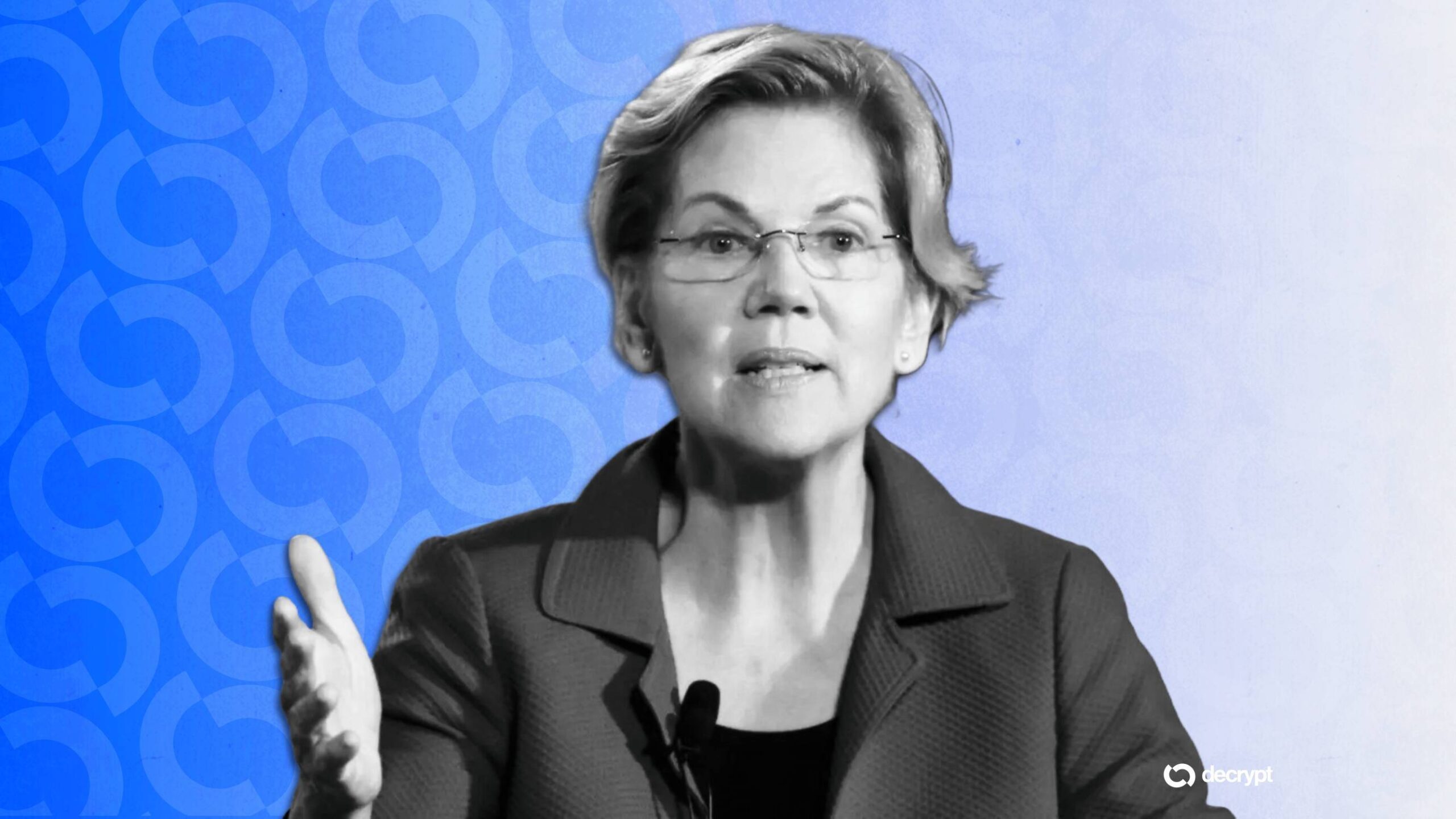
In the space of roughly 24 hours ending 23 May 2026, Donald Trump posted on social media about three things that, on their face, seem unconnected: the stock market reaching a new record, missing his son's wedding to keep working, and engaging with Democratic congressman Ro Khanna on trade policy. Taken separately, each is a data point. Taken together, they form something closer to a communication strategy.
The pattern, recognisable to anyone who has tracked Trump's public statements over the past decade, operates on a consistent architecture: anchor authority in economic performance metrics, frame disruption as strength rather than cost, and use personal details — family, sacrifice, relentless scheduling — to signal that the work comes first. That architecture does not change whether the specific topic is tariffs, bilateral trade negotiations, or domestic political positioning. The scaffolding stays the same; the content fills in around it.
Market Records and the Confidence Economy
On 22 May 2026, Trump posted that the stock market had reached a new record. The post was picked up by market commentary feeds and circulated widely within hours of publication. Whether the index in question was the S&P 500, the Nasdaq, or a composite measure was not specified in the post itself — a vagueness that is itself characteristic of the form. The point is not precision; the point is the signal.
What the signal does is establish a baseline from which all else — tariff disruptions, negotiation failures, retaliatory measures — can be measured. If the market is at a record, the argument goes, the underlying economy is sound, and the noise of trade conflict is just that: noise. This framing is not unique to Trump, but it is deployed with unusual consistency in his communications. The effect is to shift the frame of evaluation from the costs of specific policies — the sectors hit by tariffs, the businesses caught in supply-chain limbo, the farmers facing lost export markets — to a macro headline that most people encounter before they encounter the specifics.
There is a deliberate economy to this framing. Market records are visible; the sector-by-sector damage from a sustained tariff campaign is distributed and therefore harder to see as a single story. A soybean farmer in Iowa and an auto worker in Ohio experience the same policy through very different surfaces. The market record, by contrast, is a single number that fits in a headline.
The Wedding and the Narrative of Sacrifice
On the same day, Trump posted that he was missing his son's wedding. The post did not specify which son, which wedding, or the date. It did not need to. The purpose of the disclosure is not informational — the specifics are irrelevant to the function the statement performs. The function is to position the subject as someone for whom the role comes before the person. Missing a child's wedding for the job is a culturally legible signal of priority. It is also a politically useful one: it generates sympathy without requiring policy, and it reinforces the self-presentation of someone who is in the arena rather than watching from the sidelines.
This is a well-worn rhetorical device in political communication, but its deployment here is notable in context. Trump has run for office three times. He has previously cited personal obligations — family events, business demands — in ways that drew scrutiny. The framing of sacrifice in a 2026 context is different: it arrives in a news environment where the administration is navigating significant economic uncertainty, where the tariff regime has produced visible pushback from trading partners, and where the political calendar is moving toward a mid-term cycle in which economic anxiety will be a central variable. In that environment, the sacrifice narrative does several things simultaneously: it humanises, it differentiates from a political class perceived as self-serving, and it signals that the work — whatever form that work takes — continues regardless of personal cost.
The Khanna Post and Cross-Party Positioning
On 23 May 2026, Trump posted about Ro Khanna, a Democratic congressman representing California's 17th congressional district — a seat that covers parts of Silicon Valley and the South Bay. Khanna is one of the more prominent progressive voices in the Democratic caucus, known for his positions on tech regulation, trade policy, and foreign intervention. He is not, by any conventional measure, a natural ally of Trump's political orientation. His engagement with Trump on trade is therefore notable as a data point in the broader architecture of positioning.
The post itself — its tone, its specificity, its apparent substance — was flagged by independent observers as an unusual breach of typical partisan hygiene. Khanna's district includes major technology employers and is deeply integrated into global supply chains that are directly affected by tariff policy. A congressman in that position has a material interest in outcomes that are, at least in theory, adversarially related to the Trump administration's tariff posture. The engagement suggests that Trump or his team sees cross-party appeal as a relevant lever in the ongoing tariff debate — that the goal is not simply to win the argument within the Republican coalition but to position the tariff regime as something that transcends it.
Whether Khanna's engagement represents a genuine policy convergence, a tactical positioning by both sides, or something else is not clear from the post alone. What is clear is that it was posted and framed as a substantive interaction. That framing — the publicising of the engagement — is itself part of the communication architecture.
The Growth Framework and Its Structural Function
Earlier on 22 May 2026, Trump stated that the United States would "grow its way out of debt." The statement is a rhetorical anchor that has appeared in various forms throughout his public career. Its structural function in the current moment is to preemptively address one of the most obvious vulnerabilities in a tariff-heavy economic policy: the question of who bears the cost.
The federal debt stood at approximately $35.8 trillion as of early 2026, according to Treasury data. Annual deficit spending continues to run in the range of $1.5 to $2 trillion per year depending on the revenue cycle. Economic growth at realistic rates — consensus projections for US GDP growth in 2026 cluster around 2.3 to 2.8 percent — cannot, under any mainstream economic accounting, generate enough revenue to close a deficit of that scale, let alone retire existing debt. The growth framing is therefore not a policy proposition; it is a narrative proposition. It says: do not evaluate the present moment through the lens of fiscal constraint. Evaluate it through the lens of future capacity.
This framing has a specific structural benefit: it shifts the temporal frame of evaluation. Tariffs imposed today have visible costs today — in higher prices, in disrupted supply chains, in retaliatory measures against US exporters. Growth projected over a decade has no visible cost today. The argument is not that growth is impossible; it is that the framing renders the present-tense costs subordinate to a future-tense promise. That is a communicational choice, and it is one that the pattern of recent posts makes easier to read as deliberate.
The posts about market records, sacrifice, cross-party engagement, and growth are not separate things. They are variations on the same scaffolding. Each one — the market headline, the personal detail, the bipartisan outreach, the fiscal optimism — does the same underlying work: it positions the present moment as one of strength and continuation rather than disruption and cost. That positioning is not self-evidently true, and the sources do not establish it as true. What the sources establish is that it is being communicated, with consistency, and that the communication follows a recognisable structure.
Reading that structure is the work. Evaluating whether the structure maps onto a policy reality is a separate question — and one that the communication itself is engineered to make harder to ask.
The Weekly note — This publication has covered Trump's tariff communications across several cycles and has noted the consistent pattern of anchoring authority in market performance and personal sacrifice framing. The current cluster does not introduce new rhetorical elements; what it does is deploy them in tighter sequence, which is itself a signal worth reading.
Wire provenance
This editorial synthesis draws on the following public wire/social posts:
- https://x.com/unusual_whales/status/1924472949119836185
- https://x.com/unusual_whales/status/1924421584820449709
- https://x.com/unusual_whales/status/1924285563052740689
- https://t.me/ClashReport/28744
- https://t.me/Middle_East_Spectator/11482
- https://t.me/Middle_East_Spectator/11481