The 50/50 Republic: Trump's Iran Roll of the Dice
With the President describing a nuclear framework as a coin flip and his Vice President summoned back to Washington mid-trip, the US approach to Tehran has descended into improvisation dressed as strategy.
There is a particular kind of diplomatic theatre that only unfolds when no one is quite sure who is stage-managing it. On the evening of 23 May 2026, President Donald Trump was chairing a national security meeting at the White House. The occasion was the ongoing US-Iran talks — what was being described in the corridors as a possible memorandum of understanding, perhaps even a framework agreement. Trump cancelled his weekend plans to be there. He had, earlier in the day, shared an image of the American flag superimposed over Iran on Truth Social. And he had placed the odds of a deal at fifty-fifty.
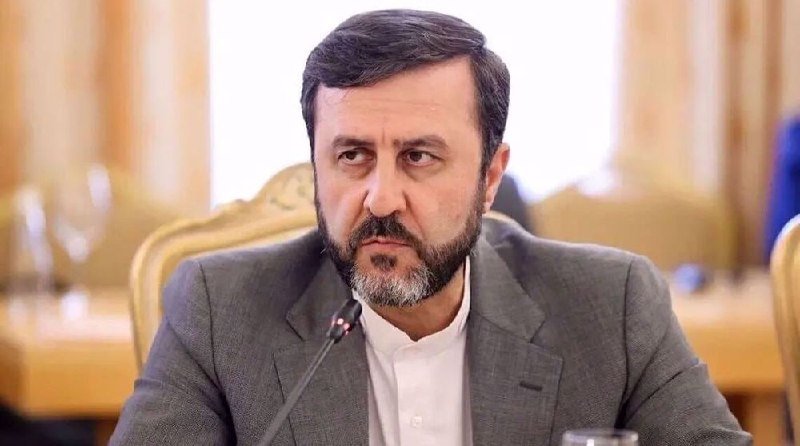
That is the state of the world's most consequential nuclear negotiation: a coin flip, in the President's own estimation, with the Vice President flown back to Washington for what one source described as an unplanned return, and Iran's top negotiator on record stating that Tehran will not compromise on its core positions.
The arithmetic of this is not complicated. Either an agreement is reached, or the military option — the one that has sat on every president's desk since 2003 — returns to active consideration. Trump has made this explicit. The question is whether his administration has the leverage, the patience, or indeed the internal coherence to push the first outcome and avoid the second.
The Gap That Won't Close
The official picture, as presented by both sides, suggests progress. Iran's foreign ministry and negotiating team have signaled willingness to engage. The BBC reported on 23 May that Tehran believes an agreement is "getting a lot closer." The language from the Iranian side, however, contains a significant caveat that has received insufficient attention in Western coverage: Iran has stated explicitly that the question of nuclear weapons — the enrichment of fissile material to weapons-grade levels, the Arak reactor, the monitoring of sites — is not part of the initial framework it is working toward.
That is not a small carve-out. It means the two sides may be agreeing on peripheral issues — sanctions relief, frozen assets, prisoner swaps — while deferring the central technical question that makes this a nonproliferation issue rather than merely a diplomatic one. The US public framing has tended to treat any movement toward a deal as a positive signal. But if the architecture being built sidesteps the enrichment problem, the result may be a temporary relief of economic pressure with no durable constraint on Iranian capabilities. That is a different outcome than the one the State Department briefings imply.
Improvisation as Doctrine
The Vice President's unplanned return to Washington speaks to something deeper than scheduling coincidence. JD Vance, who has consistently aligned with the more hawkish faction of the administration on Iran, does not interrupt a foreign trip casually. His presence at the table alongside Trump's national security principals suggests the internal debate is not merely procedural. There is a genuine divergence between those who see a limited deal as preferable to military escalation and those who believe the US has sufficient leverage — economic, diplomatic, and military — to demand more.
Trump's own framing compounds the uncertainty. Describing the outcome as "solid 50/50" is not the language of a team that has a preferred outcome and a strategy to achieve it. It is the language of someone watching the spins align and hoping rather than choosing. The image of the US flag over Iran, posted to Truth Social, was not a negotiating document. It was a signal — to the base, to the negotiating team in Vienna or wherever the talks have migrated, and to the regional actors (Saudi Arabia, Israel, the UAE) who are watching from adjacent chairs. What it signaled exactly is unclear, which may have been the point.
What a Deal Would Look Like — and Who Would Declare Victory
If the framework produces a signed document before summer, it will almost certainly involve some combination of partial sanctions relief — likely the unfreezing of oil revenue held in escrow accounts as part of earlier sanctions packages — a prisoner exchange covering dual nationals held in Iranian prisons, and some form of IAEA monitoring protocol that falls short of the Additional Protocol Iran withdrew from in 2003. Iran will claim it preserved its right to peaceful enrichment. The US side will claim it secured new inspections access. Both will be partially correct and partially inflating.
The domestic political logic for both sides is compelling. Trump approaches a mid-term cycle in which his administration's foreign policy legacy is, so far, defined by tariff disruption and ceasefire negotiations in Ukraine. A Iran deal — even a limited one — offers something in the category of historic achievement. For Khamenei and the Iranian political establishment, the relief of economic pressure is not a favor to the Americans; it is the recovery of leverage lost to sanctions, and an opportunity to position for a stronger hand in whatever comes next.
The Stakes Beyond the Framework
The structural frame that gets lost in the moment-to-moment coverage is this: the Iran nuclear question is not primarily a bilateral problem. It is a regional architecture problem. Saudi Arabia's own nuclear ambitions — enabled by cooperation agreements with China and the US — are directly shaped by whether Iran operates under binding or unconstrained enrichment. Israel's security establishment calculates its own red lines against the same data. The UAE, Jordan, and Egypt all have civilian nuclear programs whose trajectory depends on what they understand to be the regional norm.
A weak agreement — one that leaves the enrichment question ambiguous — does not stabilize this landscape. It accelerates the proliferation pressures that the nonproliferation regime was built to contain. The alternative is either a much stronger agreement than either side currently seems willing to negotiate, or a military action that would set Iranian enrichment back several years but almost certainly trigger a broader regional escalation.
Trump's fifty-fifty framing captures the honest uncertainty better than any diplomatic communique. What it obscures is that the failure mode is not a return to the status quo. It is a new chapter in a conflict that has been building, in slow motion, since 1979.
Trump's national security meeting was ongoing at the time of publication. No formal readout has been released.