Trump Says Iran Deal Is Done. Tehran Says It's Fiction. Here's the Truth
The President declared a deal largely negotiated. Iran's foreign ministry called the claim inconsistent with reality. The gap between those two statements contains an entire geopolitical argument.
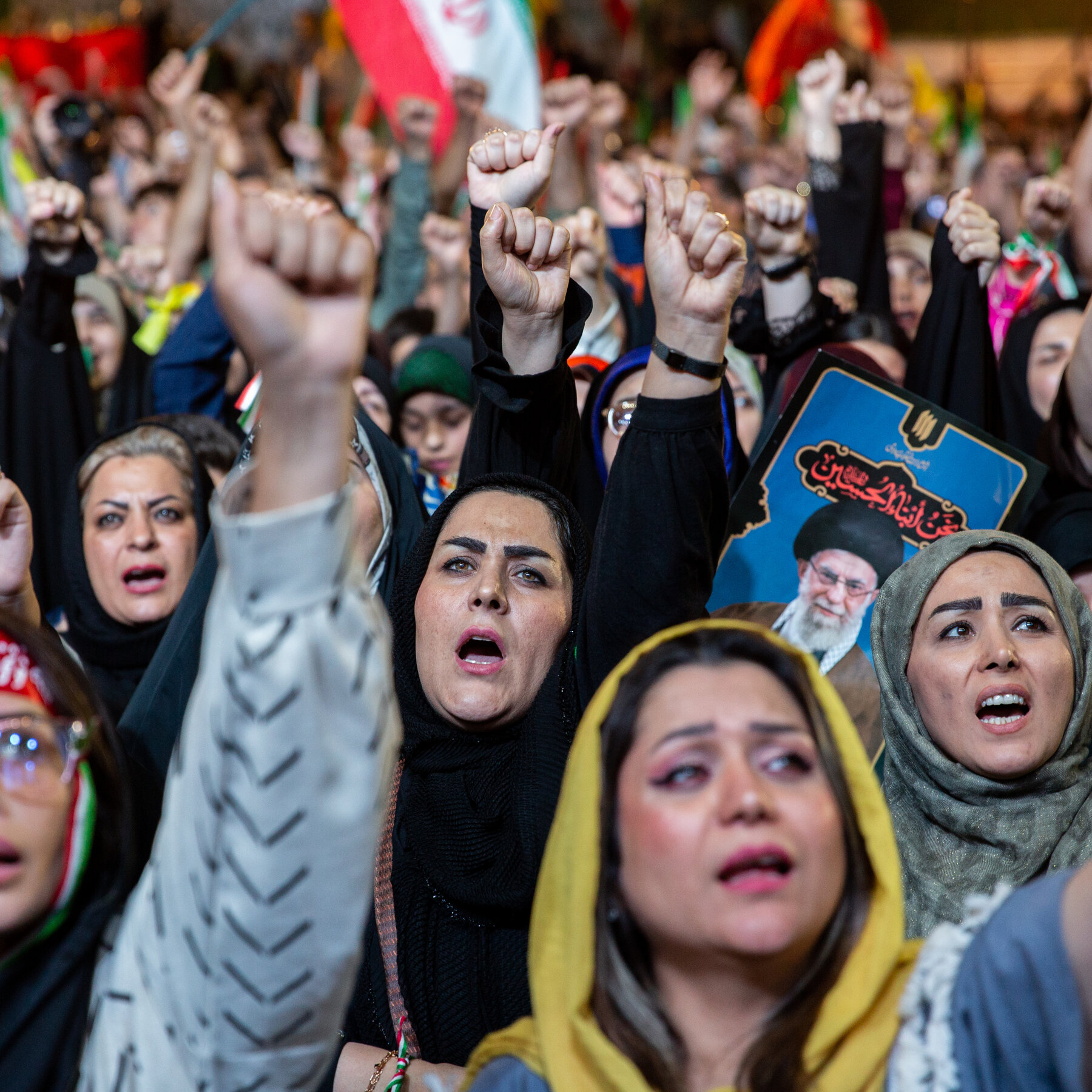
On May 23, 2026, United States President Donald Trump told reporters that an agreement with Iran had been largely negotiated. On the same day, Iran's foreign ministry described that characterisation as inconsistent with reality. The gap between those two statements contains an entire argument about leverage, legitimacy, and the peculiar economics of a sanctions regime that has never managed to achieve its stated objective.
The polymarket odds reflected the confusion. By the evening of May 23, the prediction market priced a 70 percent probability that the United States would lift its blockade of the Strait of Hormuz before the end of the month. That is not a figure that reflects certainty. It reflects a market assigning meaningful probability to a scenario that has not been confirmed by either party to the supposed deal.
What follows is an attempt to locate where the factual ground actually sits, and to ask why the public record looks the way it does.
The Announcement and the Denial
The President's comments, first flagged by the Spectator Index and independently reported across multiple feeds, landed without supporting documentation. No joint statement. No framework paper. No senior Iranian official confirming that a deal had been tabled. The absence of any paper trail is itself significant. Previous iterations of US-Iranian nuclear diplomacy — the 2015 Joint Comprehensive Plan of Action and the aborted 2021-2022 Vienna talks — both produced written drafts that could be parsed, argued over, and selectively leaked. What the public record of May 23 shows is a presidential statement and an Iranian rebuttal. That is the entirety of the verifiable exchange.
The Iranian response, conveyed through state-adjacent channels and live-tracked by Middle East Eye on May 23, was not a negotiating position. It was a denial. The language used — inconsistent with reality — is not diplomatic shorthand for further discussion. It is a flat rejection of the premise that negotiations have reached the stage the President described. In diplomatic practice, that distinction matters. A negotiating party that says talks are progressing signals room for movement. A party that says your characterisation of those talks is fictional is drawing a line.
The question this raises is not whether talks have occurred — they almost certainly have, through back-channels, intermediaries, and possibly third-country facilitation — but whether the public framing matches the actual state of play. The President's tendency to announce diplomatic outcomes before they are agreed is well documented. The question for analysts is whether this instance is different.
The Leverage Calculus
Whatever the underlying reality of the negotiations, both sides enter this moment with genuine leverage and genuine constraints.
The United States has maintained maximum pressure sanctions since 2018, when the Trump administration withdrew from the JCPOA. Those sanctions have inflicted real economic damage on Iran — the rial has weakened substantially, inflation has been sustained, and oil exports have been reduced from their 2017 peak. The blockade of Hormuz, if it amounts to active naval enforcement rather than merely sanctions pressure, adds a new dimension of physical constraint. Tehran's oil revenues depend on getting product to market. The strait is the primary conduit.
But maximum pressure has a documented ceiling. Iran has spent seven years adapting to sanctions, developing alternative export routes through overland trade with Iraq, Afghanistan, and Central Asian states, and cultivating relationships with buyers who operate outside the SWIFT banking system. The sanctions regime has made Iran poorer and more isolated. It has not produced regime change, nor has it compelled Tehran to capitulate on the nuclear programme. Iran's enrichment activities have continued and in some respects expanded since 2018. That is not a secret. It is the central fact that any Iran policy must confront.
Tehran, for its part, holds cards of its own. The nuclear programme is more advanced than it was in 2015. Iran can enrich uranium to weapons-grade levels if it chooses to do so, a capability it does not appear to be exercising but which it is not willing to surrender in negotiations where the other side is offering sanctions relief rather than security guarantees. The Gulf states — Saudi Arabia, the UAE, and their neighbours — have their own relationships with Tehran and their own calculations about what a US-Iranian deal might mean for regional architecture. Their voices are not absent from the room, even when they are not named in the public exchange.
The asymmetry is this: the United States wants a deal that can be announced before the end of the month, for reasons of domestic political timing that the public record does not need to specify. Iran, by all observable indicators, is not under comparable time pressure. That asymmetry shapes how the Iranian denial should be read. A denial issued by a party that wants the talks to succeed looks different from one issued by a party that is being asked to accept a characterisation it has not agreed to.
The Hormuz Question
The blockade deserves specific attention because it is the variable that distinguishes this moment from previous diplomatic episodes.
The Strait of Hormuz is the chokepoint through which roughly a fifth of the world's oil passes. Any credible threat to interrupt that flow — or any action that materially complicates transit — registers immediately in global energy markets. The United States has maintained a naval presence in the Gulf for decades. What appears to be new is an active posture described by the administration as a blockade, combined with polymarket pricing that treats its removal as a live probability within the next thirty days.
The source material does not establish the precise operational status of the blockade — whether it amounts to enhanced customs enforcement, naval patrols, or something more direct. That ambiguity matters for assessing leverage. A blockade that is costly to maintain is a negotiating tool with an expiration date. A blockade that is costless to maintain is something else. The sources do not resolve this question, and treating it as resolved would be an error.
What the sources do establish is that the removal of the blockade is priced at 70 percent probability on polymarket by the evening of May 23, 2026. That pricing reflects informed speculation by participants who have their own access and incentives. It is not confirmation. But it is not nothing. Markets price information that is not publicly available, and the 70 percent figure suggests that whatever the state of the deal, there is a widespread expectation that something changes before the end of May.
The Architecture of the Claim
There is a structural question that sits beneath the immediate diplomatic exchange, and it concerns what a US-Iranian deal actually means in the current global context.
The dollar-denominated international financial system is the primary tool through which US sanctions operate. Iran was expelled from SWIFT in 2018 as part of the maximum pressure campaign. Restoring Iran's ability to transact in dollars — or even in euros or other currencies outside SWIFT — requires cooperation from actors who have their own exposure to US secondary sanctions. European banks, Asian refineries, and commodity traders have all adjusted their behaviour since 2018. A deal that merely lifts the formal sanctions designation may not restore the actual financial channels Iran needs to export oil and import goods, because private actors will conduct their own risk assessments before re-engaging.
This is the gap that has defeated previous sanctions relief efforts. The Obama administration negotiated the JCPOA in 2015. Iran complied with its terms for two years before the Trump administration withdrew. The withdrawal demonstrated that a deal dependent on one administration is fragile across administrations. Any new agreement faces the same structural vulnerability unless it is embedded in something more durable — congressional action, international consensus, or a transformation in the geopolitical environment that makes the deal self-enforcing.
The sources do not indicate whether the current discussions include any mechanism to address this durability problem. What the sources show is a President who believes a deal is largely negotiated and a foreign ministry that says it is not. The gap between those two positions may itself be a negotiating tactic — a public test of how the other side responds to a characterisation offered without prior agreement. But it may also reflect a genuine disagreement about what, if anything, has been agreed.
Scenarios and Stakes
Three broad outcomes appear consistent with the observable evidence.
The first is a deal that is announced and then unravels. This would not be without precedent. Previous high-profile diplomatic moments between the United States and Iran have produced joint statements that did not survive contact with the detail. If the underlying disagreements about enrichment rights, sanctions sequencing, and verification are not resolved, an announcement creates domestic pressure on both sides that makes backtracking costly.
The second is a deal that holds in outline but takes months or years to implement. This has happened with sanctions relief efforts elsewhere. The formal political commitment is reached; the technical and financial steps required to actually restore Iran's position in global markets take far longer. Iran gets a symbolic victory; the United States gets a talking point; the structural relationship remains largely unchanged.
The third is a sustained standoff, with the Hormuz blockade maintained and both sides waiting for the other to move. This outcome is not priced at 30 percent by polymarket — that figure reflects something more specific — but it remains the background condition against which the negotiation is being conducted.
The stakes are not symmetric. For Iran, the nuclear programme is existential in a way that sanctions relief is not. Iran has survived sanctions. It has not survived without a deterrent. No Iranian government will sign an agreement that leaves it exposed on enrichment while the sanctions infrastructure remains in place. For the United States, the stakes are primarily political — the appearance of a diplomatic victory before a domestic deadline — combined with a genuine interest in preventing nuclear proliferation in a region where US allies and interests are concentrated.
The sources do not allow a confident prediction about which scenario is most likely. What they establish is that the public record on May 23, 2026 does not support the characterisation that a deal is largely negotiated — not because negotiations have not occurred, but because one of the two parties to any eventual agreement has publicly rejected that characterisation. That fact belongs in any analysis of where this stands.
This publication covered the Trump administration's announcement through wire and live-tick sources. The Iranian foreign ministry rebuttal appeared in Middle East Eye's live feed, which this desk uses as a primary regional source. Polymarket odds are included as market-sentiment indicators, not as factual confirmation. No formal text of a deal had been published as of the filing deadline.
Wire provenance
This editorial synthesis draws on the following public wire/social posts:
- https://twitter.com/spectatorindex/status/2058295671489429675/photo/1
- https://twitter.com/spectatorindex/status/2058295671489
- https://twitter.com/unusual_whales/status/1926018372658303052