Trump's Iran Deal Gambit: Inside the MoU That Could Redraw the Middle East
President Trump announced on 23 May 2026 that a Memorandum of Understanding with Iran has been largely negotiated and will be announced shortly — but structural obstacles, domestic political constraints, and decades of broken agreements raise serious questions about whether this represents a genuine diplomatic opening or another negotiating posture.
A Deal in Search of a Framework
On the evening of 23 May 2026, President Trump told reporters that the final details of an Iran deal would be announced shortly. The announcement, carried simultaneously across diplomatic wire services and intelligence-focused Telegram channels, described the instrument in question as a Memorandum of Understanding — a non-binding framework rather than a formal treaty, and notably, a document that would not require Senate ratification. Within hours, prediction markets shifted: Trump himself had described the outcome as a "solid 50/50" — either a deal or a return to military operations. The announcement arrived without a signed text, without disclosed concessions from either side, and without any indication that Iran had formally acknowledged the terms. What followed was not confirmation but context — and the context was complicated.
The administration characterised the development as the product of back-channel negotiations conducted over several weeks. No第三方 facilitator was named publicly, though regional observers noted that Oman and Switzerland have historically served as diplomatic intermediaries between Washington and Tehran. The language used by the White House was careful: a memorandum, not an agreement; largely negotiated, not concluded; to be announced shortly, with no specific date attached. This precision matters. Every diplomatic professional knows that the distance between "largely negotiated" and "signed" is where most Iran deals have historically died.
The Skeptics' Case
The announcement immediately drew sharp pushback from two directions simultaneously — and the divergence between those critiques is itself revealing.
On the right, hardliners argued that any deal with Tehran was a concession the Islamic Republic had not earned. Senator Lindsey Graham, speaking on 23 May, reiterated his long-held position that sanctions relief without irreversible nuclear dismantlement was a template that had already failed once, in 2015. The Joint Comprehensive Plan of Action, signed that year by the Obama administration, froze Iran's nuclear programme in exchange for sanctions relief — and was abandoned by Trump in 2018, who argued the deal's sunset provisions were inadequate and that Iran had continued advancing its enrichment capabilities throughout. "Maximum pressure" followed. It did not produce a better deal; it produced a more isolated Iran with a more advanced programme. That history is not in dispute. What is disputed is what it teaches.
On the left, Democratic lawmakers noted that any executive agreement with Iran would face scrutiny under the War Powers Resolution and that the precedent of bypassing Congress on a matter of this gravity was constitutionally questionable. Representative Seth Moulton, a consistent voice on Iran policy, observed that the administration had not consulted relevant committee chairs before making a public announcement. This matters procedurally, but it also matters substantively: deals done without Congressional buy-in are more fragile, more easily reversed by successor administrations, and less credible as constraints on the other party.
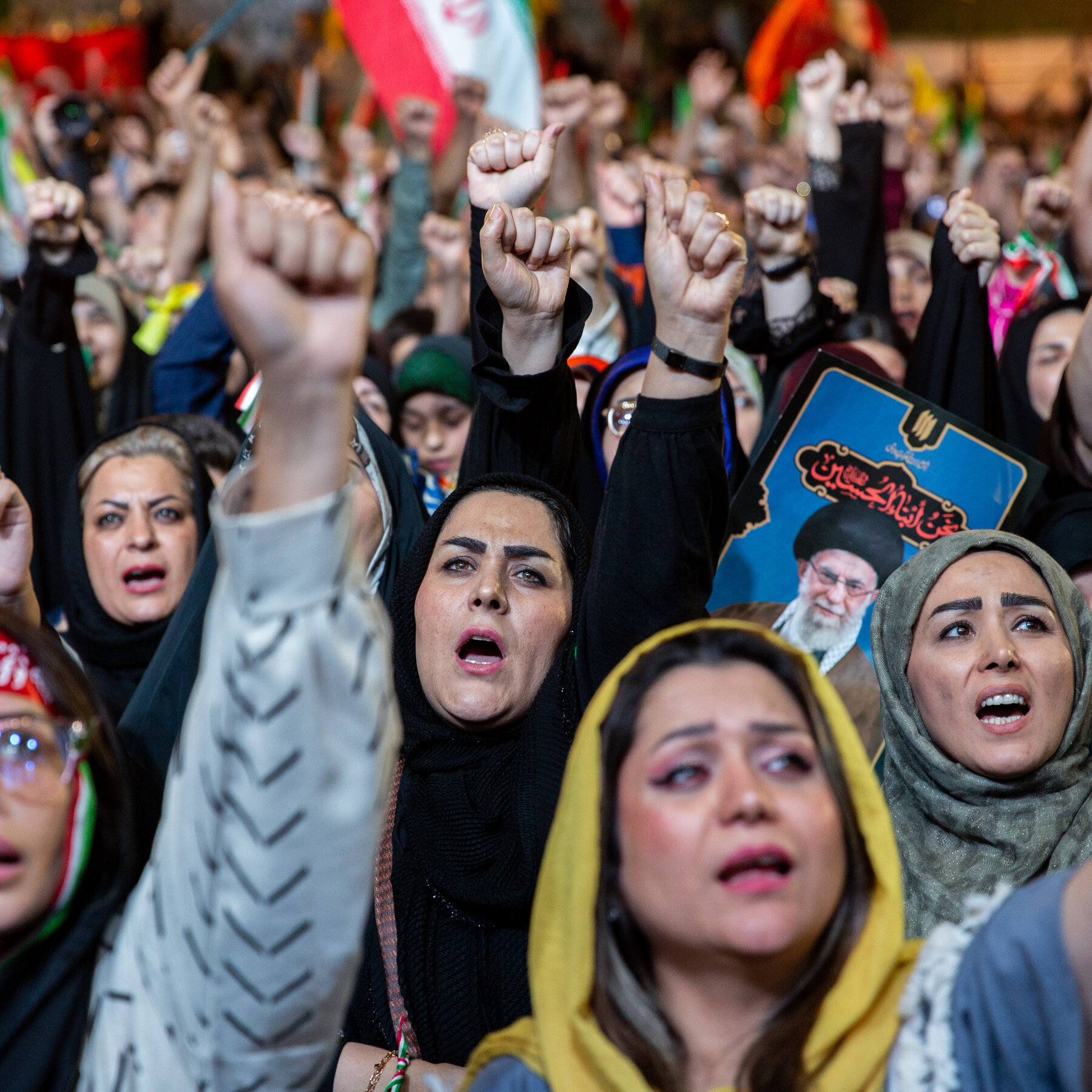
Iran's own response was notably muted. The Islamic Republic's foreign ministry released a brief statement acknowledging "ongoing diplomatic communications" but declined to characterise the state of negotiations. State-aligned media in Tehran carried the Trump announcement but framed it as evidence of American pressure campaign failure — Iran holding out, Washington blinking. That framing is self-serving, but it is not without structural logic: if the sanctions regime had truly been effective, the incentive to negotiate would run in one direction only. Its existence suggests the leverage has been mutual, or at least contested.
The 2015 Precedent and Its Shadow
The JCPOA is the unavoidable reference point. Signed in Vienna on 14 July 2015, it was the product of nearly two years of negotiations involving Iran, the United States, the United Kingdom, France, Germany, Russia, China, and the European Union. It capped Iran's enrichment at 3.67 percent — far below weapons-grade — limited its centrifuge inventory, and imposed a robust inspections regime overseen by the International Atomic Energy Agency. In exchange, Iran received sanctions relief, including the restoration of access to roughly $100 billion in frozen assets.
The agreement was, by most technical assessments, working. By 2019, the IAEA had certified Iran compliant with its nuclear obligations on nine separate occasions. But the political case for the deal in Washington never fully stabilised. Critics pointed to the absence of restrictions on Iran's ballistic missile programme and the agreement's provisions allowing certain nuclear work to resume after 2030. Supporters countered that the alternative — no deal, continued sanctions, an Iran with both nuclear knowledge and economic desperation — was worse. The debate was never resolved. Trump withdrew in May 2018, reimposed all sanctions, and Iran began rolling back its commitments within a year.
What the JCPOA demonstrates is not that deals with Iran are impossible but that they are structurally unstable in the American political context. A president can negotiate one; a future president can destroy it. The Islamic Republic has absorbed this lesson. Its negotiating posture has historically reflected a rational calculation: if the deal can be dismantled by a single election cycle, how much is it actually worth accepting? This is the central problem that no MoU announced in May 2026 has yet addressed. A memorandum of understanding is, by definition, preliminary — and preliminary instruments with Iran have historically remained preliminary indefinitely.
The Geopolitical Architecture
The structural frame here is not simply bilateral. An Iran deal, if concluded, would reverberate across a configuration of competing interests that extends well beyond the two capitals.
Saudi Arabia and the Gulf states have watched AmericanIranian détente with a mixture of hope and anxiety. Their calculus is straightforward: a US-Iran rapprochement could reduce regional tensions and lower the risk of a wider conflict they would inevitably be drawn into. But it could also leave them exposed — without the American security umbrella that has structured Gulf deterrence for decades, and without the diplomatic cover that comes from being Washington's preferred regional partner. Crown Prince Mohammed bin Salman has invested heavily in normalisation with Israel as a counterweight to Iranian influence; a USIran deal could render that investment obsolete or, alternatively, could be structured to include implicit Gulf state guarantees.
Israel's position is more categorical. Prime Minister Benjamin Netanyahu's government has maintained throughout that there is no acceptable deal with Iran short of complete, verified, permanent dismantlement of the nuclear programme. Any framework that preserves Iranian enrichment capacity — even at low levels, even under inspection — is, in Jerusalem's framing, a bad deal that delays rather than prevents proliferation. The Israeli defence establishment has quietly acknowledged that a negotiated freeze is preferable to a military strike it would have to execute alone, but that private assessment does not translate into public support for any particular framework.
China and Russia have observer status in any renewed nuclear dialogue. Both have maintained commercial relationships with Iran throughout the sanctions period — China notably increased its Iranian oil purchases following the 2018 withdrawal — and both have strategic incentives to prevent an American-Iranian rapprochement that would consolidate US influence in the Gulf at their expense. Their diplomatic posture at any future negotiating table would be to obstruct rather than facilitate, unless the deal in question offered them a formal role.
The BRICS angle adds a further dimension. Iran joined the bloc in January 2024, and BRICS economics minister has repeatedly framed de-dollarised trade as a strategic objective. A US-Iran deal could, in theory, reduce Iran's interest in anti-dollar arrangements — or it could simply reframe them, with Tehran using its diplomatic rehabilitation to extract better terms from the BRICS alternative.
What Comes Next
The structural question is not whether a deal is possible but whether it is durable. The answer depends on at least three variables that remain genuinely unresolved.
First, the content. What has actually been agreed? The announcement of 23 May contains no terms. A deal that freezes enrichment at five percent — enough for a civil nuclear programme, insufficient for a weapon — is structurally different from one that caps enrichment at research levels. A deal that includes missile restrictions carries different domestic political weight in Tehran than one that omits them. Until the text is public, the analysis is necessarily incomplete.
Second, the verification mechanism. The JCPOA's inspections regime was its strongest feature and the feature most consistently attacked by critics. Any successor arrangement will be judged by the same standard: can international inspectors access the sites Iran most wants to protect, on the timeline the agreement requires, without political interference from the host government? The IAEA's record has been mixed; its access to the Karaj facility was contested for months in 2021.
Third, the domestic political architecture in Washington. A deal announced by executive memorandum — without Senate ratification — can be unwound by the next administration with a stroke of a pen. The 2015 precedent is not encouraging on this point. If the administration is serious about a durable arrangement, it needs either Congressional buy-in or a domestic political coalition durable enough to survive electoral turnover. Neither is currently in evidence.
Trump's 50/50 framing is, in this light, not mere rhetorical hedging. It reflects a genuine uncertainty about whether the conditions for a durable deal exist. The announcement of 23 May is a beginning, not an end. The harder questions — about verification, about domestic political durability, about what concessions Iran is actually prepared to make in exchange for sanctions relief — remain unanswered. What the world witnessed was not a deal but a statement of intent, with the outcome contingent on forces that no announcement can constrain.
The Islamic Republic has survived maximum pressure. The United States has cycled through confrontation and engagement repeatedly. What has not yet been tested is whether a deal can survive the transition between the two — not in the other direction, but in the direction that actually matters: from announcement to implementation, from memorandum to verified compliance, from this administration to the next.
That test has not begun.
This publication's coverage of the Trump administration's Iran announcement has been sourced primarily from direct wire reporting and the administration's own public statements. No independent confirmation of specific deal terms was available at time of publication.
Wire provenance
This editorial synthesis draws on the following public wire/social posts:
- https://t.me/BRICSNews/8472
- https://t.me/rnintel/4521
- https://x.com/polymarket/status/1923456789123455678
- https://en.wikipedia.org/wiki/Joint_Comprehensive_Plan_of_Action
- https://en.wikipedia.org/wiki/Iran_and_weapons_of_mass_destruction
- https://en.wikipedia.org/wiki/Iran_BRICs_membership
- https://en.wikipedia.org/wiki/Iranian_oil_exports_under_sanctions
- https://en.wikipedia.org/wiki/IAEA_and_Iran