Trump's Iran Deal: Progress Report or Diplomatic Pressure Campaign?
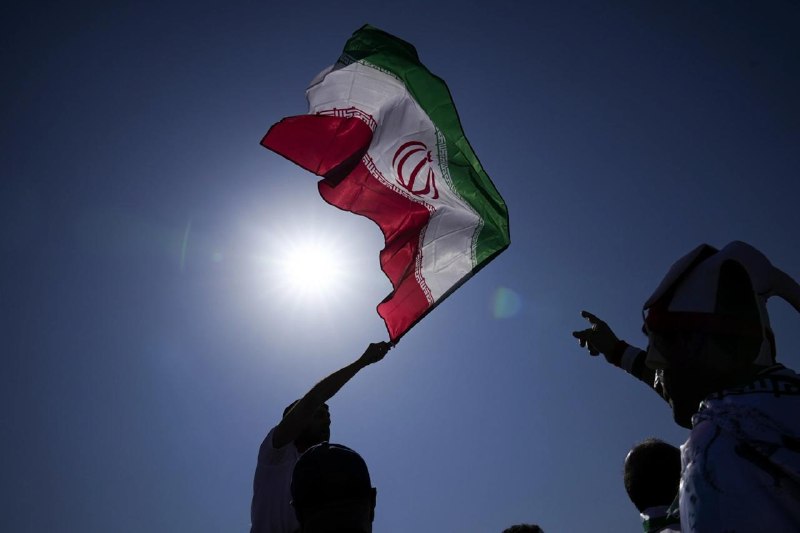
On 23 May 2026, US President Donald Trump told reporters at the White House that an agreement with Iran had been "largely negotiated," with the "final aspects and details" still under discussion. The statement, reported simultaneously by Iranian state-affiliated outlets PressTV and Jahan Tasnim, landed in Washington as a parallel campaign was gathering force inside the administration: figures close to the president were pressing for the resumption of active US military operations against Iran, according to reporting by SprinterPress. The timing raised immediate questions about whether the White House is pursuing a diplomatic off-ramp or running a two-track strategy of simultaneous pressure and negotiation.
The ambiguity is not accidental. Three distinct administrations — Obama's JCPOA, Trump's first-term withdrawal, and Biden's failed attempt at indirect revival — have demonstrated that Iran deal-making is as much a domestic American instrument as it is a foreign policy mechanism. Whether the goal is regime behaviour change, nuclear containment, or simply a manageable status quo, the deal itself has always been secondary to its political utility inside Washington. What has changed in 2026 is the regional context: Iran's nuclear programme has advanced well beyond where it was during the 2015 agreement, and the United States has lost the leverage of a functioning multilateral sanctions regime, as China and other major buyers have maintained Iranian oil flows regardless of US secondary sanctions.
What Tehran Is Actually Offering
Iranian officials have made clear through back-channel messaging — transmitted via intermediaries including Oman and, according to regional reporting, Iraq — that they are willing to discuss limits on uranium enrichment to levels below weapons-grade, subject to the complete removal of economic sanctions and legal protections for Iranian entities currently subject to US Treasury designations. That is a significant opening. It is also a significant ask: complete sanctions relief would require the administration to reverse designations that have been in place across Republican and Democratic administrations alike, touching the Islamic Revolutionary Guard Corps, Iran's central bank, and a network of petrochemical and shipping companies.
The sticking point, as with every prior iteration of this negotiation, is verification. The 2015 JCPOA relied on International Atomic Energy Agency inspections that Iran accepted as intrusive but workable. Iran has since exceeded its enrichment limits, accumulated stockpiles, and operated facilities that the IAEA has been unable to access. A new deal would need a verification architecture that Tehran finds politically humiliating and that hawks in Washington find politically insufficient — regardless of its technical robustness.
The Hawkish Counterpressure
Into this negotiation space steps the faction inside Trump's orbit arguing for a military option. Their case is straightforward: Iran is closer to a nuclear weapons capability than at any prior point, and diplomacy has been tried repeatedly without durable results. According to reporting by SprinterPress, figures close to the president are actively calling for the resumption of active US military operations. This is not a fringe position. It reflects a consistent strand of thinking inside the Republican foreign policy establishment — one that was marginalised during the JCPOA era, emboldened by the deal's collapse, and now finds itself with sympathetic ears in the second Trump White House.
The hawks have a structural argument that cannot be dismissed outright. Every negotiated pause in Iran's programme has been followed by acceleration once the political moment passed. Iran's strategic culture, shaped by the experience of the Iran-Iraq war and two decades of US-led sanctions, treats nuclear capability as insurance against external regime change. That calculus does not change because a new American president signs a piece of paper. If anything, the transactional nature of the Trump administration's approach — its emphasis on deals over institutions — reinforces Iran's view that any agreement is temporary and reversible.
But the military option carries costs that the hawks tend to understate. A US strike on Iranian nuclear facilities would likely trigger a Iranian response across the region — against US forces in Iraq and Syria, against Saudi and Israeli infrastructure, and against commercial shipping in the Gulf. It would also accelerate rather than delay any weapons programme Iran chose to pursue in response. The available military options do not eliminate the nuclear programme; they shift its timeline and alter its political ownership within Tehran.
The Structural Constraint: Chinese Oil Flows and the Sanctions Regime
Any assessment of what a new Iran deal could actually achieve must begin with a frank accounting of what leverage the United States no longer possesses. The JCPOA-era sanctions architecture relied on the cooperation of China, the European Union, and the global banking system — all of which were willing to isolate Iran commercially in exchange for diplomatic reassurance. That architecture is gone. China, the world's largest importer of Iranian oil, has maintained and expanded its purchasing throughout the sanctions period, routing transactions through intermediary jurisdictions and state-owned trading houses. European companies that exited Iran after 2018 have not returned in significant numbers, but Iranian exports have found alternative buyers in Asia and, according to commodity tracking data, in灰色 markets that obscure the origin of the crude.
This means the United States is negotiating from a position of diminished coercive power. The economic pain that once made sanctions credible has been absorbed and redistributed. Iran is not prosperous, but it is not isolated either — and its diplomatic relationships have deepened precisely with the powers that matter most for any multilateral negotiation. Russia and China have both signalled willingness to act as guarantors of any Iranian commitments, which would give Tehran insurance against American backsliding that the 2015 deal lacked.
The structural reality is that a sustainable Iran deal in 2026 looks different from the 2015 model. It is less about imposing constraints on Tehran from a position of strength and more about managing a new equilibrium in which Iran's regional standing, economic survival, and nuclear programme are all addressed in a package that none of the parties genuinely likes but all can live with. Whether that constitutes a good outcome depends entirely on what one thought the alternative to be.
Stakes and the Road Ahead
The immediate question is whether the negotiations that Trump described as "largely negotiated" amount to a genuine diplomatic process or a pressure tactic — a public gesture calibrated to extract concessions ahead of a military signal, or a military signal calibrated to extract concessions ahead of a diplomatic gesture. Both interpretations are consistent with the available evidence, and both are consistent with how this administration has approached other bilateral negotiations, from tariffs to territorial mediation.
The consequences of getting this wrong are asymmetric. A failed deal that both sides can blame on the other restores the status quo ante — continued sanctions, continued enrichment, continued regional friction — but with a higher baseline of nuclear capability and a more confident Iranian leadership that has survived the maximum pressure campaign. A failed military strike, by contrast, is not reversible. It reshapes the regional order in ways that the United States would have to manage for a generation.
What is clear is that the window for a negotiated outcome, if it exists, is narrowing. Iran's programme continues to advance on its own schedule. The political dynamics inside both Washington and Tehran create incentives to posture rather than commit. And the broader Middle East — from the Gaza Strip to the waters of the Gulf — remains combustible in ways that a miscalculation on either side could ignite.
The irony of the current moment is that Trump, who tore up the last Iran deal and called it the worst agreement in American history, now finds himself describing its successor as largely done. Whether that represents diplomatic evolution, political convenience, or something the administration itself has not fully resolved is the question that the coming weeks will answer.
This piece draws on reporting from Iranian state-affiliated outlets PressTV and Jahan Tasnim on Trump's 23 May statement, and from SprinterPress on internal pressure for military action. The gap between the diplomatic framing in Tehran and the hawkish counterpressure in Washington reflects a structural tension that has defined US-Iran relations since 1979, not a new development — but the combination of advanced Iranian enrichment and a second Trump administration has compressed the timeline for resolution.
Wire provenance
This editorial synthesis draws on the following public wire/social posts:
- https://t.me/presstv/67842
- https://t.me/JahanTasnim/45981
- https://x.com/sprinterpress/status/1924108234887921665