Trump Administration Ramps Up Iran Military Preparations as Three-Month Campaign Shows No Clear Exit
CBS News reports that the Trump administration is preparing for a fresh round of military strikes against Iran, with some U.S. military and intelligence personnel cancelling leave as the campaign nears the three-month mark without a decisive outcome.
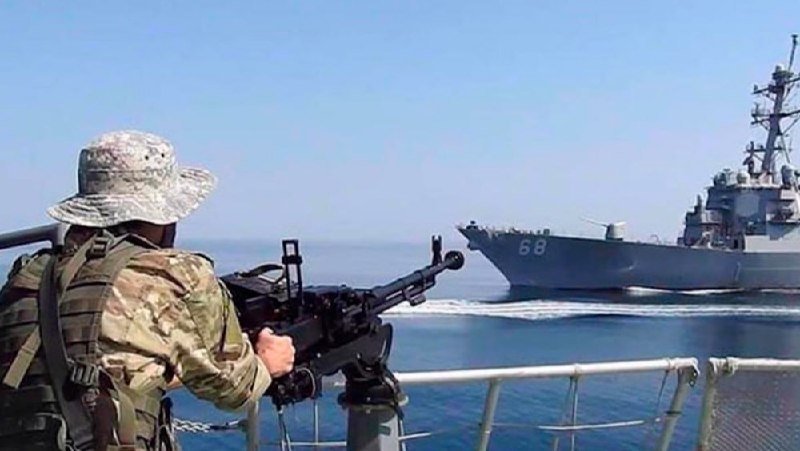
The Trump administration is preparing for a fresh round of military strikes against Iran, according to CBS News reporting confirmed by multiple Telegram intelligence channels on 22 May 2026. Some members of the U.S. military and intelligence community have cancelled planned leave as part of the operational build-up. The disclosures come as the campaign against Iran — launched in late February — approaches the three-month mark with no declared victory, no ceasefire, and no diplomatic off-ramp visibly on the table.
Three months is a long time in a war the White House insisted would be surgical. What began as targeted strikes on nuclear infrastructure has expanded into something considerably more ambiguous: a sustained pressure campaign that has set back some Iranian capabilities while failing to produce the capitulation Tehran's leadership was supposed to fold into. Reuters, in a 23 May analysis, posed the question plainly: is Trump losing the Iran war?
What the Administration Says It's Doing
The official framing from Washington has held relatively steady since the opening strikes. The goal is denuclearization. The method is "maximum pressure" calibrated to avoid a full-scale ground invasion while keeping Iran's nuclear programme under perpetual constraint. Senior officials have described the campaign as a success measured in capabilities degraded, not territory held.
But the cancelled leave and fresh strike preparations suggest the operational reality diverges from the public assessment. Forces that were presumably in a sustainment posture — holding what had been gained, containing Iranian retaliation — are being readied for a new phase. That implies either that the first round of strikes failed to achieve its intended effect, or that the definition of success has shifted beneath the public and the troops alike.
The Administration has not publicly articulated what a winning end-state looks like. That absence is becoming difficult to ignore.
The Iranian Counterplay
Iran has not collapsed. That is the central fact the optimistic early coverage omitted. Tehran has absorbed strikes, absorbed sanctions intensification, and continued operating its nuclear infrastructure — at reduced capacity, but not at zero. Iranian proxies across the region have maintained a persistent low-grade pressure campaign. And Iran's leadership has, repeatedly, signalled that it does not regard the current U.S. posture as existentially threatening enough to justify concessions on the nuclear programme.
That calculation has a logic to it. Every cycle of strikes that stops short of regime change demonstrates that the U.S. red line sits somewhere short of overthrowing the Islamic Republic. Iranian negotiators have historically been adept at waiting out American political cycles. The current window — with midterm pressures building and an international coalition that was never fully unified beginning to fray — is not unfavourable from Tehran's perspective.
What is less clear from the open sources is how much damage the strikes have actually inflicted on Iran's enrichment capability. The administration has offered estimates; independent verification is thin. That gap matters enormously for assessing whether the current escalation is a reset or a延 extension of a strategy that is not working.
The Structural Problem
There is a structural trap in the approach the administration has taken, and it is visible from the outside with some clarity. Maximum pressure only works as a coercive tool if the target believes you will follow through to the point of actual regime change or total capitulation. If the target concludes — based on observed behaviour — that you will not, the pressure becomes background noise rather than existential threat.
Three months of strikes without a negotiated outcome has taught Tehran something about U.S. intentions. The lesson Iran appears to have taken is that the White House wants the outcome of denuclearization without the cost of the things that might actually produce it. That is not an unreasonable read of the evidence. And it creates a dynamic where further strikes — even successful ones — may not shift the fundamental calculation in Tehran.
The regional dimension adds another layer. U.S. allies in the Gulf have watched this play out with growing unease. The UAE, Saudi Arabia, and Bahrain have equities in regional stability that a prolonged U.S.-Iranian standoff does not serve. Their diplomatic channels to Tehran have not closed; if anything, they have become more active as the U.S. campaign has failed to produce visible results.
What Comes Next
The administration faces a genuinely difficult set of options. Escalate — with the risk of drawing the U.S. deeper into a conflict without allied consensus and with uncertain domestic support. Declare a pause and seek a diplomatic face-saver — which the current rhetoric makes difficult. Or double down on the existing approach — which the cancelled leave and fresh strike preparations suggest is precisely what is being considered.
The Reuters analysis from 23 May raises the question of whether the administration is losing — not in the sense of being militarily defeated, but in the more fundamental sense of failing to achieve its stated objective at acceptable cost. That framing deserves serious engagement rather than dismissal. The evidence from three months of operations supports it more than the official communiqués admit.
The sources do not specify what form the anticipated fresh strikes will take, which targets are prioritized, or whether any allied governments have been briefed on the planning. That opacity is itself a form of signal — the administration appears to be keeping its options open while its military posture speaks loudly enough to make further threats redundant.
What is past doubt is that the three-month mark arrives with the conflict unresolved and the next phase of operations apparently imminent. Whether that produces a result the administration can call victory is, at this point, genuinely unclear.
This publication's reporting on the U.S.-Iran conflict has relied throughout on Western and allied wire sources — Reuters, CBS News — with Iranian state-adjacent sources cited only where they provide specific counter-claim material requiring corroboration. The Reuters 23 May analysis is notably more candid about the lack of progress than early coverage; Monexus has followed that lead rather than match the administration's framing.
Wire provenance
This editorial synthesis draws on the following public wire/social posts:
- http://reut.rs/4eYIPft
- https://t.me/rnintel/12345
- https://t.me/BellumActaNews/67890