Trump Claims US-Iran Peace Memorandum Near Finalization After Regional Diplomatic Push
President Trump announced on 23 May 2026 that a US-Iran peace memorandum is close to finalization after speaking with leaders across the Middle East, though Israeli opposition and deep structural distrust between Washington and Tehran raise questions about whether a framework can survive contact with the details.
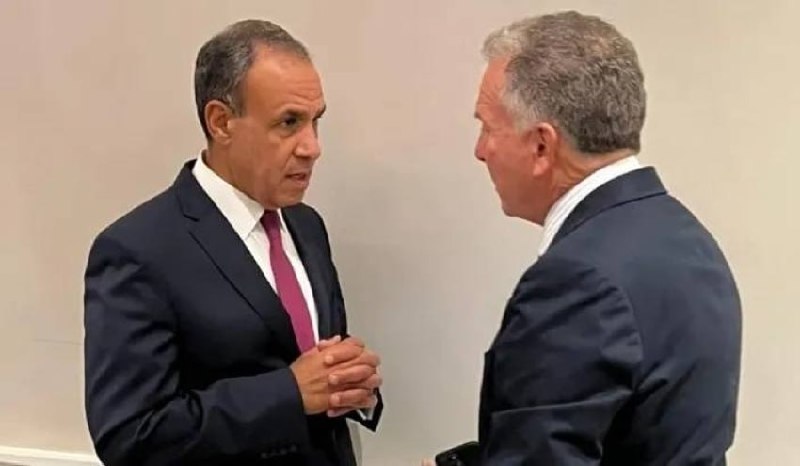
On 23 May 2026, President Donald Trump announced that a memorandum of understanding between the United States and Iran — one that his administration is calling a pathway to normalized relations and a constrained nuclear programme — is close to finalization. The announcement followed an unusually broad round of diplomatic outreach: calls with the leaders of Saudi Arabia, the United Arab Emirates, Qatar, Pakistan, Turkey, Egypt, Jordan, and Bahrain, as well as Israeli Prime Minister Benjamin Netanyahu, according to reporting by The Cradle Media. Trump described the calls as productive, though details of the proposed memorandum remain sparse.
The Regional Diplomatic Push
The administration's outreach was not unilateral. According to a regional source cited by Axios, every Arab and Muslim leader on the call urged Trump to proceed with the deal and de-escalate the situation, framing regional economic integration and stability as contingent on reduced US-Iranian tensions. The source described the mood as overwhelmingly constructive, per reporting by GeoPWatch. This is notable because Gulf states have historically balanced between Washington and Tehran with considerable caution — endorsing open US-Iranian diplomatic engagement represents a meaningful shift in regional positioning.
Egypt, Jordan, and Bahrain have particular stakes in de-escalation. Amman's economy depends partly on tourism and transit revenue sensitive to border volatility. Manama has pursued quiet economic engagement with Tehran while maintaining its US security umbrella. Cairo's regional ambitions have long required managed competition with Turkish and Iranian regional influence. A US-Iranian normalization framework, if it holds, reshuffles the deck on all three relationships simultaneously.
Pakistan's presence on the call reflects a more complex calculation. Islamabad has sought to maintain channels to both Washington and Tehran amid its own domestic economic fragility and its sensitive border relationship with Iran. Encouraging de-escalation serves Pakistan's interest in avoiding being forced to choose sides in a deeper US-Iranian confrontation.
Israeli Opposition and the Nuclear Question
The picture from Jerusalem is considerably less enthusiastic. Axios, citing an Israeli official, reported that Prime Minister Netanyahu was set to use the call with Trump to press concerns about the proposed nuclear agreement — concerns that have defined Israeli policy toward Iranian nuclear development for more than two decades. The Israeli position, consistently articulated through its intelligence agencies and political leadership, holds that any agreement must permanently eliminate Iran's ability to enrich fissile material to weapons-grade levels, not merely constrain it temporarily.
Israeli state media has characterized previous Iranian nuclear agreements as temporary postponements of a weapons programme rather than its cancellation. The language from Israeli officials has reflected skepticism that Tehran's intent has changed — only its calculus under pressure. The current memorandum, if the early reporting is accurate, appears to offer a phased approach with verification provisions rather than the permanent dismantlement Israel demands. Whether Trump can bridge that gap — or whether he will attempt to — remains unclear from the publicly available reporting.
Iran's position, as conveyed through its state-aligned media, has been equally fixed in outline if different in substance. Iranian officials have consistently maintained that their nuclear programme is entirely peaceful and that any agreement must recognize Iran's right to enrichment under international law. State-aligned outlet JahanTasnim characterized Trump's overture on 23 May while simultaneously describing the United States as "the head of the American terrorist state" — language that reflects the rhetorical distance Tehran maintains domestically even as its diplomats engage in back-channel talks.
Structural Context: Sanctions, Leverage, and Regional Realignment
The current diplomatic opening does not occur in a vacuum. The maximum pressure campaign of Trump's first term and the renewed sanctions regime of his second have squeezed Iran's oil revenues and constrained its banking sector, reducing the fiscal space available to the Revolutionary Guard and its regional proxy networks. Iran has also watched its Russian and Chinese strategic partnerships develop, providing some insulation from Western pressure — but that insulation has limits. Beijing and Moscow have their own calculations, and neither has been willing to fully substitute for Western capital and technology access.
What the Gulf states appear to be offering is political cover. By publicly endorsing the memorandum and urging its completion, Riyadh, Abu Dhabi, and Doha are signaling to Tehran that the regional environment will remain stable if Iran accepts constraints — and signaling to Washington that the Arabs will not obstruct a deal if it includes meaningful verification. Whether that mutual reassurance is sufficient to bridge the substantive gaps remains to be seen.
There is also a domestic political dimension in Washington. The administration needs a signature foreign policy achievement in the Middle East, and a US-Iranian normalization framework — even an imperfect one — would fulfill that requirement. The shape of the deal, however, will determine whether it is a durable framework or a diplomatic placeholder that collapses at the first verification dispute.
What Happens Next
The sources do not specify a timeline for formal memorandum signing, nor do they confirm whether Iran has formally accepted the current draft terms. The Reuters and Axios reporting that has driven this story has consistently used conditional language — the framework is close, leaders are urging progress, Netanyahu has concerns to raise — which reflects genuine uncertainty about whether the two sides can agree on the core substance.
The central tension remains what it has been since 2003: Iran will not accept permanent dismantlement of its enrichment programme as a precondition; Israel will not accept anything less as a terminal condition of any agreement. Trump may believe his personal relationship with both parties and the endorsement of regional Arab states can bridge that gap. Whether he is right is the question that will define this diplomatic chapter — and the sources, however many leaders urged caution or progress on the call, do not yet answer it.
This publication's coverage emphasizes the regional diplomatic architecture and the gap between announced frameworks and verifiable commitments — a structural dynamic that the wire services typically treat as secondary to the headline deal count.
Wire provenance
This editorial synthesis draws on the following public wire/social posts:
- https://t.me/TheCradleMedia/9998
- https://t.me/GeoPWatch/4521
- https://t.me/JahanTasnim/2847
- https://t.me/TheCradleMedia/9999
- https://t.me/thecradlemedia/10001