Trump Summons National Security Team as US-Iran Deal Nears Final Wording Stage
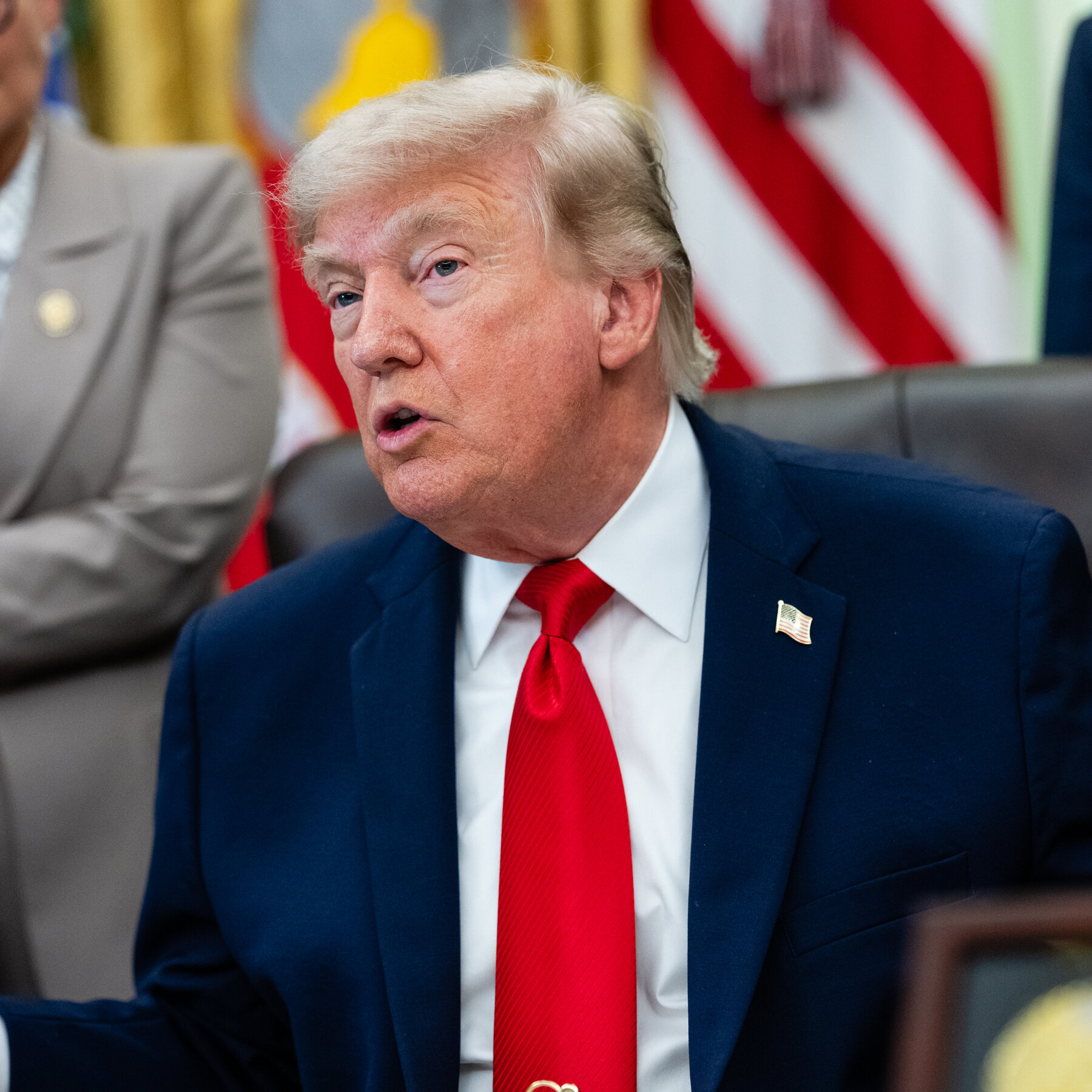
The Vice President of the United States was not supposed to be in Washington on the evening of 23 May 2026. JD Vance had been in Cincinnati, attending what had been publicly framed as a routine engagement, when his motorcade was suddenly seen moving at speed toward Joint Base Andrews. Within an hour, it was racing through the streets of the capital toward the White House. Donald Trump had summoned his entire national security team. The reason, according to a US official briefed on the negotiations and cited by Axios, was that the United States and Iran were closer to a deal than at any point in the previous three years of sustained diplomatic contact — and that the distance between agreement and collapse now hinged on a handful of disputed phrases.
The administration did not announce the meeting. There was no press pool spray. The Vice President's unplanned return, reported by multiple channels with graphic evidence of the motorcade's movement, was itself a signal: that whatever was being discussed inside the West Wing had moved beyond the deliberative phase and into something closer to decision. For months, Western officials had spoken carefully about the trajectory of US-Iran talks. On the evening of 23 May, something shifted.
The Wording That Stands Between War and Peace
The most specific description of where negotiations currently stand comes from the Axios reporting: the remaining gaps are concentrated on the language of several provisions rather than on any fundamental conceptual disagreement. That matters. Disputes over drafting language are, by definition, disputes about implementation — about what commitments mean in practice, who verifies compliance, and what happens when a party steps over a line. They are technically resolvable in a way that disagreements about the underlying structure of a deal are not. A negotiation that has reached the wording stage is a negotiation that has passed the point where either side can walk away without cost.
Iran's nuclear programme, which Western intelligence agencies had assessed as advancing toward weapons-adjacent capability throughout 2024 and 2025, sits at the centre of what any agreement would constrain. The Trump administration has taken a characteristically transactional approach: rather than the comprehensive freeze sought by the European parties to the original Joint Comprehensive Plan of Action, the current framework appears to involve a quid pro quo structured around sanctions relief in exchange for verified caps on enrichment levels and thedisablement of advanced centrifuge infrastructure. Iranian officials, citing the damage wrought by maximum pressure campaigns between 2018 and 2025, have insisted on written guarantees that any future US administration cannot unilaterally reimpose restrictions. The precise formulation of that guarantee — its legal character, its duration, its escape clauses — is reportedly one of the contested points.
The war itself adds a layer of complexity that no previous US-Iran negotiation has had to navigate. Iranian-backed groups have been engaged in sustained combat across multiple theatres. A comprehensive deal would need to address not just the nuclear track but the regional network of proxies and allies whose activities have defined the conflict's kinetic surface. That work appears to be proceeding in parallel, with separate tracks for Lebanon, Yemen, and the broader Gulf security architecture.
Vance's Return and the Domestic Political Calculus
The decision to summon the Vice President from Ohio carried an unmistakable implication: Trump wanted his deputy present for a meeting whose outcome he expected to be decisive. Vance, who spent the early years of the administration positioned as the administration's most vocal sceptic of extended foreign engagement, has increasingly been drawn into the Iran file as the diplomatic track matured. His presence at a national security principals meeting rather than a full Cabinet session suggests the format was operational rather than ceremonial — a working session, not a briefing.
The domestic political environment around the deal is, by any measure, complicated. Republicans who spent years excoriating the original JCPOA as an existential error have repositioned only partially; a deal that delivers visible strategic gains — the end of a regional war, a constrained Iranian programme — could be framed as a Trump-era achievement rather than a continuation of Obama-era architecture. But the framing battle inside the Republican coalition is not resolved. Hawks who have built reputations on Iranian containment will scrutinise any agreement's verification provisions with exceptional care, and any sign of weakness in the enforcement mechanism will generate immediate political heat.
On the Democratic side, the calculus is different but equally charged. A deal that looks like it might actually hold would offer opposition lawmakers a rare moment of bipartisan overlap with an administration they have spent three years opposing on most domestic questions. But party centrists who watched the original JCPOA negotiations from inside the White House will be acutely aware of the domestic political costs of being associated with a framework that collapses — or is perceived to have been prematurely embraced.
The Structural Context: Middle Eastern Power Architecture
What makes this moment distinct from previous negotiations is not the technical substance of what is being proposed but the broader realignment that has taken place across the Middle East since the last serious US-Iran diplomatic contact. The Abraham Accords normalised a set of relationships between Israel and several Gulf states that would have been politically unthinkable five years earlier. Saudi Arabia has navigated its own rapprochement with Tehran through Chinese-mediated channels. The map of alignments that once made a US-Iran deal almost structurally impossible has been substantially redrawn.
Israel's position remains central and, in certain respects, asymmetrically powerful. Any deal that does not adequately address the Iranian ballistic missile programme or Tehran's support for Hezbollah will face immediate friction with Jerusalem. Israeli officials have made clear through back-channel communications that they view a weakly verified nuclear agreement as worse than no agreement — a view that carries weight in an administration that has invested significantly in the US-Israel relationship. The question of whether Israeli concerns are being adequately incorporated into the final drafting, or are being treated as a secondary constraint, is one the sources do not fully resolve.
The broader Middle Eastern security architecture that would emerge from a sustained US-Iran détente is genuinely difficult to map in advance. If sanctions relief proceeds and Iran regains access to frozen financial assets, where does that money flow? How do regional actors with longstanding adversarial relationships with Tehran — Saudi Arabia, the UAE, Bahrain — recalibrate their own postures? The United States has interests across all of those relationships, and a deal that stabilises one axis of conflict while destabilising another would be, at best, an incomplete success.
Precedent and the Verification Problem
The original JCPOA, negotiated between 2013 and 2015 and implemented in January 2016, collapsed not because its terms were inherently flawed but because a subsequent US administration — Trump's first — withdrew from the agreement, citing sunset provisions and the absence of restrictions on Iran's ballistic missile programme. That withdrawal, and the subsequent maximum pressure campaign, produced a period of escalating tension that ultimately merged into the conflict now nearing possible resolution. The lesson most analysts draw from that history is not that the JCPOA was wrong but that any agreement must be structured to survive a change of administration — or at least to impose such high political costs on withdrawal that a future president thinks twice.
Whether the current framework achieves that durability is the central question. The wording disputes reportedly centre partly on precisely this issue: whether the commitments can be given a form that binds future administrations without requiring Senate ratification, which would be politically impossible given current US polarization. Iranian negotiators, burned by the first Trump administration's unilateral withdrawal, are not naive about the vulnerability. The solution, if one emerges, will require creative legal architecture — possibly involving third-party guarantees, bilateral frameworks outside the UN system, or structural features that make withdrawal so diplomatically expensive as to be effectively irreversible. Whether such architecture exists, or can be constructed in the remaining hours of negotiation, is the question that will determine whether this moment becomes an agreement or a near-miss.
Stakes and the Path Forward
The immediate stakes are straightforward to state. If an agreement is reached and holds, the war ends. Iran's nuclear programme is constrained — not eliminated, but slowed, inspected, and capped in ways that buy time. The regional architecture stabilises, at least temporarily, around a set of commitments that both sides have incentives to honour. American military assets currently deployed in the Gulf can begin a measured redeployment. The humanitarian cost of continued conflict — measured in civilian lives, displacement, and economic devastation across multiple countries — stops accumulating at the current rate.
If the wording disputes prove unresolvable, or if the agreement is reached but collapses within months of signing, the consequences cut in a different direction. Iran resumes its nuclear advancement without meaningful constraint. The regional conflict, which has shown no signs of terminating on its own, continues with all its attendant human costs. And a second US withdrawal from a major diplomatic framework — following the first — would send a signal to every country currently engaged with the United States about the value of American commitments that could take a generation to overcome.
The Trump administration, whatever else one might say about its approach to international agreements, has demonstrated a consistent preference for deals over sustained conflict when the terms are defensible domestically. Whether the current framework meets that threshold will be answered in the next hours, not days. Vance's motorcade, racing toward the White House on the evening of 23 May, was not moving toward a briefing. It was moving toward a decision.
This publication approached the US-Iran deal story from the perspective of what the available sourcing permits us to state with confidence: the fact of the negotiations, the involvement of senior US officials, the significance of the Vice President's unplanned return, and the framing that remaining gaps concern wording rather than substance. The wire services treated the story primarily as a presidential drama — Vance's movement, the meeting's timing — and played down the structural significance of what the negotiations represent. We tried to reverse that balance.
Wire provenance
This editorial synthesis draws on the following public wire/social posts:
- https://t.me/GeoPWatch
- https://t.me/GeoPWatch
- https://t.me/wfwitness
- https://t.me/presstv