Trump Touts Iran Deal Progress as Arab Leaders Signal Backing
President Trump said on 23 May 2026 that Washington and Tehran are closer than ever to an agreement restricting Iran's nuclear programme, a day after a call with Arab leaders that regional diplomats described as delivering a potential breakthrough.
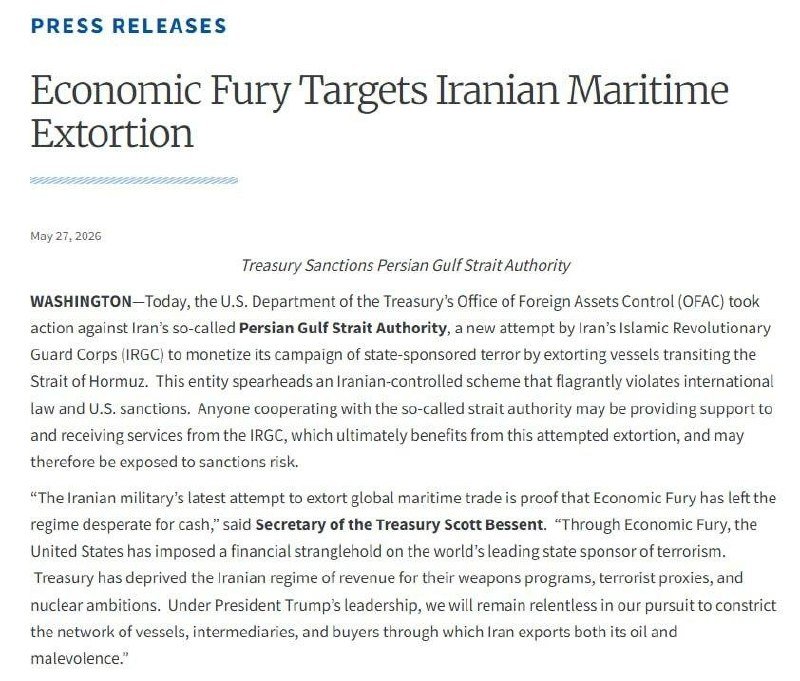
President Donald Trump said on 23 May 2026 that the United States and Iran are closer than ever to an agreement restricting Tehran's nuclear programme, telling CBS News in an interview published that day that "the situation is getting better and better every day." Trump added that any deal would prevent Iran from developing a nuclear weapon. The comments arrived hours after a call between the president and a group of Arab leaders that a regional diplomat described to Fox News as producing a potential "breakthrough." Arab leaders wrapped the call on a positive note, with the unnamed diplomat characterising the conversation as "very positive" and noting that regional counterparts were supportive of the progress achieved, according to reporting carried across open-source intelligence channels referencing the Fox News account.
The timing of both developments suggests coordinated diplomatic pressure. Trump has madeclear that sanctions relief is the primary incentive on offer, while Iran has sought guarantees against further economic isolation. The substance of what was being discussed remains opaque. Neither Washington nor Tehran has released terms of a draft agreement, and officials on both sides have offered only broad characterisations of progress. The absence of a published framework leaves significant uncertainty about what, exactly, would be agreed—and what enforcement mechanisms would apply if Iran chose to expand its programme again.
The Terms Being Discussed
Reporting on the negotiating positions, one senior administration official told open-source analysts that the United States is seeking Iranian dismantling of most of its enriched uranium stockpile, along with a cap on enrichment at 3.67 percent purity—the level Tehran agreed to under the 2015 JCPOA. In exchange, the US would offer staged sanctions relief and asset unfreezing. That framing is consistent with what outside analysts have expected: Trump wants a deal badly enough to offer meaningful concessions, while Iran calculates whether the economic upside of normalisation outweighs the strategic value of continuing to advance its programme.
The structural asymmetry matters more than the stated positions. Iran has demonstrated it can absorb economic pressure; the Islamic Republic's oil exports have remained resilient despite sanctions, and its nuclear programme has continued advancing under inspection constraints that were never fully dismantled. The regime may calculate it can outlast continued pressure—leaving Trump, who has signalled a desire for a signature foreign-policy win, with a stronger interest in a deal than Tehran has.
Regional Support and Its Limits
The call with Arab leaders complicates any simple reading of the diplomatic situation. Gulf states—Saudi Arabia, the UAE, and Qatar in particular—have their own calculus on Iran that does not map cleanly onto Washington's framing. Saudi Arabia moved toward its own normalisation with Tehran through Chinese-mediated talks in 2023, and has since pursued engagement on terms it considers commercially and strategically sustainable. That track record informs the "supportive" position Arab diplomats described to Fox News—but support for a nuclear deal is not the same as endorsement of a broader US approach to Iran.
Gulf states share Washington's interest in preventing a nuclear-armed Iran. They do not necessarily share Washington's appetite for a deal that removes sanctions pressure without addressing the missile programmes and regional proxy networks that Gulf analysts identify as the more immediate threat to their security. Those capabilities—Houthi missiles launched at shipping lanes, Iranian-linked militias in Iraq and Syria, support for Hezbollah—are outside the scope of a nuclear framework. The gap between what Washington is negotiating and what Gulf states actually want from Iran is real, and it will shape whether any agreement holds.
What a Deal Would Actually Resolve
The talks, if they produce an agreement, would represent the most significant diplomatic engagement between Washington and Tehran since the collapse of the JCPOA in 2018. A working nuclear constraint would reduce one vector of regional instability and remove a source of friction between the US and its Gulf partners. It would also give Trump a foreign-policy achievement to point to ahead of the 2026 midterms.
But the structural gaps in the current negotiating logic are not trivial. A deal structured around sanctions relief, staged and reversible in theory, in practice relies on sustained US pressure to keep Iran honest—pressure that the current White House has shown limited appetite to maintain indefinitely. Iran's preference for gradual normalisation over immediate concessions suggests a timeline that rewards patience, not US deadlines. Without explicit mechanisms addressing missile capacity and regional influence, a nuclear deal would do nothing to resolve the concerns driving Gulf states' own Iran strategies.
What remains unclear—and the sources reviewed for this article do not resolve—is whether the Arab leaders who spoke to regional diplomats on 23 May conveyed support for the specific framework under discussion, or support for a process they hope produces a different outcome. The distinction matters. The Arab world is watching not just for a deal, but for an agreement that actually changes Iranian behaviour. Whether Trump can deliver that is a question the current diplomatic window has not yet answered.
Wire provenance
This editorial synthesis draws on the following public wire/social posts:
- https://x.com/sprinterpress/status/1924580345619947640
- https://t.me/osintlive/28458
- https://t.me/osintlive/28452
- https://t.me/rnintel/12457