Uganda Confirms Three New Ebola Cases as Africa CDC Warns Ten Nations Face Heightened Risk
Uganda's health authorities confirmed three new Ebola cases linked to the Democratic Republic of Congo on Saturday, prompting the Africa CDC to warn that ten African countries now face elevated risk of transmission. The development arrives as continental health infrastructure grapples with overlapping humanitarian pressures across the region.
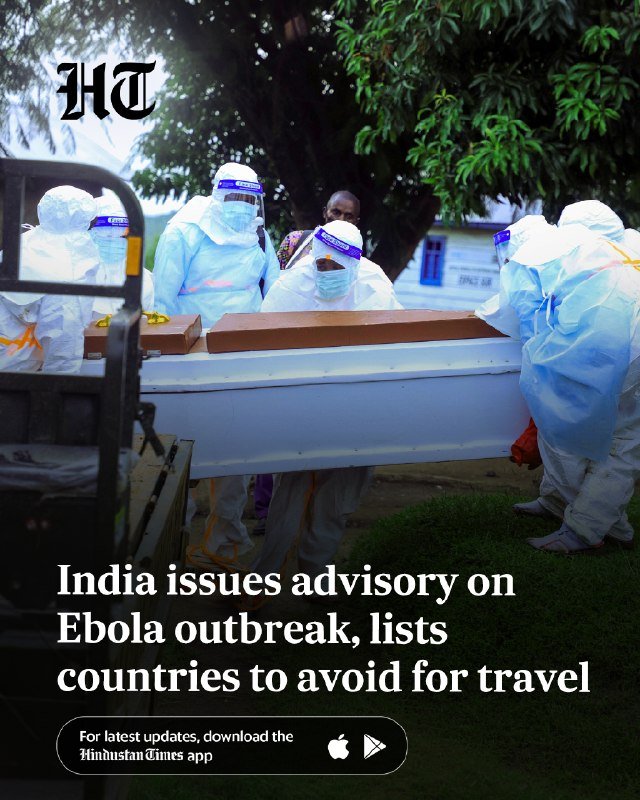
Uganda's health authorities confirmed three new cases of Ebola on Saturday, 23 May 2026, all linked to an ongoing outbreak in the neighbouring Democratic Republic of Congo. All three individuals were reported to be alive at the time of confirmation. The Africa CDC, the African Union's health agency, simultaneously warned that ten African nations now face elevated risk of transmission, underscoring the challenge facing the continent's already strained disease-surveillance architecture.
Three cases, one epidemiological neighbourhood
The confirmed cases in Uganda mark a continuation, not a rupture, of an outbreak that has simmered across the DRC-Uganda border corridor for months. Uganda's Ministry of Health confirmed the infections on Saturday, specifying that all three new patients had detectable links to transmission chains inside the Democratic Republic of Congo. The fact that all three individuals were alive at the time of confirmation reflects improvements in outbreak detection and early clinical management compared to earlier Ebola cycles in the region — a point internal health analysts have noted with cautious optimism.
Cross-border movement between the two countries is substantial and routine. Traders, labourers, and families traverse the DRC-Uganda frontier daily, a flow that local health authorities have long identified as a structural risk factor during outbreaks in either direction. Contact-tracing in this context requires coordination that neither capital has historically found easy to sustain at scale.
Ten countries, one surveillance system under pressure
The Africa CDC's warning that ten African countries now face heightened transmission risk represents a significant escalation in continental alert posture. The warning is not a prediction of inevitable spread but a recognition that the epidemiological conditions enabling the DRC outbreak — porous borders, fragmented surveillance networks, and overlapping humanitarian crises — extend well beyond a single corridor.
What the Africa CDC is effectively acknowledging is that its member states possess highly variable capacity to detect, confirm, and respond to Ebola cases quickly enough to interrupt transmission chains. Countries with stronger laboratory infrastructure and active community-healthworker networks are better positioned. Others, where surveillance remains episodic and laboratory confirmation depends on samples travelling long distances, face a compounding vulnerability: a case detected late is a case that has had time to generate secondary infections before any response is mounted.
The warning should also be read against the backdrop of concurrent health emergencies on the continent. Several of the ten countries flagged by the Africa CDC are managing other pressures — displacement crises, cholera outbreaks, or limited healthcare workforce capacity — that make rapid mobilisation of Ebola-specific response capacity genuinely difficult.
What this tells us about continental health architecture
The Africa CDC, established in 2017 as an African Union body, was designed precisely to manage this kind of scenario: a disease event that crosses borders and requires coordinated continental response. That it is issuing explicit warnings rather than reacting to confirmed spread suggests the institution is functioning as intended — using early epidemiological signals to trigger anticipatory action rather than waiting for cases to appear on its own territory.
The counterpoint is worth stating plainly: the warning also exposes the limits of what that coordination can deliver absent sustained investment in the national health systems it depends on. Africa CDC coordinates; national ministries execute. When those ministries are under-resourced, the coordination layer can issue warnings but cannot itself close the gaps.
There is also a longer structural question that the outbreak surfaces, even if it is not answerable here: how the continent funds and maintains the kind of surveillance infrastructure that makes early-warning systems reliable rather than aspirational. International donor support — from the World Health Organization, the World Bank, and bilateral partners — has funded discrete responses to Ebola outbreaks since 2014. But the transition from emergency funding to sustained domestic capacity has proved difficult to engineer, and the political economy of health investment in lower-income countries rarely prioritises disease surveillance over curative services that produce more visible electoral returns.
What comes next
The immediate priority for Uganda's health authorities is contact-tracing and isolation of the three confirmed cases, along with monitoring of their known contacts. Whether the outbreak stops there or spreads depends on the speed and accuracy of that work.
The Africa CDC's warning to ten countries creates a window — possibly a narrow one — for pre-positioned response capacity in the countries it has flagged. That window closes if cases appear before preparations are complete. The agency has the mandate and the structure to convene a continental response. Whether member states have the domestic political will and fiscal headroom to act on the warning before cases force the issue is the more uncertain variable.
This report was compiled from wire reports and the Africa CDC's published risk assessment. Uganda's Ministry of Health has not yet published a detailed epidemiological bulletin covering the three confirmed cases; this publication will update as figures become available.
Wire provenance
This editorial synthesis draws on the following public wire/social posts:
- https://t.me/france24_en
- https://t.me/france24_fr