The Unnecessary War That Wasn't: Tehran's Diplomatic Gambit After the Strikes
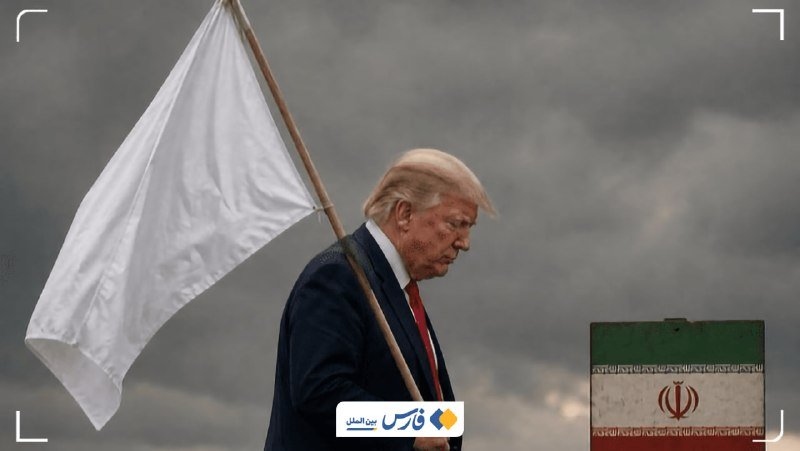
The joint US-Israeli strikes on Iranian military infrastructure were framed by Western officials as a calibrated response to an imminent threat. The Iranian Foreign Ministry saw it differently — and said so plainly. The operation was not necessary, Tehran held; it was an act of aggression, nothing more. That semantic split matters more than it might appear. When a state reclassifies a military action from defensive to criminal, it does more than express outrage. It rewrites the legal and moral ledger, and it does so for an audience that extends well beyond the two capitals directly involved.
The divergence in framing is not cosmetic. It reflects a genuine contest over how this episode will be remembered in the corridors of diplomacy, in the chambers of international law, and in the trading floors that translate geopolitical confidence into market behaviour. The question is not merely who fired what at whom, but whose version of the story takes root.
Tehran's Offensive on the Narrative Front
Iran's Foreign Ministry did not wait for Western wire services to set the terms of the debate. The rejection came within hours, sharp and unhedged: Western descriptions of the strikes as unnecessary were correct, but only because the framing was inverted. The strikes were not unnecessary in the sense that they were disproportionate or poorly executed. They were unnecessary in the sense that the threat they purported to address did not exist — or was manufactured to justify a predetermined course of action.
This is a known rhetorical move in international disputes. States facing military action routinely contest the justification, not merely the scale. What is notable here is the speed and the institutional weight behind it. The Iranian Foreign Ministry is not a provincial body issuing a reactive statement; it is the primary instrument of a state that has been building the legal architecture for this moment for years, through international forums, through bilateral diplomacy with non-Western capitals, and through a deliberate campaign to position itself as a victim of hegemonic overreach rather than a source of regional instability.
The timing of the Polymarket post from Iran's Foreign Ministry spokesperson — noting that differences with the United States are "deep and extremely significant" — reinforces the picture. The message is not that negotiations are impossible; it is that negotiations under these conditions are premature, and that the burden of proof for any future talks rests entirely on Washington. That is a negotiating position, dressed in diplomatic language.
What the Economic Data Is Telling Washington
The narrative contest is not happening in a vacuum. A survey released on 22 May 2026 showed US economic confidence falling to its lowest level since 2022, with analysts pointing directly to the Iran strikes as a contributing factor. The mechanism is not hard to trace: uncertainty about energy supply routes, concern over potential retaliatory action, and the broader unease that comes when a country whose currency still anchors global trade begins a new front in an already volatile region.
The dollar's role as the world's reserve currency means that US economic confidence is not merely a domestic variable. It translates into borrowing costs in emerging markets, into commodity pricing, into the financing terms for governments across three continents that have no direct stake in the Iran question but cannot insulate themselves from its consequences. That transmission mechanism is precisely why Washington has historically preferred to frame its military actions in terms that reassure rather than alarm — and why the slippage in that framing, if that is what is occurring, is not a public relations problem. It is a financial one.
The survey data does not establish causation with surgical precision; economic confidence is a compound variable, shaped by multiple inputs simultaneously. But the fact that analysts are naming the Iran operation as a factor — and that the timing aligns — is itself a signal. Markets are not waiting for the diplomatic resolution to price in the consequences. They are pricing in the uncertainty.
The Problem With the "Necessary" Frame
For Washington and Jerusalem, the logic of necessity was always going to be difficult to sustain in the court of international opinion, regardless of the underlying facts. The threshold for a legally and politically defensible "anticipatory self-defence" claim is high: the threat must be imminent, the response proportional, the alternatives exhausted or unavailable. Iranian officials have been quick to note — in their own statements, in communications with non-aligned capitals, and in submissions to international bodies — that none of those conditions were clearly met.
That does not mean the Israeli or American assessments of the threat were wrong. It means that the evidentiary basis for those assessments was not presented in a form that could be independently verified by the international community. When a state acts on intelligence it cannot share without compromising its sources, it creates an asymmetric situation: it expects the world to accept the conclusion while denying the world access to the premises. Some audiences will accept that arrangement. Many will not.
The countries most likely to accept it are those already aligned with the US-Israel position. The countries most likely to reject it are those for whom US military action in the Middle East is prima facie evidence of overreach, regardless of the specific circumstances. That leaves a large and consequential middle — states in Asia, Africa, and Latin America whose posture toward Washington is transactional and whose read of this episode will shape whether they become more or less willing to cooperate on the sanctions, diplomatic isolation, and financial pressure campaigns that the US relies upon to enforce its Iran policy.
The Stakes and What Comes Next
If Tehran's reframe takes hold in non-Western capitals, the practical consequences could be significant. The architecture of sanctions against Iran depends partly on the willingness of third countries to enforce or respect secondary sanctions. That willingness is not infinite, and it is not independent of the political legitimacy that the target state enjoys in the eyes of its trading partners. A Iran that successfully positions itself as an unjustly attacked party has a better chance of retaining — or rebuilding — those partnerships than one that is widely seen as a regional aggressor. The question of which version of the story prevails in places like New Delhi, São Paulo, and Nairobi is not an abstraction. It is a variable in a calculation that determines whether the pressure campaign holds.
For Washington, the immediate challenge is not military. It is epistemic. The strikes have demonstrated capability and resolve — that is not nothing. But capability and resolve without a compelling narrative are costly to maintain. The longer the justification remains contested, the more the costs compound: financial, diplomatic, and political. The survey data on US economic confidence is one symptom. The silence from capitals that might have been expected to express solidarity with Washington is another. The hardening of Tehran's position — "deep and extremely significant" — is a third.
What this publication finds is that the US-Iran confrontation is entering a phase where the battlefield is not only military but grammatical. The outcome will be decided not just by what each side can do, but by what the world is persuaded to believe about why it was done. On that terrain, Tehran appears to be making a serious and well-resourced play.
This desk covered the strikes primarily through Iranian and non-aligned wire reporting, using Western economic surveys as a secondary frame. A future piece will examine how Gulf state capitals have calibrated their public positions relative to Washington and Tehran.
Wire provenance
This editorial synthesis draws on the following public wire/social posts:
- https://t.me/presstv
- https://t.me/presstv