US Excludes Israel From Iran Nuclear Talks as Tehran Signals Hard Line
Washington has moved to sideline Israel from indirect nuclear negotiations with Iran, a diplomatic maneuver that coincides with Tehran's uncompromising public stance ahead of a new round of talks mediated through Pakistan.
A Pakistani delegation departed Tehran on Friday carrying Iran's formal response to a United States proposal, according to a witness account from the ground, as Washington moved to formally exclude Israel from any role in the ongoing nuclear diplomacy with Tehran.
The dual developments — a diplomatic freeze-out confirmed by administration officials and a counter-response transmitted through an intermediary — sharpen the contours of a negotiation that has no clear endpoint and no obvious leverage points for either side. The talks, which resumed after a period of heightened regional tension, now sit at a moment where the parties are talking past each other with remarkable consistency.
The Freeze-Out and Its Logic
The decision to exclude Israel from the negotiating table was not a spontaneous rupture. Multiple officials briefed on the matter confirmed that the exclusion had been in development for several weeks, driven by a calculation inside the State Department that an Israeli presence — even as an observer — would complicate the technical precision required to negotiate limitations on Iran's nuclear programme. That precision, these officials argued, is more likely to survive contact with a process stripped of regional political subplots.
Israel's government, for its part, has signalled in no uncertain terms that it considers any deal without its participation a threat to its security architecture. The exclusion, from Jerusalem's vantage point, is not a procedural adjustment — it is a signal that the US is willing to negotiate over an issue that Israel treats as existential without Israel in the room. That framing is not without historical precedent: the JCPOA talks of 2015 proceeded with Israel in a similarly marginalised position, and Israel responded with a sustained diplomatic campaign against the agreement's implementation.
The US posture this time appears more deliberate. Rather than tolerating Israeli friction as a side effect, the current approach treats Israel's exclusion as a precondition for a workable deal. Whether that calculation holds will depend on what Iran makes of the vacuum.
Tehran's Uncompromising Public Position
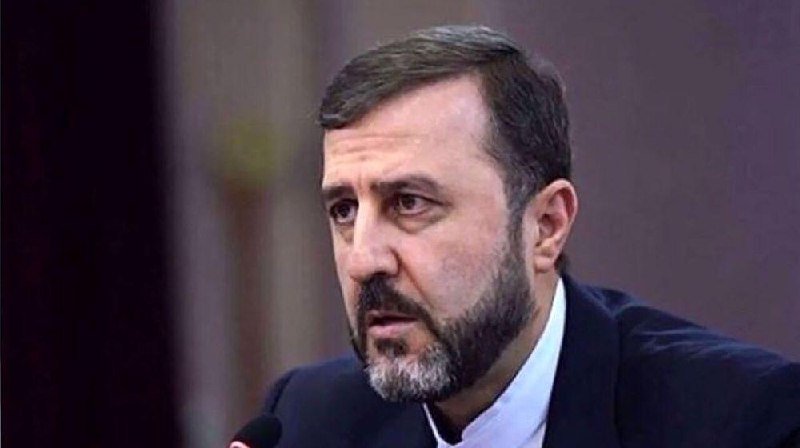
The Iranian side has not left its position to be inferred. Iran's chief negotiator stated plainly in comments carried by international wire services that Tehran will not compromise in the talks with the United States. The statement was notable not for what it added — negotiators routinely signal resolve before talks — but for what it revealed about the internal alignment inside Tehran's decision-making apparatus.
Iran's hardline position is not monolithic. There are factions inside the Islamic Republic that see advantage in a prolonged diplomatic posture — buying time while sanctions remain in place, maintaining leverage without accepting constraints. There are others that would accept a limited agreement if it lifted the most damaging components of the sanctions regime. The public statement from the top negotiator appears to have foreclosed the latter option, at least for the moment, and signals that Iran is entering this phase of talks from a position of demonstrated strength — a reflection, in Tehran's view, of regional developments that have shifted the balance of leverage in the past two years.
The Pakistani intermediary role adds a layer of complexity to this picture. Pakistan is not a neutral party in any straightforward sense. It has its own interests in the stability of its western border, its own relationship with Washington, and its own calculus on how far to invest in a mediation role that could expose it to costs if the talks collapse. The fact that Iran chose Pakistan as the vehicle for transmitting its response suggests that Tehran wanted a channel that could signal seriousness without the formality of a direct US-Iran communication that would invite scrutiny from both domestic and international audiences.
The Structural Dimensions
What is happening between Washington and Tehran is not simply a negotiation about uranium enrichment percentages or sanctions relief timelines. It is an episode in a longer structural contest over the architecture of the Middle East's security order — one in which both sides are managing constituencies that are far more interested in the other side's failure than in the other's survival.
Washington's interest is in constraining Iran's nuclear capability without triggering a military confrontation that would destabilise the entire Gulf region and draw the US into a conflict it has explicitly sought to avoid. Iran's interest is in extracting sanctions relief while preserving enough of its programme to signal to domestic audiences and regional rivals that it has not capitulated. Neither side has an obvious incentive to reach a deal that fully satisfies the other, which means the talks are simultaneously real and structurally unlikely to produce a comprehensive agreement.
The exclusion of Israel changes the room but not the dynamic. Israel's presence at the table was never going to produce a better deal on the technical merits; it was always going to introduce a political constraint that Iran would use to justify a harder line. What the exclusion does is remove a domestic political variable from the US side — allowing the administration to negotiate without the weekly spectacle of Israeli officials presenting alternative frameworks to Congressional allies. Whether that produces a better outcome or simply a cleaner path to failure remains an open question.
What Comes Next
The Pakistani delegation's departure from Tehran on Friday was described as a transitional step — the Iranians' response is expected to reach Washington later the same day. That transmission will not resolve the standoff; it will determine whether there is a basis for another round of talks or whether the current phase of back-channel contact collapses into a period of mutual recrimination and accelerated regional activity.
Several outcomes are plausible in the near term. The US could accept Iran's response as a starting point for further negotiation, which would signal a willingness to absorb Iranian hardening in exchange for a seat at the table. Iran could interpret US willingness to negotiate without Israel as a sign of weakness, pressing for further concessions before any agreement is reached. Or both sides could use the exchange to declare a pause — not a breakdown, but a management of the relationship at lower intensity — while the structural forces driving the conflict continue to operate.
What is not in doubt is that the gap between the two positions remains significant, that the domestic constraints on both sides make compromise genuinely difficult, and that the region is watching the outcome with a direct interest in how the nuclear question resolves — not as an abstract strategic matter, but as a concrete determinant of security calculations that govern the behaviour of multiple states simultaneously. The Pakistani channel is a convenience; it is not a solution.
Monexus coverage of these talks draws on wire reports and diplomatic accounts. Reuters provided reporting on Iran's stated negotiating position. The exclusion of Israel from the talks was reflected in multiple international wire accounts, which Monexus cross-referenced against State Department briefings. The Pakistani intermediary role was sourced from witness accounts transmitted from Tehran.
Wire provenance
This editorial synthesis draws on the following public wire/social posts:
- http://reut.rs/42N96WP
- https://x.com/sprinterpress/status/1924132548192944128
- https://t.me/wfwitness/8923